



Hey there 👋
Glad to have you back.
In the previous part, we talked about ecosystems and why they exist. To be fair, most of that discussion focused on the good side of things. These systems make life easier because everything connects, everything syncs, and you don’t have to think too much about how things work together.
But like everything else, there’s another side to it.
You only start noticing it when you ask a simple question:
“What happens after you’re inside an ecosystem?”
And the strange part is, there’s no moment where the system suddenly turns against you. Everything continues to work, just like before, but the difference shows up slowly.
Small changes get introduced over time. Each one feels minor, almost insignificant on its own. But as they stack, the system starts behaving differently. And because the change is gradual, the majority of people don’t notice it happening.
It’s like that boiling frog analogy. The temperature doesn’t spike. It rises slowly enough that you don’t react to it.
Anyway, let’s get started.
Lock-In Phase
In Part 1, we broke down how ecosystems form. There’s a stage in that process where everything starts connecting, for example: your data, your habits, and the tools you rely on.
That’s where lock-in happens.
Take a simple example.
If you’ve been using Google products for years, chances are you’re not just using one service. You probably have Gmail for communication, Drive for files, Photos for backups, Chrome for browsing, and maybe Android as your operating system.
None of these decisions feel connected when you make them. Each one solves a small problem, but with the passage of time, they start overlapping.
Your files, emails, photos, documents…etc. everything is tied to the same account. Even the way you use your devices starts adapting to that system.
Now add another layer.
The people around you are often using the same tools. Your family shares photos through the same apps. Your work depends on the same platforms. That creates a network effect. Communication becomes easier inside the system, which makes leaving less appealing.
At that point, switching is still possible, but there’s a lot of friction involved in that process because you’re moving years of data, rebuilding workflows, and adjusting habits that took time to form. Most people won’t be willing to go through that due to which they stay because leaving feels like unnecessary effort.
Control Starts Shifting
As discussed earlier - when the users are settled into a platform, the priorities inside that platform begin to change.
In the early stages, everything is built around attracting users. Features are designed to feel open and easy to use. But once a large user base is established, the pressure to compete in the same way starts to reduce.
A clear example of this is how feeds changed over time.
When Instagram launched, posts were shown in chronological order. You saw content based on who you followed and when it was posted. Over time, that changed. The platform introduced an algorithmic feed that decides what you see and in what order. Even when chronological feeds were brought back later, they weren’t set as default. You still have to switch manually each time.
Alternatively, when YouTube introduced autoplay, it was turned on by default. The next video starts automatically, selected by the system which plays a key role in how people consume content without them actively choosing it.
In another case, TikTok was fined €345m in Europe for default settings that pushed younger users toward more public visibility instead of keeping accounts private.
Individually, these changes might seem small, but together, they show a pattern - platforms start by giving users control. Over time, they begin to guide behavior more actively. Not in a way that breaks the experience, but in a way that gradually reshapes it.
There’s a term for this - dark patterns and I have already covered in detail on what these patterns are, how the algorithm is manipulating you and how to protect yourself from it, check it out here:

Case Studies
Although this isn’t limited to one company and different platforms approach it in different ways, the underlying structure stays the same.
And just a side note - the goal here isn’t to label companies as good or bad. It’s to understand how the system works.
Google
If you want to understand how ecosystem lock-in works in practice, Google is one of the clearest examples.
At the center of it all is a single Google account. That account connects almost everything - Gmail for communication, Drive for storage, Photos for backups, Chrome for browsing, Play Store for apps, and a long list of other services. Each of these tools works fine on its own, but the real value comes from how they connect, and that’s where things start to compound.
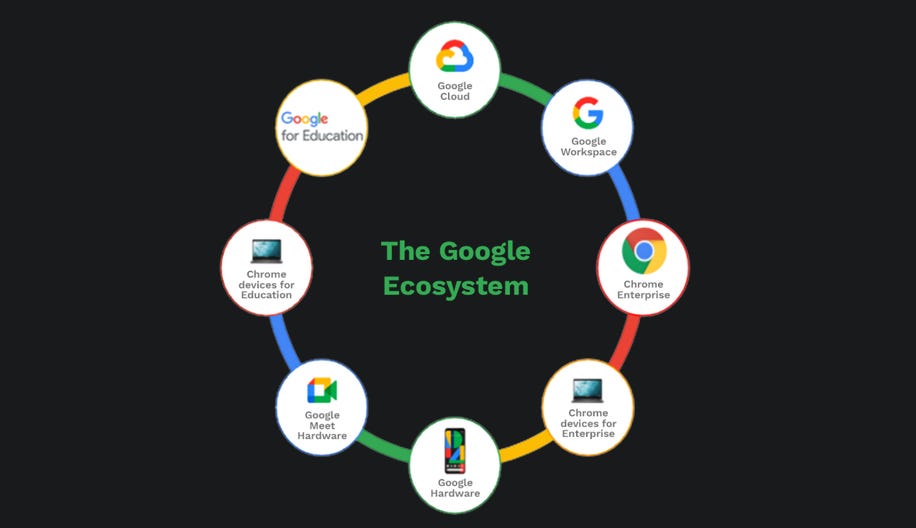
As time passes, your entire digital footprint begins to settle inside that system and everything starts living in one place. It’s not something you consciously plan. It just builds gradually as you keep using the same tools.
And when you imagine trying to leave. Suddenly, you’re dealing with years of accumulated data. While tools like Google Takeout allow you to export your data, that’s only one part of the process. You still have to move everything, set up alternatives that don’t behave the same way. That friction is enough to stop most people.
Another layer that pulls users deeper into the system is single sign-on. A large number of third-party apps and services allow you to sign in using your Google account. It’s convenient, but this creates a dependency chain. Your access to multiple services becomes tied to that one account, which means if you leave Google, you’ll have to reconfigure access to everything connected through it.
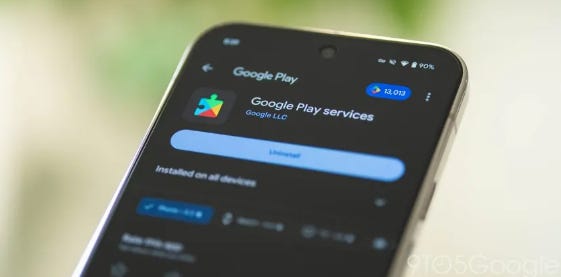
Then there’s the infrastructure layer - even if you try to step outside the ecosystem, say by installing apps from alternative app stores, many of those apps still rely on Google Play Services in the background. Things like notifications, location tracking, authentication, and payments often depend on it. This means that even outside the visible layer, parts of the system still depend on Google’s infrastructure, which makes full separation harder than it seems.
There’s also a less obvious dependency that builds over time. Google updates Play Services independently of Android system updates. That means even older devices, which may not receive full operating system updates anymore, still rely on Google’s services to function properly.
Storage plays another role in this. Google offers around 15GB of free storage shared across Gmail, Drive, Photos, and other services. At first, that feels like more than enough. But as your usage grows, that limit gets reached. At that point, you’ll either clean up years of stored data or move to a paid plan like Google One. Most people choose the second option, ultimately making leaving even more difficult now the person has to deal with both data migration and subscription dependency.
Then there’s the data layer - Google’s services improve as they collect more user data. From a user perspective, this often feels like improvement. From a system perspective, it strengthens the ecosystem, because the more data that stays inside, the harder it becomes to replicate that experience somewhere else.
This extends beyond software. If you use Google Home, Nest devices, Android Auto, Chromebooks, or Wear OS devices, the ecosystem expands into hardware as well. These products are designed to work best within Google’s environment. Outside of it, functionality often becomes limited. Even services like YouTube Premium or Google Workspace add another layer. Each additional service increases reliance on the system.
At this point, I could keep going. There’s a lot more to cover when it comes to Google alone. But that would take us out of scope for this piece.
If you’re interested in going deeper, I’ve covered Google in much more detail in my privacy series. Worth checking out if you want a clearer picture of what’s happening behind the scenes and how to manage your exposure better.
Industry-Wide Pattern
Google is just one example, and probably the most visible one, but this pattern exists across the industry.
Companies like Proton, Ente, Apple…etc. All of them either have a strong ecosystem or are building one in their own way. Some focus on privacy, others focus on hardware integration or start with a single product and expand outward.
Some companies handle this more responsibly than others and genuinely prioritize user interests, but the model itself remains the same because at the end of the day, ecosystems do two things very well:
Increasing convenience
Increasing dependency
The Cost of Staying
By this point, every interaction already feeds into the platform. That data is used to refine how the system behaves. On the surface, this feels like improvement. But it creates a dependency that isn’t easy to replicate elsewhere.
The same data that improves your experience is also used to extract value from it. Advertising becomes more precise. Features and pricing can be adjusted based on usage. Visibility is influenced by systems you don’t control.
This ties in directly with enshittification.
Anthropic’s recent trajectory demonstrates the pattern. The company signed a $200 million contract with the Pentagon in 2025, but made clear it did not want its technology used for mass surveillance of people in the United States or for fully autonomous weapons systems. According to BBC reporting, when Pentagon ordered Anthropic to allow unrestricted military use of its AI and Anthropic refused, the Pentagon retaliated by designating the company a “supply chain risk” and ending the contract. The ethical stance attracted users seeking an alternative to OpenAI that contributed towards a large user base boost for Anthropic.
The user base boost allowed anthropic to conduct different experiments. In April 2026, Anthropic updated its pricing page showing Claude Code as unavailable on the Pro plan. The company later stated this was only a test affecting 2% of new signups, though The Register noted the change appeared across all public-facing documentation and support materials. Anthropic reversed the change within hours after user backlash. The company maintains the test was limited in scope and not intended as a permanent policy shift.
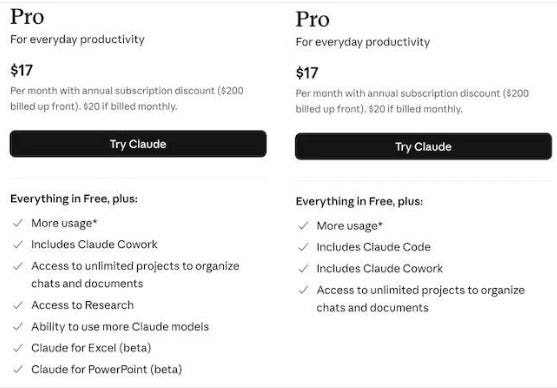
The bigger picture is, once you’re locked in - the platform has the power to degrade service quality, change pricing structures, run A/B tests to determine willingness to pay, adjust data collection practices, or make the service shit*y because you are the one dependent on the platform.
The platform depends on you only as part of an aggregate user base. And individual complaints don’t carry weight when switching costs are high enough that most users won’t leave regardless of what changes.
What You Can Do
At this point, you should have a clear understanding of how these systems work. But the question is…what can you actually do about it?
First of all, it helps to check where you stand.
Signs of Dependency
Look at your current setup and answer honestly.
Does losing access to one account affect your email, files, photos, and payments?
Does the idea of exporting your data feel complicated or unfamiliar?
Do most of your logins depend on “Sign in with” options from large platforms?
Do you rely on default apps for search, maps, or storage without considering alternatives?
If the answer to even one of these is yes, then you’re likely more dependent on a system than you realize.
How to Reduce Lock-In
The goal here isn’t to completely avoid ecosystems. That’s neither realistic nor practical. The goal is to avoid depending entirely on one.
If you want a more unified setup without the same level of data collection, companies like Proton offer a reasonable alternative for core services like email, calendar, and storage. It is still an ecosystem, but the incentives are different compared to most large platforms. Even then, I still wouldn’t rely on it for everything.
A mix-and-match approach works better - use one service for communication, another for browsing, another for search. For example, you can keep Proton for email and storage, use browsers like Brave or Mullvad Browser, and rely on search engines like DuckDuckGo instead of defaults.
For platforms like YouTube, using a separate browser profile helps isolate activity instead of feeding everything into one account.
The same idea applies to hardware.
If you prefer a specific brand, that’s fine. Just avoid building your entire setup around it. The deeper the integration, the harder it becomes to step away later.
When choosing tools, a few things matter more than anything else.
Make sure your data can be exported easily. Prefer services that work across platforms instead of locking you into one environment. Where possible, choose tools built on open standards or open-source foundations.
Final Thoughts
An important thing to note - the article’s point wasn’t to paint every tech company as a problem. A lot of these products are genuinely useful. They solve real problems and make everyday tasks easier. That’s exactly why ecosystems work as well as they do. The convenience is real, and it’s understandable why people rely on it.
But it’s important to acknowledge that convenience comes with trade-offs.
The majority of people don’t really know how things behave once you’re inside the system. But if you understand how the system works, you’re able to make your own decision instead of defaulting into whatever is presented to you.
You can still use these tools, just remember to not rely on them for everything.
Thanks for reading.
See you next time.
One Last Thing
Nearly all people interact with systems without questioning them. This space is about doing the opposite aka understanding how things work, where they fail, and what that means in practice.
If that’s the kind of content you want more of, subscribe. And if this piece added something new to how you see things, pass it on. Good information only matters if it travels.
And if you’re active elsewhere, follow along on Bluesky or X (Twitter) or LinkedIn - those are the two places I show up most consistently outside Substack. A follow, a like, a repost - it matters to me, more than you think.