



Hey there 👋
Remember when software used to just…work?
You would install something, learn how it works once, and it would keep doing exactly what you expected. There were no constant redesigns or algorithms secretly deciding what you should or shouldn’t see.
But, those days seem to be in the past now because today - most platforms feel harder to use despite being more ‘advanced.’ Search results feel polluted. Feeds are filled with things you didn’t ask for and interfaces change for no clear reason.
You must have felt this as well…there’s this strange situation where everything works, but the experience keeps getting worse. NOT surprisingly, there’s a term for it - Ensh*ttification.
What Ensh*ttification Actually Means
The term Ensh*ttification, popularized by Cory Doctorow, describes the gradual decline of digital platforms as they shift their priorities away from users and toward profit extraction.
At a surface level, ist sounds like a rough way of saying ‘things are getting worse.’ But the idea goes deeper than that. It describes a predictable lifecycle - one where platforms follow a structured path as incentives change.
Before going further, there’s an important distinction to make.
A lot of people confuse Ensh*ttification with planned obsolescence.
Planned obsolescence is about hardware. Devices slow down or wear out over time. While Ensh*ttification is about software. In one case, the product physically degrades. In the other, the product continues to function - but increasingly works against the user.
To understand why that happens, you have to look at how platforms evolve over time.
Stage 1 - User-First
In the beginning, platforms are built to attract users.
Different platforms focus on building something that people want to use. The experience feels clean & valuable. The features are designed to solve real problems and most importantly the growth comes from usability, not manipulation.
This is where trust is built, but it’s also the bait.
At this stage, companies market their product in a way that it feels promising, feels useful, something that respects your time. And for a while, that promise holds.
Stage 2 - Ecosystem Shift
Once a platform has enough users, the priorities begin to change.
This is where the ecosystem starts changing. Businesses, advertisers, and creators become the new focus because they generate revenue. The platform begins to reshape itself around them.
You start seeing algorithmic control replacing organic reach. Content is no longer shown because it’s relevant, but because it serves a business goal. Pay-to-play systems emerge, where visibility increasingly depends on spending money.
The change is gradual, which makes it harder to notice all this happening.
Stage 3 - Extraction Mode
Eventually, the platform runs out of easy growth.
At this point, it turns inward.
Even business customers start getting squeezed. Ad loads and costs start to shoot up. Reach declines unless you pay more. Features are redesigned to maximize engagement.
This is where the platform reveals its true purpose which is to extract as much value as possible from everyone.
Why This is a Business Model - Not a Bug
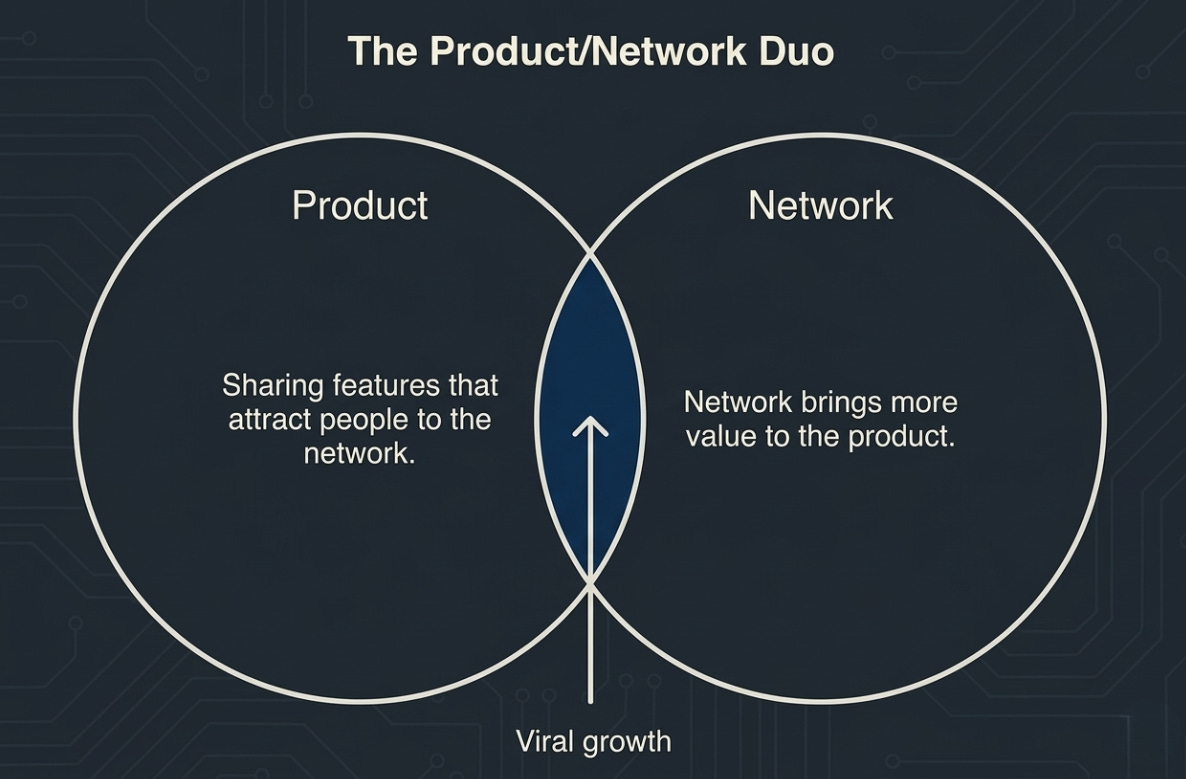
Network Effects
Every major platform is powered by other people.
The reason a platform becomes valuable is because of who is already using it. If your friends are there, you join. If your audience is there, you stay. If your customers depend on it, you build around it.
With the passage of time, this compounds. The platform becomes the place where interactions happen by default and that exact concentration gives the platform leverage. On top of that, leaving stops being a simple choice. Even if a better alternative exists, it feels empty without the same network.
Switching Costs
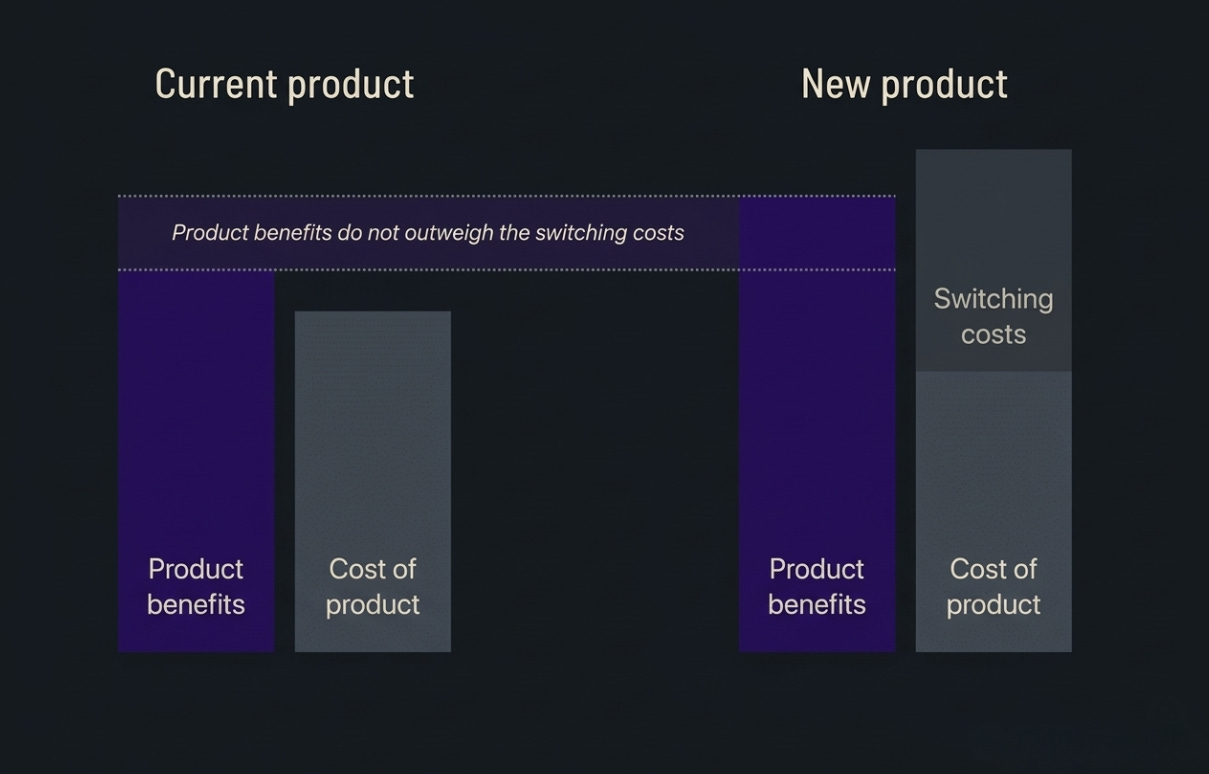
Once people are in, switching becomes difficult in ways that are not always obvious.
There is the visible layer, that involves your data, messages…etc. But the heavier layer is everything built on top of that aka your identity, your presence, your connections.
And it’s really hard to move that cleanly.
Exporting data rarely recreates the experience somewhere else. A list of followers is not the same as an active audience. A backup of messages does not replace ongoing conversations and that’s why leaving starts to feel like starting over and who likes that?
That friction is enough to keep most people where they are, even when the experience declines.
Monopoly Pressure
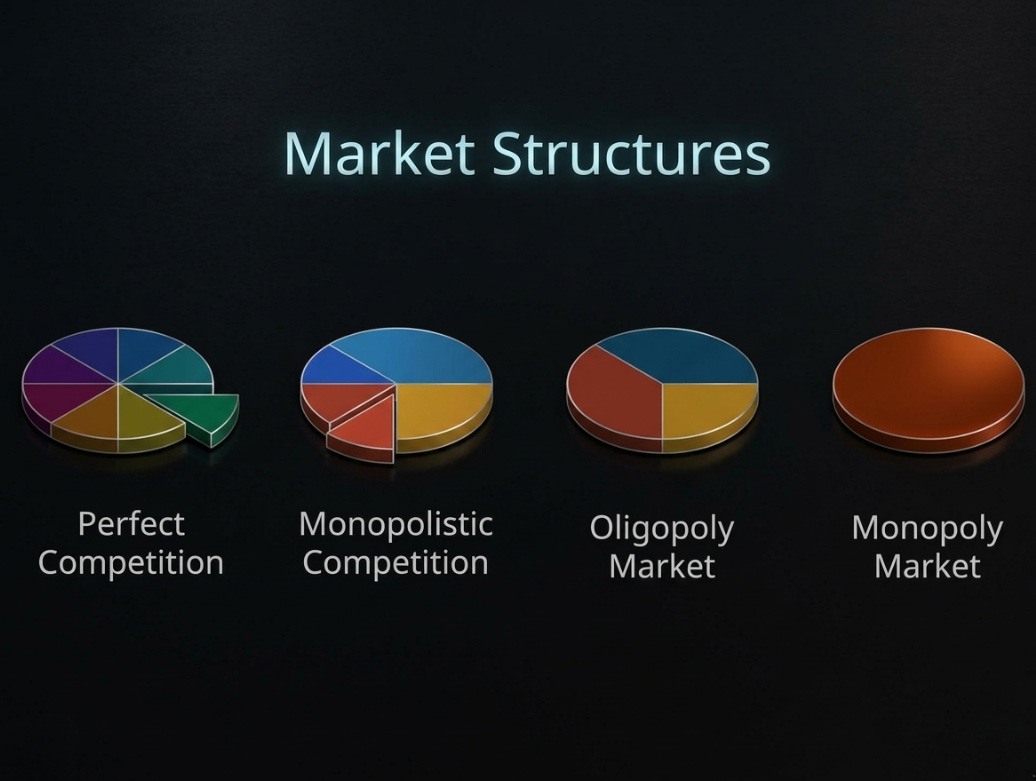
The environment around the platforms start to change once they grow. In the early stages, there is pressure to improve. Users can leave easily, so companies focus on making the product better and more useful.
Over time, that pressure weakens. New players struggle to attract users because the network is already established elsewhere. The platform settles into a position where users stay stuck in the loop because alternatives feel impractical.
At that point, priorities relocate internally. Decisions are no longer shaped by user experience in the same way. Control becomes easier to enforce and changes can be pushed without the same risk of users walking away.
Shareholder Growth
The final pressure comes from expectations around growth.
Large platforms are not designed to stay stable. They are expected to increase revenue consistently. In the early phase, that growth comes from new users and expanding markets.
But that phase does not last forever and there is a limit to how many people can join and how much time they can spend. Once that limit is reached, growth has to come from somewhere else.
In order to solve this issue, the platform is made sh****er - more ads are introduced into the same space. Features that were once freely available become restricted or monetized. Visibility becomes something that can be bought.
None of these changes happen all at once. They are introduced gradually, often framed as improvements.
From the outside, the experience feels heavier and less intuitive. From the inside, the system is doing what it was built to do aka extract more value from the same users.
Putting It Together
None of these forces act alone. They stack on top of each other, and they unfold in a sequence.
A platform starts by being useful. That’s how it pulls people in. Once enough users are in, network effects and switching costs begin to take hold. Leaving becomes inconvenient, then difficult, and eventually unrealistic for most people.
As that grip strengthens, competition becomes less relevant. Now, the platform doesn’t need to win users the same way anymore because it already has them, due to which the strategy relocates toward pulling more value out of the same system.
And as a result what you get is a product that still works, but it feels worse.
You can see how widely recognized this pattern has become. Even the Government of Norway acknowledged it with a video. It’s funny, but it lands because it reflects how these systems actually behave. You can watch it here:
Case Studies
The easiest way to understand Ensh*ttification is to watch it play out in systems you already use. The pattern is really visible and in many cases, hard to avoid:
Facebook (now Meta)
Meta (previously Facebook) started as something which wasn’t available to the general public. But when that changed, early users were able to connect with people they cared about, and see what they shared.
That phase did one thing very well. It attracted users and locked them in.
As more people joined, the platform became harder to leave. Everyone’s friends, history, communication channels - all were at one place. Leaving meant disconnecting from all of it at once and nobody wanted that.
Once the users were locked-in, the priorities changed.
Meta began reallocating attention. The feed stopped being a direct line to people you followed and turned into a system optimized for engagement and monetization. Ads became more frequent. Posts from publishers and brands were inserted into spaces users didn’t explicitly choose. Behind the scenes, the platform expanded its data collection to make that targeting more precise
Publishers and advertisers came in next. Meta had the audience, and that was enough. Businesses followed because that’s where attention was. Media companies started relying on it for traffic.
Then the algorithm took control.
Instead of showing you posts from people you chose to follow, the system started deciding what you should see. What keeps you scrolling gets pushed. What doesn’t, disappears.
You can already see the next version of this on Instagram. The feeds are fully curated, ads are baked in and what you see is no longer a reflection of who you follow, but what the system wants you to engage with.
Even core ideas like privacy are starting to change. Encryption, which was once pushed as a feature, is now something platforms are under pressure to weaken or remove entirely.
Amazon
Amazon followed a similar path, just in a different domain.
In its early years, Amazon focused on being the most convenient place to shop. Prices were aggressively low, often below cost. Shipping was fast. Search worked the way users expected (relevant products showed up first)
That combination pulled users in and changed behavior. For many, Amazon became the default starting point for shopping.
Lock-in came through habit and ecosystem. Services like Prime encouraged users to stay within the platform. Online purchases added another layer. Books, audiobooks, and other media were tied to Amazon’s systems; if users wanted to leave amazon, they would have to give up everything, aka making it costly to leave.
Once the user base stabilized, suppliers became the next focus.
Third-party sellers joined to access that demand. Amazon offered reach, logistics, and infrastructure. For a while, the terms were favorable enough to make the platform attractive. Sellers scaled their businesses around it, but things didn’t stay like that forever.
Fees increased, visibility inside search results became tied to ad spend. Sellers started paying to be visible on the platform. In many categories, the top results are now dominated by sponsored listings rather than the most relevant products.
Now, we have a platform on which users still find what they need. Sellers still make sales. But both operate inside a system that steadily extracts more value from them than it returns.
Further Examples
This pattern isn’t limited to social media or e-commerce. You see it across almost every digital service.
Take streaming platforms. Netflix, Hulu, and others followed the same. They started by offering convenience and large content libraries at reasonable prices. Over time, prices increased and access became conditional. What you “have” depends on what you’re currently “paying for.”
Ownership, pretty much, disappeared in the background. Because think about it - the moment you stop paying, it’s gone. The same logic applies to software, games, and even devices.
Search engines show a similar shift. Look at Google. A simple query used to return the most relevant results. Now, the top layer is often sponsored placements or SEO-optimized pages competing for visibility.
Then there’s the ecosystem effect.
Every platform out there is on a mission to build a full network of services around you. If you use Gmail, you’re likely using Google Photos, Google Drive, maybe even Android. Each product reinforces the other. Leaving one means disrupting all of them.
You see a similar dynamic outside of software.
Take modern cars. Features that used to be part of the product are now tied to subscriptions. Different features are now being locked behind ongoing payments. You buy the car, but access to parts of it depends on whether you keep paying.
Companies understand this. Get users in, build dependence, then change the terms.
Where this is Heading
I can’t see into the future, but from where I sit, it seems - monetization will get more aggressive. Systems will extract more from the same user base rather than expanding it. Algorithms will become harder to understand, making it difficult to know why you’re seeing what you see. Creators will become more dependent on platforms they don’t control. Reach, visibility, and income will stay tied to systems that can change the rules at any time.
AI will accelerate all of this. Feeds will be filled with synthetic content optimized for engagement.
And here’s another interesting thing I want to bring to your attention:
In February 2026, the United States Congress moved forward with requirements tied to impaired driving prevention systems in future vehicles. These systems are designed to monitor drivers and intervene when needed. The goal is “safety”, but the mechanism is constant monitoring built into the product itself.
Everything I mentioned here, isn’t directly tied to Ensh*ttification, but it points in a similar direction - Control is moving away from the user and everything is getting worse.
Across platforms, devices, and services, the model is becoming consistent and given how these systems have evolved so far, there’s little reason to expect that to reverse anytime soon.
What You Can Do About This
Platforms control the environment, but you still control what you feed into it. Don’t put all your eggs in one basket. Relying on a single platform for audience, communication, or content locks you in. Spread yourself across multiple tools and services so leaving one doesn’t mean losing everything.
Own what you can. If you’re building an audience or creating content, keep a layer that’s yours. Email lists, local backups, personal storage…etc Anything outside the platform’s walls gives you leverage. The less you depend entirely on someone else’s system, the more freedom you keep.
Support alternatives when possible. Smaller platforms, open-source tools, or services that don’t monetize through extraction are worth exploring. Doing this might not be convenient, but know that even convenience comes at the cost of control and security being taken away.
Finally, pay attention to how your decisions are shaped. Algorithms nudge your behavior. Be skeptical of what you see because most of what you see is designed to make you act without thinking. Recognizing this lets you step back and act deliberately instead of reacting.
Platforms will keep evolving. They’ll attract, lock in, extract. Understanding the cycle doesn’t fix it, but it gives you a way to operate with intention rather than being dragged along. That’s how you keep some control in a system designed to take it.
Thanks for reading.
See you next time.
One Last Thing
Nearly all people interact with systems without questioning them. This space is about doing the opposite aka understanding how things work, where they fail, and what that means in practice.
If that’s the kind of content you want more of, subscribe. And if this piece added something new to how you see things, pass it on. Good information only matters if it travels.
And if you’re active elsewhere, follow along on Bluesky or X (Twitter) or LinkedIn - those are the two places I show up most consistently outside Substack. A follow, a like, a repost - it matters to me, more than you think.
Now that they’ve started adding unskippable ads when I’m trying to flick through my friends’ stories on Instagram, I might finally have to get rid of it. (I should have got rid of it long ago but it’s my main communication tool with a lot of friends).
There shareholder mechanic to push people towards a paid version by enshittifying the free version of a service is so obvious. YouTube and all of its ads come to mind. They also allow you to play videos using a minimized screen and scroll other apps only IF you have YouTube premium. That feature is just locked behind a paywall.
Heard about this term for the first time and I am shocked, I get it now why every application feels like it's getting worse.