



Hey there 👋
I was watching the WAN Show a while back when Linus Sebastian shared this cool thought.
He was talking about Valve’s new Steam Machine, and he made a point nobody else was really making.
See, everybody keeps comparing this thing to the PlayStation and the Xbox. Linus thinks the real rival is the Mac Mini.
That sounds a little crazy at first. A gaming box from Valve going up against Apple’s tiny work computer?
But the more he explained it, the more it clicked for me. And I want to build on that idea today.
Here is the short version. Judge the Steam Machine as a console and it looks bad. Too pricey, too weak.
But judge it as a small, quiet computer that one company built from the chip all the way up to the software, and it suddenly stands almost alone.
The only other famous box that works this way is the Mac Mini. So let’s talk about why these two are secretly rivals, and what this means for the future of desktop computers.
Everybody Reviewed the Wrong Machine
Console pricing works on a trick. Sony and Microsoft sell them at a loss.
They lose money on every PS5 and Xbox that leaves the shelf. They earn it back later by taking a cut of every game you buy. The console is basically bait because the games are where the real money is.
Valve does not want that for Steam Machine. They plainly said in their FAQ that the Steam Machine is priced like a PC, not like a console.
There is no selling it cheap now and clawing the money back later, because Valve does not need to. It already prints money from the Steam store itself.
So when people line the Steam Machine up next to a PS5 on price, they are comparing a computer sold at its true cost against a console sold at a loss. Of course the console looks cheaper.
The moment you stop thinking console and start thinking small desktop computer, everything shifts. And there is really only one famous small desktop that is built the way this one is.
What Valve Actually Built
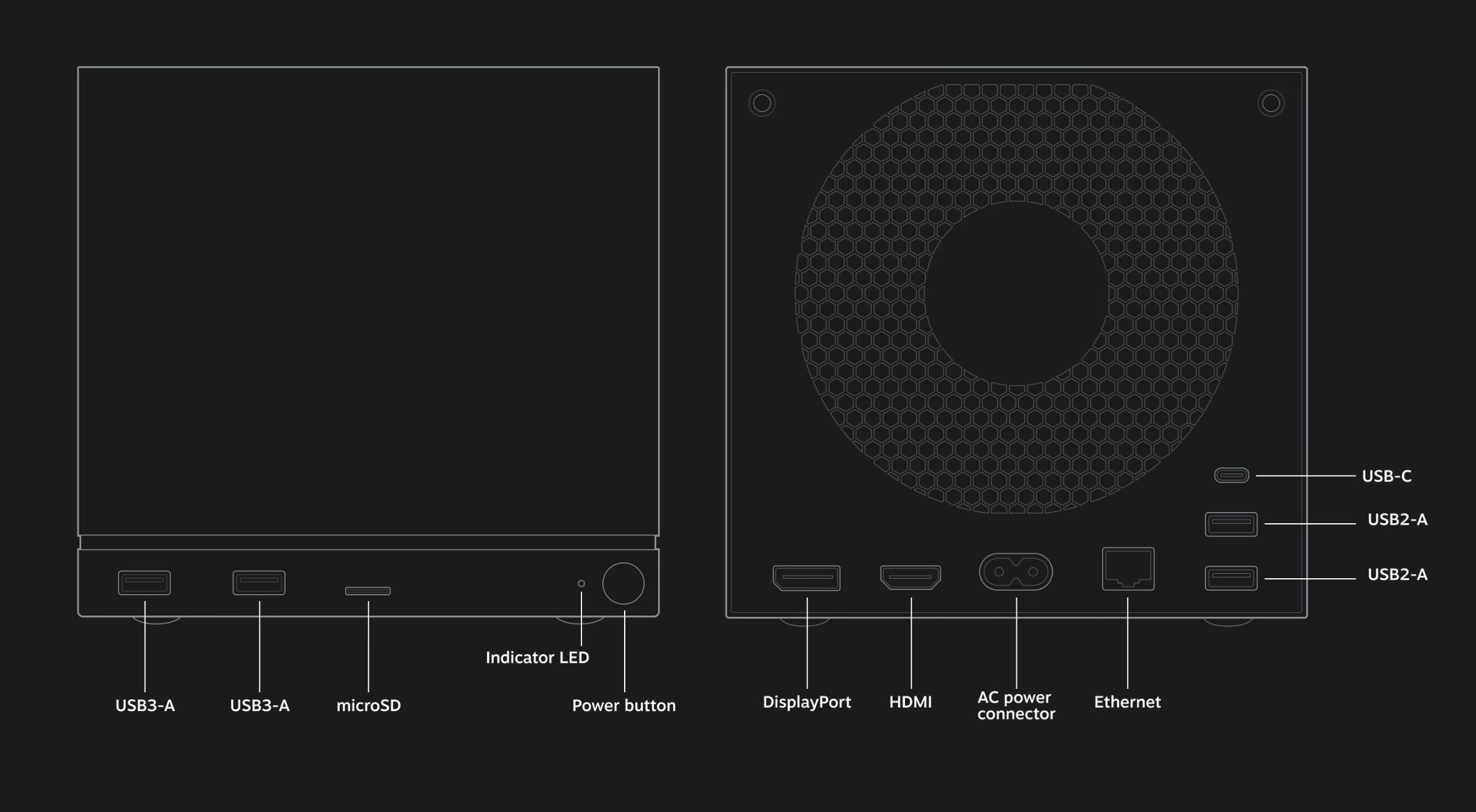
Let’s cover what the Steam Machine actually is first.
It is a little cube, roughly 6 inches on each side. Valve calls it Steam Machine, the community calls it the GabeCube, after Valve boss Gabe Newell.
It launched on June 29, 2026, starting at $1,049 for the 512GB version.
Inside sits a custom AMD chip built to Valve’s spec. You get a 6-core processor based on AMD’s Zen 4 design that runs up to 4.8 GHz, paired with a graphics chip based on AMD’s RDNA 3 architecture.
The GPU has its own 8GB of video memory. There is 16GB of regular RAM too, and you pick either 512GB or 2TB of storage. It runs Valve’s own SteamOS.
Valve says it is about 6 times more powerful than the Steam Deck, their handheld. The goal is 4K gaming at 60 frames per second, though it leans on a trick called FSR to get there.
FSR is basically smart upscaling. The chip draws the game at a lower resolution, then cleverly fills in the detail so it looks close to 4K without doing all the hard work.
One genuinely nice touch is that you can open this thing. It has a slot to add storage and two slots to add memory, and Valve sells official replacement parts through iFixit.
Even Linus pointed this out in his video and it matters a lot in this comparison as you will see.
Did you know Valve just opened up their SteamOS for anyone to build their own Steam Machine?
Here’s my linked article where I turned my ThinkPad into a Steam Machine in less than 60 minutes.
The Vertical Integration Magic
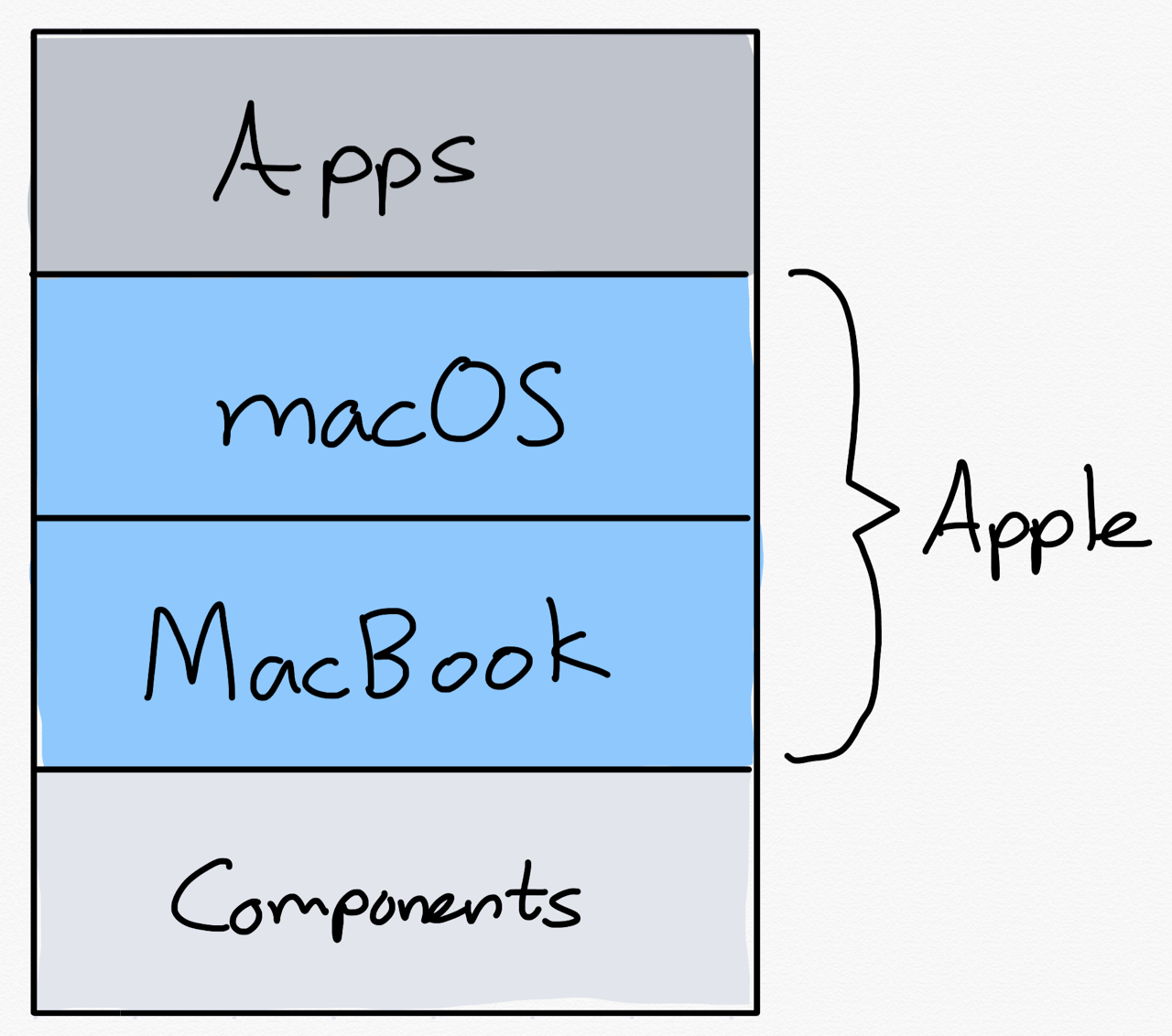
Vertical integration just means one company makes the whole thing instead of splitting the work. The hardware, the box, and the software all come from the same place, built to fit together.
Think about a normal Windows PC.
Microsoft makes Windows. AMD or Intel makes the chip. Some other company like Dell builds the actual computer.
That is three different companies, none of them really talking, all their parts meeting inside your machine and hoping to get along.
That’s why Windows PCs can feel janky sometimes. A driver breaks. A setting fights you. Two bits of software disagree.
Nobody owns the whole thing, so nobody can make it all just work in a perfect way.
When one company controls everything, they can tune it tight. The software knows the exact chip it is running on. The power settings are built for that exact hardware.
Stuff just works, because one team made sure it does. And this is the real reason the Steam Machine is interesting.
Valve designed the chip, wrote the OS, made the interface, and controls the updates. That is a purpose-built appliance, not a generic beige box.
And there is only one other company known for doing this in a tiny desktop.
The King of Vertical Integration
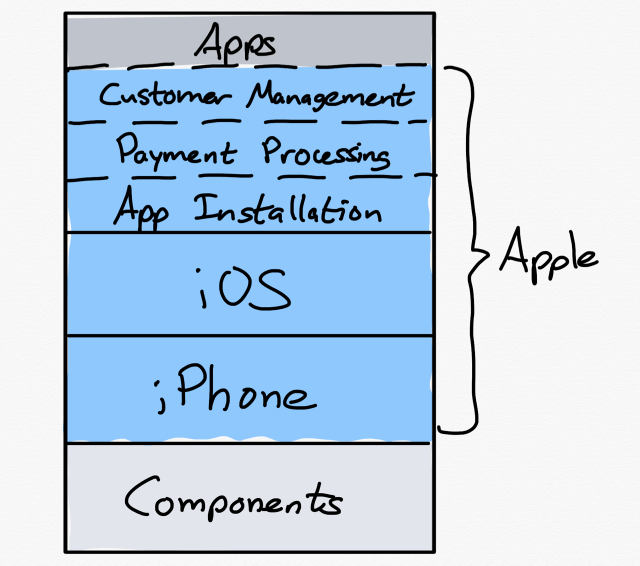
You already guessed it. It’s Apple.
Look, Apple is the poster child for controlling the whole stack.
Ever since it started making its own chips, called Apple Silicon, the Mac runs on hardware Apple designed, with software Apple wrote, in a box Apple built. Everything from one house.
That is a big reason Macs feel smooth and last so long on battery. The software and the chip were made for each other. No third parties means no guessing games.
The Mac Mini is the purest version of this idea. It is just the computer. A small square box, no screen, no keyboard, no mouse. You bring your own.
It is Apple’s whole approach shrunk down to the smallest, cheapest Mac you can buy.
So here is where we land.
On one side, the Mac Mini, one company controlling everything inside a closed Apple world. On the other, the Steam Machine, one company controlling everything but built on open parts.
These two boxes have a similar idea but opposite personalities. That is why they belong on the same shelf, and it is a shelf with almost nothing else on it.
Now let’s compare the two “boxes.”
Vertical integration is what got us arguably the best value laptop of this decade.
Here’s a link to my article where I discuss the MacBook Neo and how it changed the laptop game for us all.
The Price Argument
We just can’t ignore price because it is the roughest part for Valve.
The base Mac Mini with the M6 chip starts at $899 (once it ships this month).
For that you get Apple’s M6 chip, 16GB of memory, and 256GB of storage, in that tiny 5-inch square. It is still one of the best value computers you can buy.
The Steam Machine starts at $1,049. That is about $150 more than the Mac Mini before you even start.
The funny part though:
The base Mac Mini used to be even cheaper. It went for around $599 until May 2026. That’s when Apple killed off the cheapest version and bumped the entry price to $799.
Then later in August of this year, Apple announced the Mac Mini with the M6 chip and it has gone up $100 in price. It will ship this month.
In a way, the Mac Mini had its price bumped two times just this year.
When a company like Apple has to raise prices in that way, you know things are getting bad!
If you read my article on RAM crisis, I mentioned Micron leaving the consumer memory business and warned that RAM prices were about to punch everyone in the face.
Well, that was the punch. Both Valve and Apple raised prices in 2026 for the same reason. Nobody escaped it.
To be fair to Valve, you are not being ripped off.
GamersNexus priced out building an equal box from parts and landed around $979, so Valve’s $1,049 is close to what a similar machine would cost you to build yourself.
You pay a small premium for something tiny, quiet, and pre-built. But close to fair is not the same as cheap.
And against an $899 Mac Mini, the Steam Machine has to earn that extra cash.
SteamOS Is Secretly a Really Nice Desktop
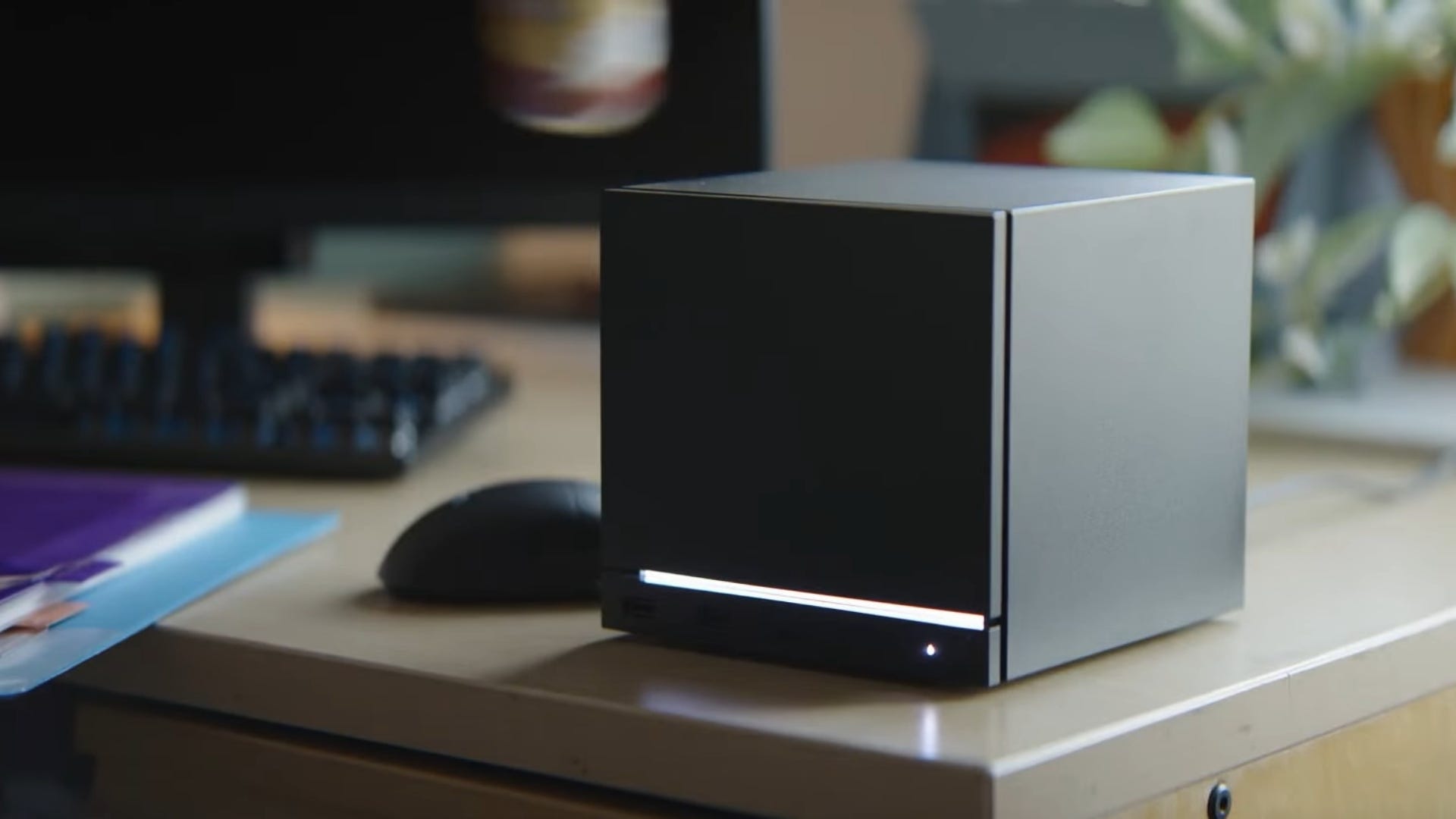
Here is the part that genuinely surprised people, and it is the most interesting bit of the whole story.
SteamOS, the software on the Steam Machine, is not just a game launcher.
Underneath, it is a full desktop operating system just like Microsoft Windows.
Unlike Windows, though, it is built on Linux, the free and open-source system that quietly runs a huge chunk of the internet’s servers.
On top of that Linux base sits a desktop called KDE Plasma, which looks and behaves a lot like Windows, with a taskbar, windows, and a menu.
Getting to it is easy. You tap a reboot to desktop button, wait a few seconds, and the gaming interface drops you into a normal desktop where you can browse, write, and do computer stuff.
This is the part Linus fell in love with, and his examples say it best.
His oddball high-resolution monitor was detected right away. The settings menus are simple instead of buried. Mouse pointer acceleration is turned off by default, which is exactly what you want.
The biggest thing is that there is no bloatware shoved in your face and no pop-up nagging you to buy a subscription.
And this last part is the quiet killer.
Windows in 2026 keeps pushing ads and pop-ups at you inside your own computer. And plenty of people are sick of it.
Linus put it perfectly. He said a product you pay for should feel comfortable out of the box, and he is right.
SteamOS feels like software that respects you and gets out of your way. That is the whole job of an operating system. When an OS does its job right, you won’t know about it.
Apps come through a system called Flatpak, which is basically an app store for Linux that keeps each program tidy in its own box. Chrome, VLC, OBS, a calculator, the usual stuff.
It is not as stuffed as Windows or Mac for random software, but for everyday needs it covers a lot.
The modern SteamOS wouldn’t exist if it weren’t for a revolutionary piece of hardware. I’m talking about the Steam Deck.
Here’s my linked article that goes over how Steam Deck revolutionized handheld consoles and got us an alternative to Windows.
The Immutable OS Thing Explained
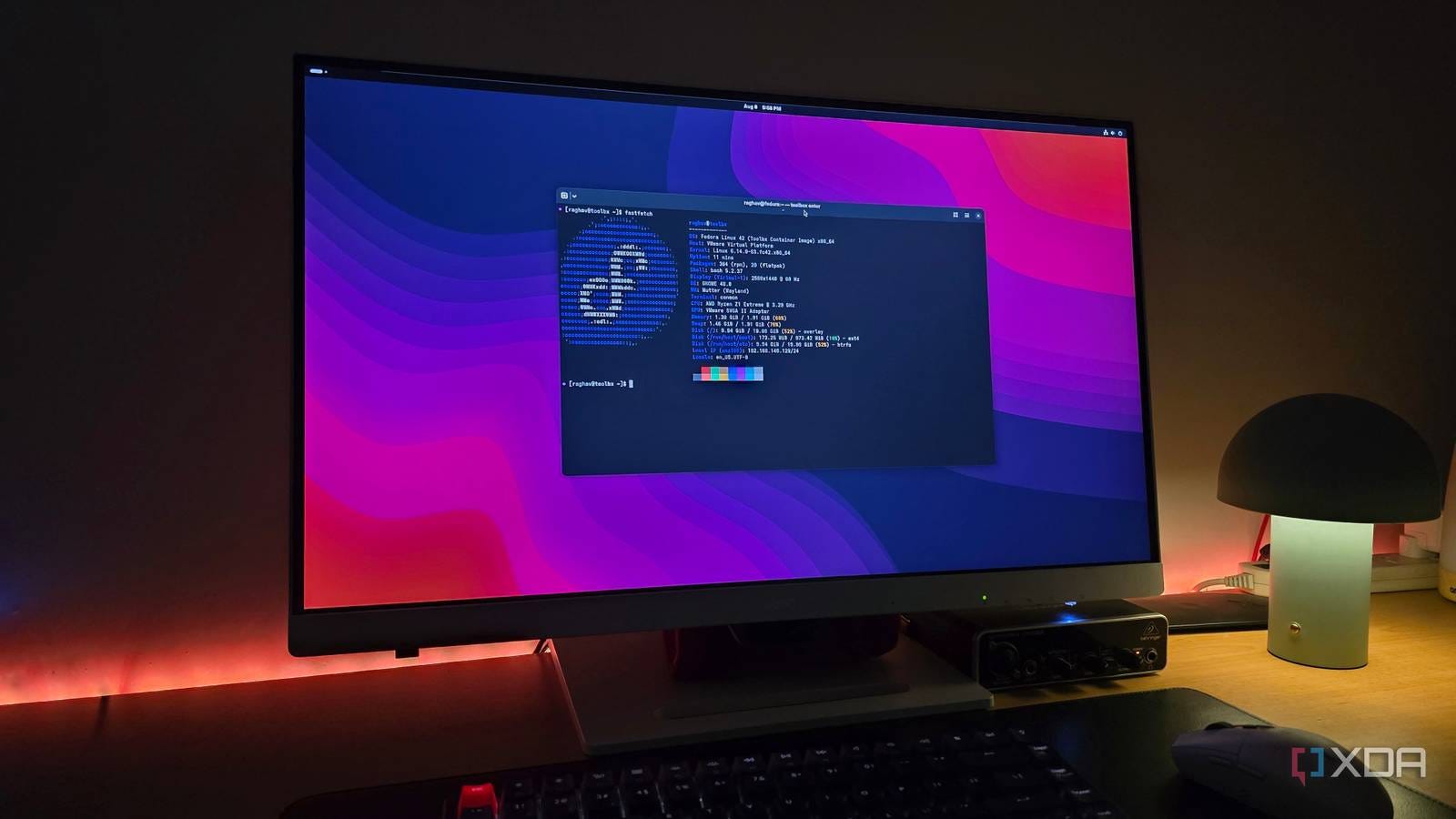
SteamOS is what people call an immutable OS.
In plain terms, the core of the system is locked, and it resets itself back to normal every time you reboot. Install something the normal way and it survives. Install it outside the normal system, and a reboot wipes it.
Your files and games stay where they are, but deep changes to the system itself get wiped.
The upside is that it’s pretty hard to break SteamOS. On a normal computer, you can mess up one setting or delete the wrong file and suddenly nothing boots.
On SteamOS, if things go sideways, a restart puts the core back the way it should be. For a regular person, that is fantastic. It is really hard to shoot yourself in the foot.
The downside shows up if you like to tinker.
Linus talked about this too: he installed a small app outside the normal Flatpak system to get an audio device working, and after a reboot the whole thing reset and stopped.
That is the tradeoff SteamOS makes, and for most people it is the right one. For tinkerers, it is the one thing to know going in.
Rough Edges Around the Cube
I love Valve but I won’t oversell the Steam Machine, so let’s talk about its rough edges.
The biggest miss is the ports.
The Steam Machine does not have USB4 or Thunderbolt, which are the fast connections that let you run a whole desk setup, monitor and drives and everything, through a single cable.
Its fastest USB-C port is quick at 10 gigabits per second, but it cannot even output video to a monitor.
It also uses regular Gigabit Ethernet instead of the faster 2.5 gigabit kind, which can be an issue for some.
Then there are the small Linux annoyances that pop up in daily use.
Pulling video files off an iPhone turned into a real headache, mostly thanks to how Apple locks things down, and Linus ended up doing the transfer on Windows instead.
And middle-click auto-scroll, the handy trick where you click the scroll wheel to glide down a long page, just does not work properly on SteamOS yet.
None of these are dealbreakers on their own though. But stack them together and they remind you this is a gaming-first machine wearing a desktop hat, not just a work computer.
The Mac Mini Isn’t Perfect Either
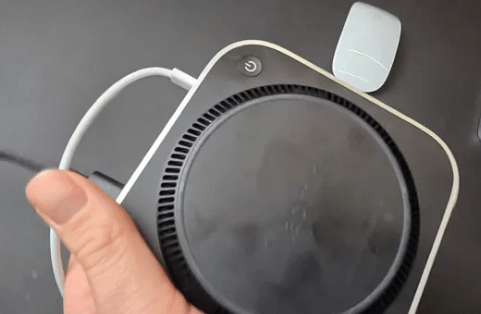
Just like the Steam Machine, the Mac Mini has its own rough edges.
Its big issue is that you cannot upgrade it at all.
The RAM and storage are soldered in at the factory. Whatever you buy on day one is what you have forever. There is no popping it open to add more later like you can with the Steam Machine.
And Apple has historically charged brutal prices to bump those specs up front.
Want more storage or memory? Apple’s upgrade pricing is famously steep, and it pushes that $899 starting price up fast.
The Steam Machine, with its openable case and swappable parts, clearly wins on repairability and living a long life.
The Mac Mini is also a closed world. You run macOS, and that is that. Apple does not give you an escape hatch.
The Steam Machine is the opposite. You do not like SteamOS? You can wipe it and install Windows, and Valve is completely fine with that. That freedom is a real point in its favor.
And of course, the Mac Mini basically cannot game. For a lot of buyers that does not matter one bit. For others it is the whole reason they showed up.
More Choice for the Rest of Us
This is the crux of this whole discussion.
For years, if you wanted a computer, you basically had two choices.
Buy into Apple’s world, where everything is smooth but closed and you play by Apple’s rules.
Buy a Windows PC, where you get freedom but also driver issues, the bloat, and now the ads.
The Steam Machine quietly adds a third door.
It takes Apple’s best idea, one company controlling the whole stack, and builds it out of open parts instead of a walled garden.
As an end-user, you get the smoothness of a tightly built machine and the freedom to crack it open and do what you want.
Both Valve and Apple decided the way to make a great small computer is to control the whole stack.
Apple did it with a closed system. Valve did it with an open one.
And for the first time, there is a real desktop that is neither Windows nor Mac, one that a normal person can just plug in and use.
Linus called 2026 the year of the Linux desktop, and watching the Steam Machine, it is hard to argue.
The point isn’t a comparison between the Mac Mini and the Steam Machine.
It is that the choice finally got wider for the end-user.
And more options means more competition, which is always a good thing for all of us.
If you liked reading through this free article, a share to someone as curious as you would be really cool. Just use the blue button below:
Similar Articles from SK NEXUS


Further Learning
I Love The Steam Machine More Already - WAN Show June 26, 2026
Valve Steam Machine Review: GPU & CPU Benchmarks, SteamOS Test, Thermals, Noise, and Price
Valve Steam Machine, Desktop SteamOS, Steam Frame VR, & Controller
The Steam Machine is the most ambitious game console I’ve ever played
The Steam Machine is actually a Mac mini competitor, but not in the way you think
Apple to Raise Prices Due to Memory Chip Crunch, Tim Cook Says
Apple’s new Mac Mini has fresh M6 and M5 Pro chip offerings — and higher prices
Apple’s latest Mac Mini runs on a new M6 chip, and starts at $899