



Hey There👋
Just when you thought this year can’t get much exciting, Valve completely takes the gaming world by storm as 2025 comes to a close.
This November, Valve, the company infamous for not being able to count to 3 just did.
Instead of Half-Life 3, the company dropped announcements for 3 pieces of hardware that it’s planning to release next year.
Out of the 3 devices, Steam Frame is a completely new VR headset that is aimed for PC gamers. It is not just Valve’s new headset but a device that brings in some of the coolest tech in VR space.
From a technology POV, Steam Frame has some shiny new features that no headset in the market currently has, such as foveated streaming, running SteamOS and having a built-in translation layer for x86 games.
Because I really like the bleeding-edge of technology, and I need a reason to talk about Linux whenever I can, I am writing this article to nerd about some of the stuff that Steam Frame brings to the scene and its potential impact.
The Release Announcement
Six years ago, Valve announced their first VR game and alongside it, they released Valve Index, their first VR headset. It was their entry into virtual reality world.
The original Valve Index sold well over 149,000 units and costed around $1,000 for a full-kit that included the headset, controllers and the base stations for tracking.
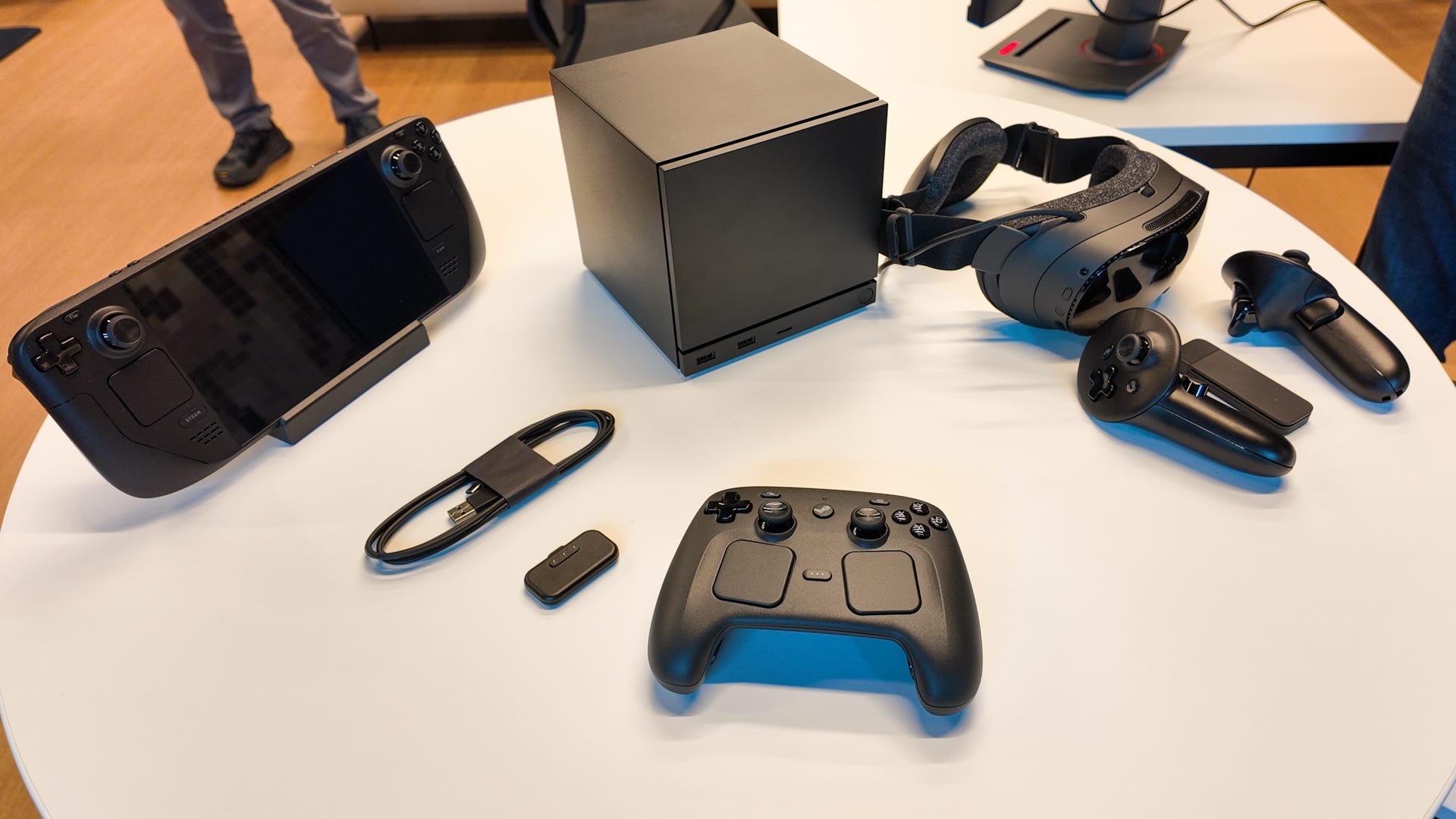
On 12th November 2025, Valve announced 3 new hardware products that they’re planning to launch in Early 2026:
Steam Frame - Frame is Valve’s latest VR headset aimed for PC gamers
Steam Machine - It is Valve’s console and a PC
Steam Controller - This is the second controller by Valve that has the same name as the original Steam controller
For this article, I’ll specifically be discussing the Steam Frame. We will go over the Steam Machine and Steam Controller some other day.
Disclaimer: Valve just announced their new hardware. The pricing and final reviews would only come after launch.
At this moment, I’m using first impressions by reputed reviewers/tech outlets that were invited to test out Steam Frame in-person at Valve HQ.
Technology Steam Frame Brings
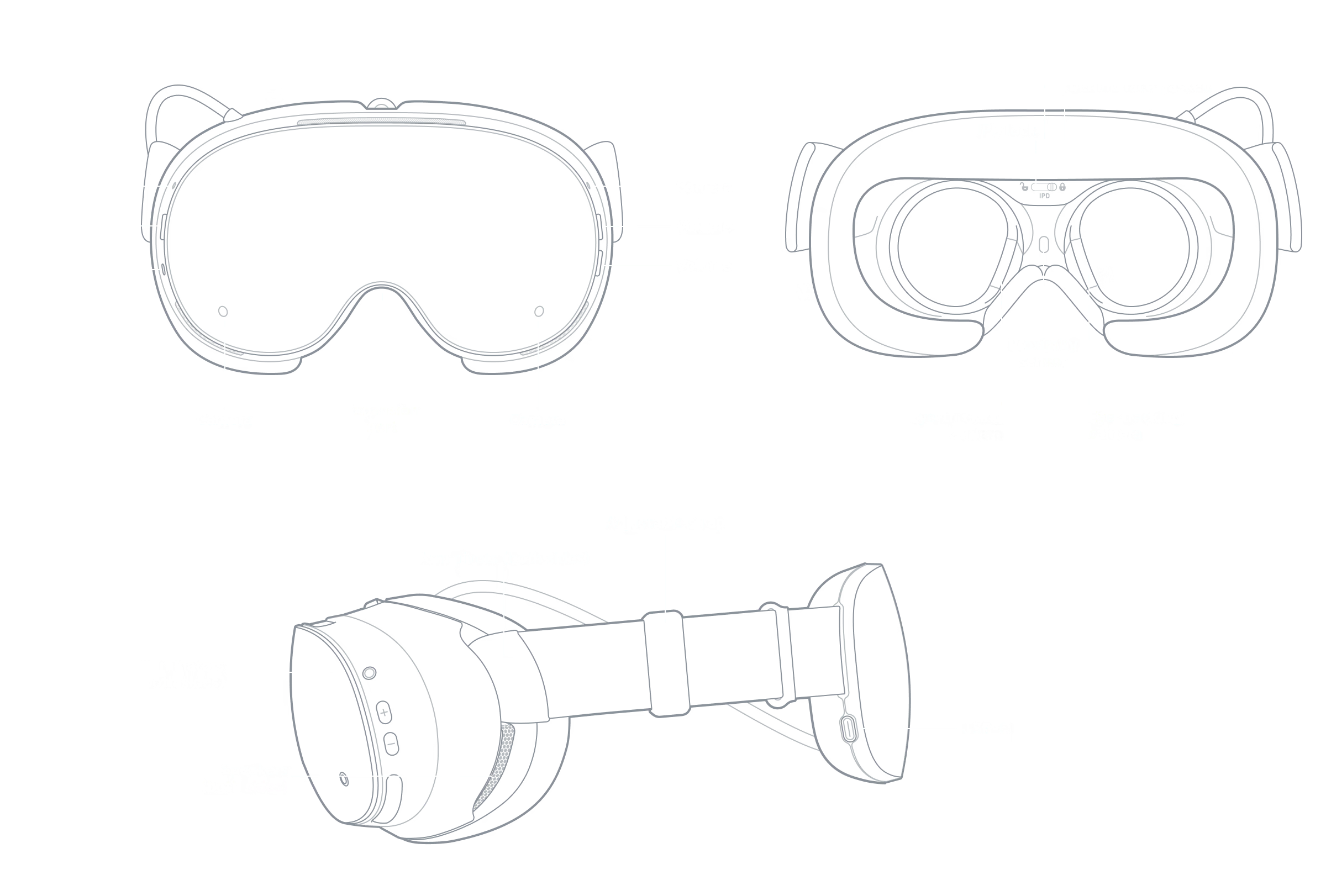
The Steam Frame isn’t just any VR headset. As is typical Valve fashion, the company tries to do something new when it comes to most of their projects be they games or gaming hardware.
And Steam Frame is no stranger to Valve’s philosophy. Their latest VR headset has some really unique features up its sleeves.
This article would be far too long if we discuss each of the technologies behind the Steam Frame so instead I’ll discuss the major features that the Steam Frame brings in brief sections.
SteamOS on VR
Steam Frame is the first VR headset in the market that is running a full linux-based OS (SteamOS) natively.
Most VR headsets before the Frame have used custom versions of Android or Windows for PC-based systems but the use of SteamOS integrates it well into the ecosystem that now exists because of the SteamDeck.
Other than SteamOS, some developers have speculated that AndroidVR may be configured on the Frame because Valve doesn’t plan to restrict the software used on the Frame.
Whether AndroidVR gets supported is a speculation and something not confirmed by Valve at this point.
Native Android Game Support
The Steam Frame uses the same snapdragon chips from Qualcomm that most of the world’s Android phones uses.
The Verge confirmed that the Steam Frame can use the same Android APKs developers already use to bring their apps to phones and Android-based VR headsets such as the Meta Quest.
Valve is specifically hoping to attract some of those Meta VR game developers, rather than just any kind of Android app you might find on a tablet or phone.
Valve developers confirmed that Android apps won’t take any performance hit because they natively run on the ARM-architecture hardware.
If you don’t know what ARM architecture is, I’ve got you covered. Early this year, I did an article explaining what ARM architecture is, How it is different and why it is recently making serious inroads into our digital lives.
The article is linked below:
ARM vs x86 - What You Need to Know

This article is a companion piece to the Tech Made Fun Episode - TMF 020 - PCs Getting Arm'ed Up - Why You Should Care
Foveated Streaming

The Steam Frame is a wireless VR headset focused for gamers. This means that it has to have a good amount of focus on balancing graphical fidelity and low-latency because it doesn’t use a wire.
The Steam Frame is a wireless-first headset. Unlike wired headsets, it has to balance games running on its double 4k 144hz screens on a battery, all through a wireless USB dongle.
On a wireless VR headset you can’t just crack the visual fidelity to maximum and expect to drive double 4k screens for multiple hours without visual artifacts. That’s where Foveated Streaming comes in.
Foveated Streaming is a technique that the Steam Frame uses to optimize the content a person engages with inside the headset.
It works similar to Foveated Rendering by tracking eye movement of the player inside the headset. The scene that the player is looking at any given time is rendered at a higher visual fidelity than the out-of-focus content.
As the player moves his eyeballs, the focus switches instantly to the next scene. But Valve is using high quality compression for focus areas and this improves latency during the wireless operation through the dongle.
Foveated Streaming vs Rendering
Foveated Streaming is Valve’s technology while Foveated Rendering is a known concept in the VR space. Both are different technologies with a similar goal.
The goal of both of the technologies, is to focus on the content that the user’s eyeballs are looking at and doing it fast enough so that the user cannot pick it up.
They spares transmission bandwidth that wireless headsets have limited amount of compared to wired headsets, reduce GPU load and improve latency.
But a critical difference between the two is implementation.
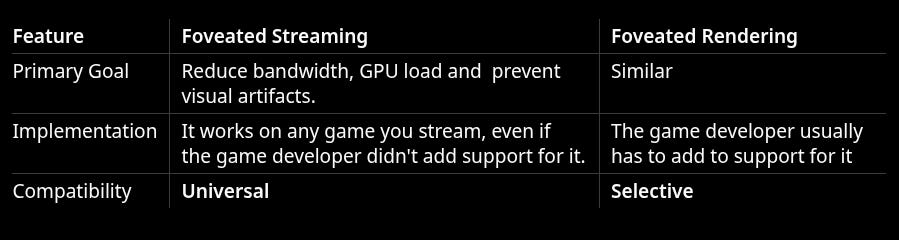
Foveated Rendering is implemented at game-engine level. This means that game developers have to support that for each of their games. But Valve’s approach doesn’t need the devs doing extra work on their end.
For those with the Steam Frame, they can just enable Foveated Streaming even across games that don’t have Foveated Rendering support because it works at the headset level.
The first impressions of Foveated Streaming by initial hands-on reviews are pretty positive. Most of the reviews mention that the technology as indistinguishable even when reviewers tried to move their eyeballs quickly to catch it.
But we still have to wait for the final product and the complete hands-on reviews to fully know if the feature is as described in the initial reviews.
The Valve Ecosystem

It is quite clear that through the launch of the Steam Machine, Steam Frame and Steam Controller, Valve is pushing for more than just new hardware release.
Almost a decade after announcing the original Steam Machine, 2026 is when Valve can finally start showing off their ecosystem that is the antithesis to Windows gaming.
It appears Valve is building its own ecosystem. Ever since the release of Steam Deck, Valve challenged the dominance of Windows as an Operating System for games.
Through the help of the open-source community, Valve showed that an open-source ecosystem could work for not just gamers but developers too.
Because of the success of SteamDeck, Valve has already cemented itself as a force in the portable handheld space. Now, it is eyeing not just VR but consoles, through the Steam Frame and Steam Machine respectively.
The glue that binds all of Valve’s devices is SteamOS which is built on open-source technologies that anyone can benefit from. Anyone can just pick up Valve’s Proton Compatibility layer and build their version of SteamOS if they don’t like the official one.
What we don’t know about Steam Frame?
As with most products that haven’t shipped, there are some things that we would only find out when the product launches.
We just have to wait for people to get the hardware in their hands to test it out themselves and share their experiences.
Here are some of the things about the Steam Frame we don’t have much information on:
Pricing
In the release announcements Valve didn’t announce a price for any of the 3 hardware pieces. But in an interview, Valve hinted that the Steam Frame will cost less than the full kit of Valve Index (It was $999).
The price is something that Valve intentionally kept a secret and for good reason. The uncertainty over Trump tariffs still haunts the US and any company building tech hardware around the world.
And the spurt of RAM prices globally hasn’t helped. Recently, we’ve seen prices of RAM double and triple in a matter of just a few weeks because of data-centers needing evermore memory.
The RAM situation especially is so bad that last week I went over with a friend to get him a hard drive. We were talking to the shopkeeper and found out that 16 gigs of DDR4 3200 Mhz RAM now costs 25k PKR (~80 USD).
The prices were so out of hand that the sellers were quoting prices for just a week as they were unsure if prices would further increase or not.
I remember I got a system-pulled 16 GB DDR4 2400 Mhz kit a couple of months ago for 6k PKR (~20 USD).
What this means is that no-one knows what PC component prices will be 6 months from today. We don’t know if Trump tariffs would increase prices for tech or the AI eating up our RAMs.
That’s why it’s a smart move on Valve’s end to have sealed lips on their end on the pricing front while things continue to stabilize if they do by the release.
Game Compatibility
Steam Frame is the first VR headset trying to run x86 games natively on the headset. Now, of course, it won’t run your AAA games, it’s not built for that.
But the idea is to run less-demanding games directly on the headset. The process it’s using to run the games is new and no-one else has done it before in the VR space.
That’s exactly why it remains to be seen how well that x86-ARM translation works, because run-time translation would take some level of performance and battery hit.
I think some level of configuration or tinkering may also be required just like we have with SteamDeck but it’s too early to say anything.
Wireless Experience
Valve describes the Steam Frame as a “streaming-first wireless VR headset”.
This means that the headset is designed for a wire-free setup where you can stream your games or media wirelessly without being in a web of wires like headsets.
Valve doesn’t just want the Steam Frame to be able to play VR games but it claims that the Steam Frame could stream all of the games available on Steam.
So, even if you don’t have VR games in your Steam library, you should be able to stream them just fine on the headset, and play with the Steam Frame controllers.
The initial impressions of their wireless experience are positive but it remains to be seen how the Frame actually ships and how well it performs with time.
Only complete reviews of the device can help us know if the wireless experience is as good as shown in the first impressions.
Stay Tuned to SK NEXUS for a detailed coverage of the 3 hardware pieces when the actually release next year.
Half-Life 3

Ok, hear me out for a second. This is totally based on hearsay, rumors and some monkey logic but….it seems as another Half-Life game is happening, and I’m not the only one who believes this.
You can say I’m on hopium but think of it yourself. The last time Valve released a half-life game was when the Index (Valve’s first VR headset) launched.
It looks like Valve uses Half-Life to build upon new experiments whether it’s a digital storefront or a new piece of hardware.
When it comes to hardware Valve is at its peak. It has seen the success of SteamDeck, jolted the Linux community and now it’s back at innovating in the VR space again.
Considering all this, Isn’t it a good time to release Half-Life 3 with the launch of Steam Frame and Steam Machine?
Don’t you think Valve would want to bundle one of the most anticipated games in history with their flagship hardware?
Offcourse, nothing is officially confirmed yet but there have been documented leaks of a Half-Life X project on the internet for quite a few years now.
Some trusted leakers in the community also believe that Half-Life X could be announced with Valve’s upcoming hardware next year.
Still, if Half-Life 3 doesn’t release this time, it’s just another injection of hopium for fans of the franchise. They’re quite used to it at this point ˙◠˙
Impact on Gaming Industry

A large portion of how Steam Frame will be received depends upon the pricing and its ability to live up to promises it has made. It could very well be the go-to VR for PC gaming.
At this moment, we just have the initial impressions by different creators to make an opinion on the device, and it seems like Valve is up to something.
But if the Steam Frame is received well it will have a far greater impact on the gaming industry as well as the future of Virtual Reality.
The first major impact of Steam Frame’s success would be that as more people get into the Valve Ecosystem, more video-game developers will have their games available for Linux.
Developers won’t need to provide native linux games. They would just have to work with the community to ensure they haven’t placed any obstacles in their games running on devices running SteamOS.
Valve’s original Steam Machine failed because it required developers to actually push native Linux builds for their games.
But this time, SteamOS is quite there and the newer Steam Machine would be using that as its operating system.
Another major impact would be in the VR space where the open-source software translation layer that Valve is contributing to, could be used by other companies to run x86 software on ARM.
As ARM hardware is widely adopted and the Fex translation layer matures, we will have open ecosystems built on it just as Proton Compatibility did for Linux gaming.
Some people also suggested that we may even have android apps working on the headset but this is yet to be confirmed.
What do I think?
Honestly, I can’t be more thrilled!
As someone who has yet to experience Virtual Reality headsets, I’m really interested in a wireless VR headset that cannot only play VR games but stream non-VR titles as well.
I recently picked up the original Half-Life and I can’t imagine how I can enjoy a game that was released long before I was even born. The physics still holds up even if the graphics don’t.
And knowing that one of the best shooters in the VR space (Half-Life: Alyx) is just waiting there to be experienced, makes me more excited about the Steam Frame.
Honestly, if I could afford the Steam Frame by the time it launches, I’ll probably buy it and write the first hands-on hardware review here at SK NEXUS.
So yeah, I am pretty excited about the Steam Frame. It is actually one of those gadgets that truly make you love technology. I plan to cover the Frame in more detail in the future.
I know many more of you would be as excited as I am for the Steam Frame. If you are one of those, the comments for this article are open to nerds, critics or anyone who wants to talk about the Steam Frame.
I love engaging with my readers and your comments actually make my writing better.
Thanks for the information.