
Hey there 👋
There is a good chance you have seen a drone in the sky at some point. Maybe at a wedding, a concert, or an expensive photo shoot.
And there is an even better chance that the drone was made by DJI.
You might not know the name.
But if you have ever watched a travel video on YouTube, seen aerial footage in a movie or documentary, you have almost certainly encountered DJI’s products.
The company single-handedly controls somewhere between 70 and 90 percent of the global consumer drone market depending on which segment you look at.
A 2024 estimate puts DJI accounting for over 90% of all consumer drones sold globally.
More than the numbers, the interesting part is DJI’s story.
It starts with a boy losing his remote-controlled helicopter and figuring out why it crashed the way it did.
And the funny side to this story is that he initially didn’t plan to build this giant drone company.
So, in this article I’ll start with that story of how DJI came to be, how it stands against its competition and what the future looks like for consumer drones and DJI.
The Drone We’re Talking About
Before we go further, let’s make sure we are all on the same page about what a drone actually is and how it stays in the air.
A drone, in the context we are talking about, is basically a radio-controlled helicopter with four rotors. The pilot controls it remotely, either with a handheld controller or from a phone or tablet.
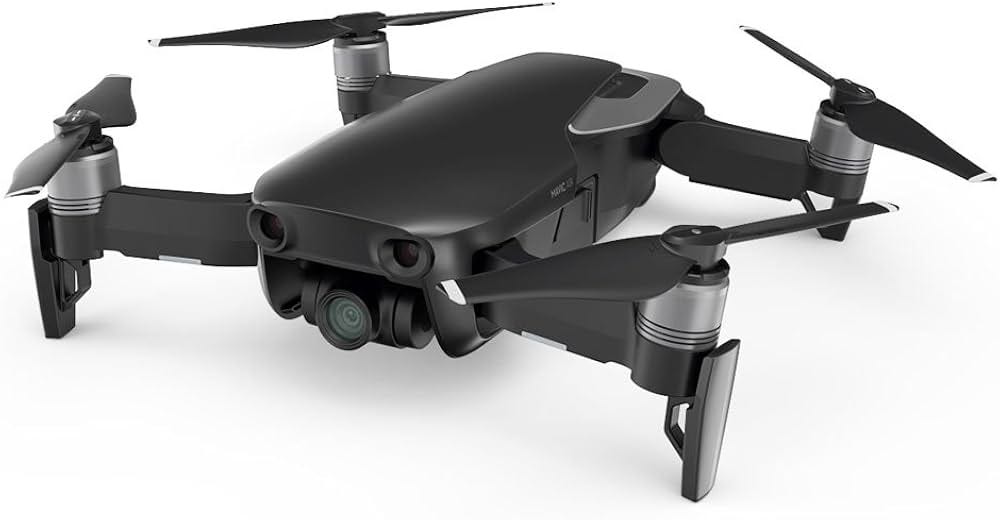
The kind of drones DJI makes are called multirotor drones. Most of the popular models are quadcopters, meaning they have four propellers arranged around a central body.
To understand how a drone stays up, think about what keeps a regular helicopter in the air. A single big rotor spins and generates lift.
The problem is that spinning a single rotor creates a rotational force that would spin the whole body of the helicopter in the opposite direction. That is why helicopters have a small tail rotor, to counteract that spin.
Drones solve this better. Two of the four propellers spin clockwise, and two spin counterclockwise. The opposing spins cancel each other out, so there is no spinning body.
To move forward, the drone tilts its front motors slightly down by spinning them a bit slower. To turn, it adjusts the speed of individual motors.
All of this happens automatically, dozens of times per second, through the flight controller chip inside the drone.
The flight controller is the brain of a drone. It reads data from sensors, processes it, and adjusts motor speeds constantly to keep the drone stable.
Without a flight controller, a drone would be nearly impossible for a human to fly manually.
This is the initial problem Frank Wang set out to solve.
Crash Of An RC Helicopter
Frank Wang is a guy born in China, in 1980.
As a child, he read a comic book in which the protagonist flew around the world in a small red helicopter. That image stuck with him and he wanted one of his own.
Our guy Frank studied hard enough that his parents eventually bought him a toy model helicopter. He crashed it the moment it left his hands.
That crash, instead of putting him off, made him obsessed. The problem was not the helicopter. The problem was control. Why was it so hard to keep these things stable in the air?
That question followed Frank Wang all the way to university.
He went to the Hong Kong University of Science and Technology. In his senior year, he took on a class project to build a flight control system for a model helicopter.
He stayed up nights working on it and presented the result to his professor, Li Zexiang.
The presentation was messy. The system did not fully work. But Professor Li saw something in Wang and brought him into the graduate program to keep developing it.
By January 2006, Wang and his small team had cracked it. The helicopter flew. It hovered. It landed. Stable and controlled.
Out of curiosity, Wang posted his result on a model airplane forum and offered the system for 50,000 Chinese yuan, which was about 7,000 US dollars at the time.
It costed him 2,000 dollars to produce it. To his surprise, people were willing to pay. And that’s when he saw a business.
In March 2006, he co-founded DJI with two teammates. The name stands for Da-Jiang Innovations, which loosely translates to Great Frontier Innovations.
His goal at the time was small. “If I can feed a team of 10 to 20 people with this, that would be great,” he said in an interview years later.
From A Dorm Room To The Skies
The early days of DJI were not glamorous.
Wang moved with his co-founders to Shenzhen after graduation, renting a small apartment and funding the operation with leftover scholarship money and support from family.
A family friend named Lu Di provided 90,000 US dollars and helped manage finances.
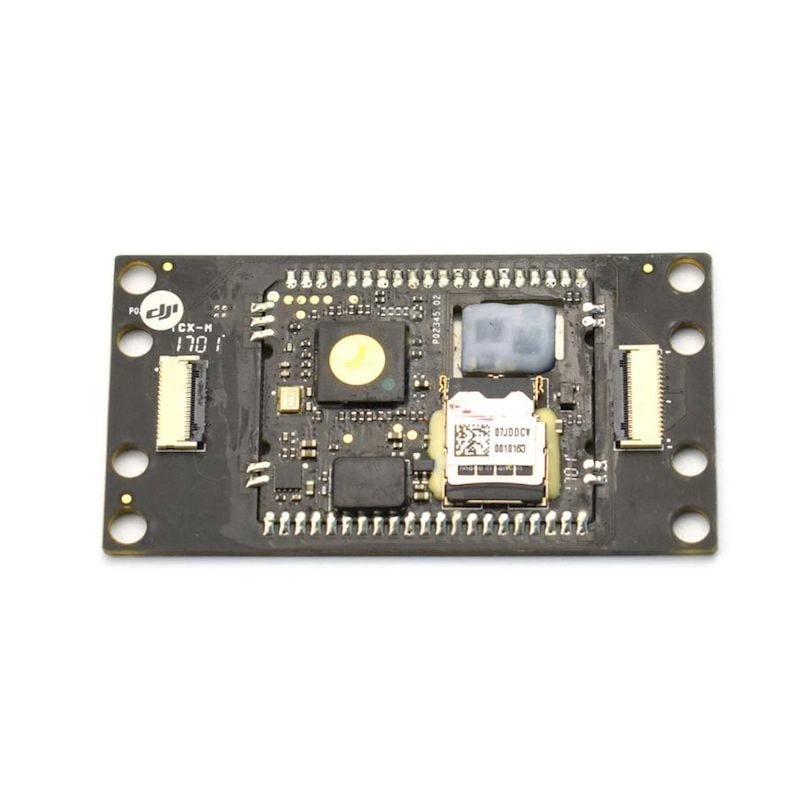
DJI’s first product was the XP flight controller series. These were not drones. They were the flight controllers that we just talked about above.
Essentially, flight controllers are brains that went inside drones that hobbyists were building themselves at the time.
Before companies like DJI existed, flying a radio-controlled aircraft was serious business.
You had to buy components from different sources, assemble them yourself, calibrate everything, and then pray it did not fall out of the sky.
Most people who tried lost aircraft in spectacular fashion.
The XP flight controller changed that for a lot of hobbyists. It came pre-built and provided stable, reliable performance out of the box.
DJI sold around 20 units a month, mostly through word of mouth and online model airplane forums.
In 2009, a team used DJI’s flight control system to fly a drone to the peak of Mount Everest. It was a proof of concept that the technology worked in extreme conditions. Orders started coming in more consistently after that.
Professor Li joined DJI as chairman. A family friend sold his apartment to invest in the company. A high school friend of Wang’s joined in 2010 to run marketing and began pushing DJI into hobbyist markets outside China.
The early years were hard. Wang was a perfectionist and an exacting boss. Most of the founding team eventually left.
There was even an incident where an early employee tried to steal DJI’s intellectual property and sell it to a competitor.
Wang wanted to sue but could not afford the legal fees. Professor Li helped settle the dispute and raised additional capital to keep the company alive.
Through all of this, Wang kept iterating on the technology.
The Drone That Made DJI
By 2012, DJI had built enough components around drones. They had the technology for flight controllers, motors, and GPS systems.
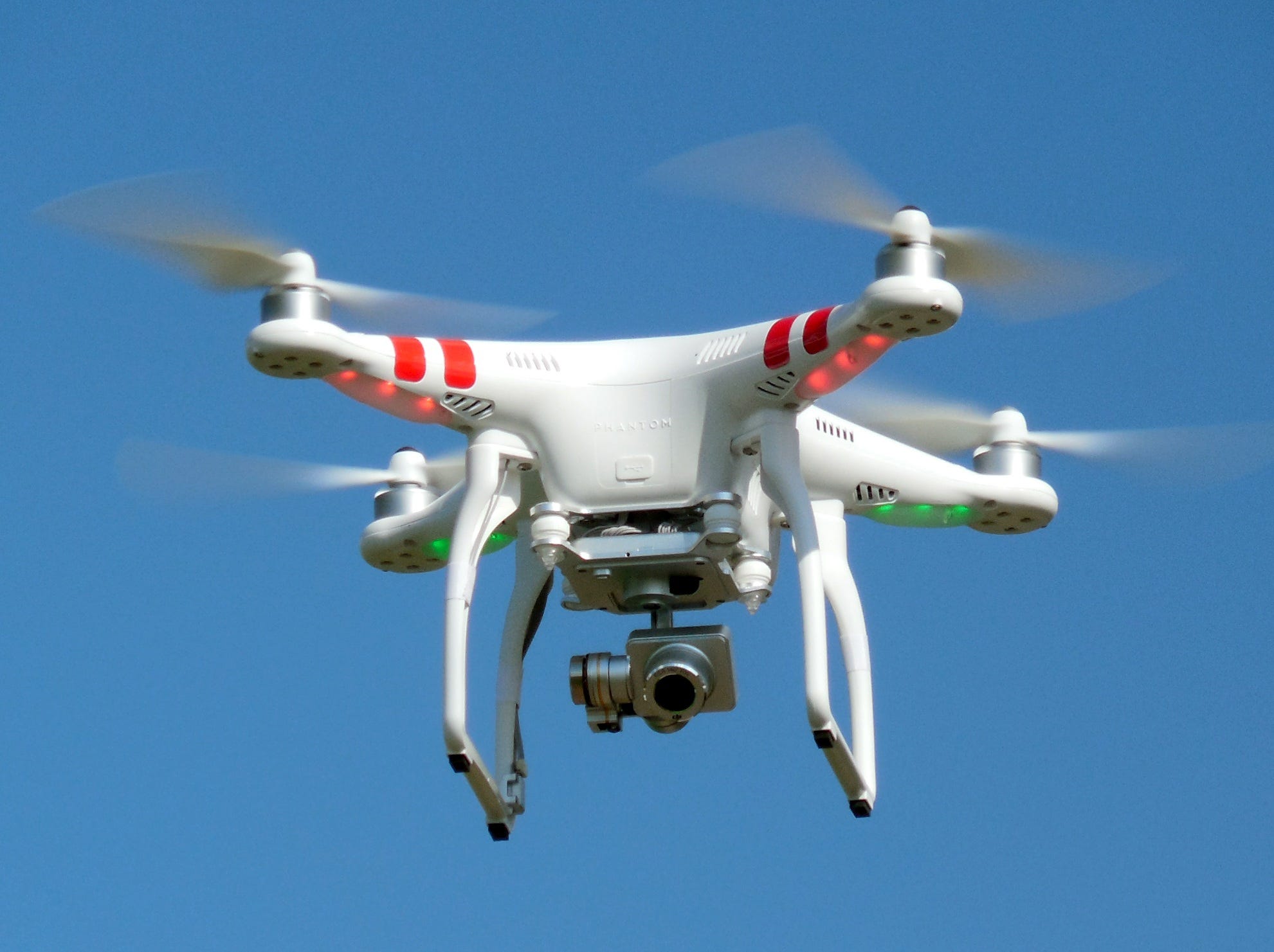
Wang decided to put it all together into a single product. And on January 7, 2013, DJI launched the Phantom 1, its first ever drone.
It was priced at 629 US dollars. It was white, compact, and required no assembly. You pulled it out of the box, charged the battery, connected a controller, and flew it.
It was the first consumer drone you could just fly. Full stop.
Every other quadcopter on the market was either a DIY kit or an industrial product costing tens of thousands of dollars.
It used GPS to hover in place automatically. If it lost signal from the controller, it would fly back to where it launched from on its own.
The press release DJI sent out was two paragraphs. It said: “You can fly your Phantom the moment you receive it.”
That year, DJI’s revenue went from about 4 million dollars to 130 million dollars.
The drone community had never seen anything like it. Filmmakers realized they could now get aerial shots that used to require hiring a helicopter crew at thousands of dollars per hour.
Wedding photographers (esp in our part of the world) realized they could shoot from angles no one had ever captured before. YouTubers could make their travel videos look cinematic too.
By 2015, DJI was the largest consumer drone company in the world. Competitors who had existed before the Phantom began quietly shutting down or pivoting away from hardware entirely.
But the Phantom was just the beginning of what DJI was building.
How DJI Builds Almost Everything Itself
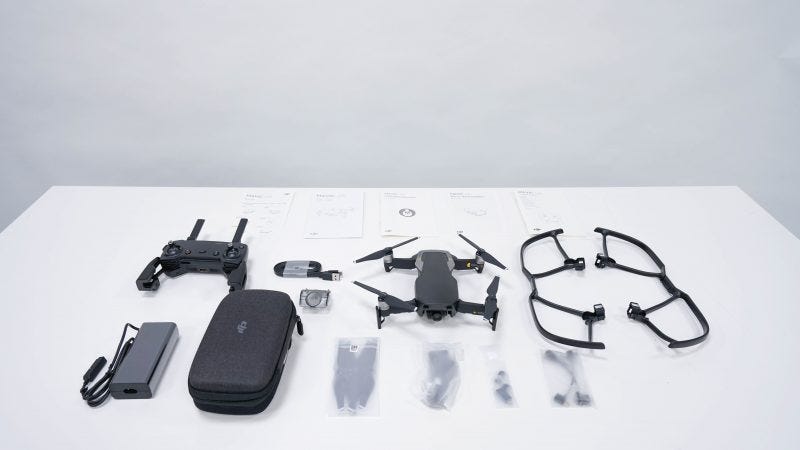
One of the biggest reasons DJI got so far so fast is that it builds almost everything in-house.
Most technology companies buy components from other suppliers and assemble them into finished products.
DJI does some of that too, but the core technology and the software is designed and produced internally.
This is called vertical integration. It is the same concept as Apple producing their MacBooks and also developing the MacOS that goes inside it.
And this vertical integration is what has given DJI enormous advantages.
Wanna know how vertical integration helped Apple beat most of the laptop competition to dust? Here’s our coverage of the MacBook formula linked here.
Let’s break down what is actually inside a DJI drone and why each part matters.
The flight controller is the central computer of a drone. It reads data from the GPS module and many other sensors.
It processes all of that information and adjusts the motor speeds constantly to keep the drone level and on course.
Without a good flight controller, even a well-built drone handles like a car with no power steering.
The gimbal is the mechanical arm that holds the camera. The whole point of a drone is to get smooth, stable aerial footage.
But a drone is always vibrating, always tilting slightly in the wind. If you just strapped a camera to the body of a drone, your footage would look like it was shot during an earthquake.
A gimbal solves this by mounting the camera on a set of motorised arms that rotate in three axes: tilt, roll, and pan.
It reads the drone’s movement and adjusts in real time, keeping the camera perfectly level regardless of what the drone is doing.
DJI developed its Zenmuse gimbal series early on, and that became one of its key advantages.
Other companies trying to build camera drones had to source gimbals from third parties. DJI built its own, at a fraction of the cost.
The transmission system handles how video and control signals travel between the drone and the remote controller.
Here DJI developed its own proprietary transmission technology called OcuSync, which it later updated and renamed.
It allows stable video transmission at distances of several kilometres with low latency. If you are watching a live feed on your phone or controller screen while flying, that is the transmission system working.
The software is what ties it all together though.
The DJI Fly app runs on your phone and gives you a live view from the drone’s camera, flight telemetry, battery status, maps, and access to automated flight modes like ActiveTrack.
ActiveTrack lets the drone follow a moving subject automatically. DJI updates its app regularly and has released developer tools so third parties can build on top of its platform.
Alongside this, DJI makes everything from standalone camera stabilisers like the Ronin series, used by film crews on the ground, to the Osmo line of action cameras and smartphone gimbals.
These products share technology with the drone division and give DJI a broader presence in the creator tools market.
All of this is manufactured primarily in Shenzhen, which is often called China’s Silicon Valley.
Shenzhen has a dense ecosystem of component suppliers, electronics manufacturers, and engineering talent all found in one city.
If DJI needs a custom motor component, there is likely a supplier an hour away.
That proximity allows rapid prototyping and iteration at a speed Western companies simply cannot match with their supply chains.
DJI holds over 5,000 patents globally. About 25 percent of its more than 14,000 employees work in research and development.
From Hobbyists to Hollywood
In 2013 the Phantom made DJI famous among hobbyists. By 2016, the company was everywhere.
Hollywood adopted DJI drones rapidly. The cost of aerial cinematography dropped dramatically.
Film productions that used to budget tens of thousands of dollars for helicopter crews could now get comparable or better shots for a fraction of the price.
DJI won a Technology and Engineering Emmy Award in 2017 for its contributions to television production.
If you’re a fan of shows like Game of Thrones and Better Call Saul, just know that they used DJI’s technology at some point.
In 2016, DJI released the Mavic Pro. It was the first foldable consumer drone.
When folded, it was roughly the size of a water bottle. It had a four-axis gimbal, a 4K camera, obstacle avoidance sensors, and a flight time of about 27 minutes.
It could fly up to 7 kilometres from the controller.
The Mavic changed who could own a drone. You could throw it in a backpack and take it anywhere.
Travel creators went from filming everything at ground level to getting shots that looked like they were from a National Geographic documentary.
DJI then moved aggressively into the enterprise and professional market.
Its Matrice series drones are designed for industrial applications.
They have interchangeable payloads, which means you can swap out the camera for a thermal imaging sensor, a LiDAR mapping unit, a gas detector, or special cameras depending on what you need.
To learn more about LiDARs and how they’re useable in self-driving cars, here’s a linked article that we wrote a while back.
Firefighters use them to see heat sources through smoke. Energy companies use them to inspect power lines and wind turbines.
Construction firms use these drones to map building sites with centimetre-level accuracy.
The Agras line is DJI’s agricultural drone series. These drones are designed to spray pesticides and fertiliser over crops with precision.
In countries like China and Japan, where farmland is expensive and labour is costly, agricultural drones have saved significant amounts of time and money.
A single Agras drone can cover farmland far faster than a manual operator with a backpack sprayer. The system uses GPS mapping to ensure even coverage and avoids spraying areas outside the designated field.
In 2019, DJI acquired a majority stake in Hasselblad, the Swedish camera company known for its extremely high-quality image sensors.
Hasselblad cameras have been used on NASA missions and are considered among the best in the world for colour accuracy and image quality.
DJI began integrating Hasselblad sensors into its professional drones, including the Mavic 3 Pro and the Mavic 4 Pro released in May 2025, which ships with a 100-megapixel Hasselblad sensor and a 51-minute flight time.
The Ecosystem Nobody Can Resist
DJI’s dominance is not just about making good hardware. They do that too but the secret sauce is when that hardware combines into an ecosystem.
If you are a drone operator, your workflows are built around DJI’s software.
Your team knows how to use DJI’s controller and app. Your editing workflow uses DJI’s video formats. Your automated missions are set up in DJI’s enterprise platform.
Switching to a competitor is not just buying new hardware. It means retraining your team, rebuilding your workflows, and accepting that the new product probably does not do everything DJI’s product does, at least not yet.
DJI also offers developer tools and software development kits that let other companies build applications on top of DJI’s drones.
This created a whole industry of businesses whose products only work with DJI hardware. Drone inspection software, agricultural analytics platforms, mapping tools, all built assuming DJI is the platform.
This is similar to how Apple created an app store ecosystem that made iPhones stickier. You stay on the iPhone partly because your apps are there, your data is there, and your habits are formed around iOS.
Mohib Ur Rehman recently covered Tech Ecosystems in a dedicated article which you can read here. You’ll understand why most companies are looking to build their own ecosystems.
DJI basically pulled off the same trick with drones.
Then there is the brand itself. For a large portion of the population, the word drone and the word DJI have become interchangeable.
In the same way people say Google when they mean search, people say DJI when they mean camera drones. That kind of brand recognition is built over years and is almost impossible to dislodge quickly.
Why The Competition Never Stood A Chance
Over the years, many companies have tried to compete with DJI. Most of them are no longer in the consumer drone business.
3D Robotics was one of the most prominent early competitors. It was a US-based drone company that raised significant investments.
By 2016 it had essentially exited the consumer drone hardware market because it could not compete with DJI on price or features.
The founder himself said: “I don’t see a way to compete with DJI on consumer hardware.”
GoPro tried too. The company known for its action cameras launched the GoPro Karma drone in October 2016, the same month DJI launched the Mavic Pro.
The Karma was recalled weeks after launch due to a battery issue that caused some units to lose power mid-flight. GoPro exited the drone market entirely by early 2018.
Skydio is the most interesting current competitor.
It is a US company that focuses on AI and autonomous obstacle avoidance. Its drones are genuinely excellent at following a subject through complex environments without crashing.
However Skydio drones cost significantly more than equivalent DJI models and their camera quality has historically not matched DJI’s.
Skydio raised 170 million dollars in late 2024 and has secured government and military contracts, but its consumer market share remains very small.
The fundamental problem for competitors comes down to a few things DJI does that are very difficult to replicate at the same time.
DJI releases new products very fast because it controls its own supply chain and does much of its manufacturing internally.
It can go from prototype to shipping product faster than most Western companies can go from prototype to first supplier meeting.
DJI prices its products aggressively because it manufactures at massive scale in China with vertically integrated components.
Its cost per unit is lower than what competitors can achieve by buying components from different suppliers.
DJI invests a lot in the user experience too.
The DJI Fly app, the return-to-home feature, obstacle avoidance, ActiveTrack, and all the intelligent flight modes are things that matter enormously to a first-time drone buyer.
A drone that is technically impressive but hard to use will not sell. DJI understood this from the moment the Phantom launched.
DJI also had the first-mover advantage. It built an ecosystem before anyone else understood what the market would become.
Geopolitics Enter The Chat
DJI’s dominance has created a serious geopolitical problem, at least from the POV of the US government.
Their concerns are straightforward. DJI drones collect data. They record video of wherever they fly, GPS coordinates, altitude, flight paths, and more.
The question governments have asked is: where does that data go, and who can access it?
The US government began raising concerns formally in 2017, warning about surveillance risks from Chinese-made drones.
In 2019, the US Army banned the use of DJI drones entirely.
In 2020, the US Commerce Department placed DJI on its government’s economic blacklist for its alleged role in a surveillance project which DJI denies.
The ban has not destroyed DJI globally.
The US market is important but it is not the whole world. DJI has been growing in other markets and its global market position remains largely intact.
But it does create a real ceiling on its ambitions in the world’s largest tech economy. DJI continues to operate normally outside the United States.
For us in Pakistan and most of the rest of the world, none of this directly affects the ability to buy or fly DJI products. We couldn’t buy them even before without breaking a bone :p
Where DJI Goes From Here?
DJI is not slowing down anytime soon.
In May 2025, it released the Mavic 4 Pro with a 100-megapixel Hasselblad sensor, a 360-degree rotating gimbal, 51 minutes of flight time, and obstacle avoidance in every direction.
It is a genuinely impressive piece of technology. But DJI is also moving into areas beyond consumer drones.
Artificial intelligence is a growing part of what DJI’s drones can do.
The obstacle avoidance systems on newer models are sophisticated enough that even a new pilot can fly through a complex environment without crashing.
ActiveTrack has gotten good enough that filmmakers use it without a dedicated drone operator.
The drone watches a moving subject and follows it autonomously while the operator focuses on framing and story.
DJI is also investing in autonomous infrastructure.
The DJI Dock 2 is a charging station that lets enterprise drones take off, complete a mission, land, recharge, and take off again without any human intervention.
This means a drone can monitor a location continuously without anyone physically present.
The FlyCart 30 is DJI’s drone delivery product, designed to carry payloads of up to 30 kilograms.
It is aimed at deliveries in remote or difficult-to-reach areas, supplying medicine, supplies, or equipment where traditional transport is slow or expensive.
DJI has also begun moving into self-driving technology.
It has a LiDAR and autonomy division that sells sensors and software to electric vehicle manufacturers for use in assisted driving systems.
This is diversification that takes DJI well beyond drones entirely.
In 2024, DJI began producing electric bicycle motors. In 2025, it released the DJI Romo, its first robot vacuum cleaner.
These expansions show that DJI sees itself as a broader robotics and autonomy platform, not just a drone maker.
The company Frank Wang he built in a Shenzhen apartment is now one of the most technically sophisticated consumer hardware companies in the world.
These guys started with simple flight controllers to drones and full-blown ecosystems and now they’re diversifying that too by going into autonomous driving, electric bicycles even when Uncle Sam has pulled his blessings.
For me personally, it’d be really cool to try DJI’s products here in my neighborhood but from what I hear it’s a pain to get hold of consumer drones in Pakistan.
They’re not only expensive and imported through grey import but even if you are able to get one, flying it is definitely a challenge that involves law enforcement agencies.
Still, even if I couldn’t buy or fly these drones today, I can certainly write for you guys and share how reading about the technology excites me. Maybe someday I might be able to fly one and write a hands-on review here on SK NEXUS.
Comment down below if you’re excited for that ;)


I always liked these drones but was never able to afford, lol.