



Hey there 👋
Recently, I was watching a podcast featuring kyla scanlon. The podcast involved discussions around the current state of the global economy.
One idea in particular that caught my attention was the little treat economy.
The little treat economy refers to the idea that when bigger purchases start feeling out of reach, people can shift their spending toward smaller things they can still afford.
Something that feels manageable and gives you a little bit of enjoyment without committing to a major expense. That got me thinking about tech because we’re surrounded by products designed to be easy to buy.
That might include a desk gadget you saw on TikTok or maybe another subscription because the device you already bought needs one to unlock everything it can do.
None of these purchases have to be particularly expensive on their own.
The problem starts when thousands of small purchases become a normal part of how we consume technology.
At the same time, creators have built entire content ecosystems around recommending these products.
Short videos make gadgets look cool and worth buying before we’ve had much time to ask whether we actually need them.
That creates a cycle I want to look at in this piece: How did everyday technology become so easy to impulse buy? And how can we become more deliberate about the technology we bring into our lives?
The Business of Buying More Tech
When Tech Becomes Impulse Buying
Walk through any social media platform for long enough and you’ll eventually hit the same type of content. Desk setups. Everyday tech (EDC) videos. A new device that supposedly fixes a problem you didn’t know you had.
There’s nothing inherently wrong with recommending products. The problem is the business model sitting underneath much of this content.
Affiliate links give creators a financial reason to turn attention into sales. If someone clicks a link and buys the product, the creator can earn a commission. That also changes what the content is optimized for.
A 2025 study of social commerce found that social proof, including the number of likes and comments around a product, can increase consumers’ impulse buying behavior.
That matters because tech is particularly easy to package this way. A 30-second video can show the product, demonstrate what it does, make it look good on a desk, and put the purchase link a few taps away.
The waste problem gets much bigger when you look at the numbers.
E-waste is discarded electrical and electronic equipment, including products that run on a plug or battery. In 2022, the world produced 62 million tonnes of it, according to the UN’s Global E-waste Monitor. Less than a quarter, 22.3%, was formally collected and recycled.
Small devices made up about one-third of that total, or 20.4 million tonnes. Only 12% of that category was formally collected and recycled.
That category includes things such as toys, small appliances, e-cigarettes, and other compact electronics. The small tech gadgets filling online storefronts and creator videos sit within this wider pattern of short-lived electronics.
The result is a market where the incentive can be to sell the product first and worry about how long it lasts later. A gadget doesn’t need to become someone’s favorite device for 5 years. It just needs to get enough attention to generate a purchase.
And that brings us to the whole trust problem.
When Product Recommendations Become Advertising
The FTC requires influencers to disclose material connections with brands, including financial relationships such as affiliate commissions, free products, and other forms of compensation. The disclosure is supposed to be clear enough that people can understand the relationship before making a decision.
A recent GoPro controversy shows why that matters.
YouTuber Markiplier became GoPro’s largest individual holder after accumulating an 8.5% stake in the company. Around the same period, he was also making content about GoPro products. His GoPro review disclosed the sponsorship, but the size of his personal investment was not disclosed to viewers at the time. The investment only became public through his SEC filing.

That disclosure is important because it allows a viewer to understand that a video is sponsored and that the person recommending the product owns millions of dollars worth of the company.
I’ve previously written about this problem in my piece on influencer marketing. In the post, I looked at how affiliate marketing works and why disclosure has become harder for audiences to evaluate:

The bigger problem is that product recommendations increasingly sit somewhere between advertising and personal advice. A “five gadgets I can’t live without” video can look like a genuine recommendation. But if the creator earns money from those products, or has another financial relationship with the brand, that context changes how the recommendation should be understood.
When Big Purchases Feel Out of Reach
Why Small Purchases Feel Easier
This brings us back to the idea that started this article.
When bigger purchases feel out of reach, spending can shift toward things that are easier to afford.
Economists have used the lipstick effect to describe a similar pattern. The idea is that during periods of economic pressure, people may cut back on expensive purchases while continuing to spend on smaller luxuries that provide some immediate satisfaction.
The current version of this idea has become the little treat economy.
A 2026 SurveyMonkey study found that 62% of Americans buy small, affordable treats at least once a month, with 52% of those people keeping each purchase to $25 or less.
That helps explain why a $30 gadget can feel very different from a $1,000 purchase.
The gadget is small enough to justify. You don’t have to save for months or make a major financial decision. You see it, like it, and the price feels manageable.
Tech fits this pattern particularly well.
None of these purchases looks significant on its own, but the problem is what happens when they become normal.
The Diderot Effect: When One Purchase Leads to Another
I came across another concept while reading Atomic Habits that made me think about this differently. It was called the Diderot Effect.
The idea is that buying one new thing can make the things around it feel out of place, which creates a reason to buy more.
The concept comes from the French philosopher Denis Diderot. After receiving a beautiful scarlet dressing gown in the 18th century, Diderot found that everything he had suddenly looked soulless beside it. He ended up replacing other possessions to match the new robe.

Now apply this same idea to tech.
You build a gaming PC. Then your monitor looks old next to it. So you upgrade the monitor. The new monitor makes the desk look dated. You buy a new desk. Then the setup needs better cable management and RGB lighting. Your old keyboard and mouse suddenly don’t fit the look.
One purchase creates a reason for the next one.
Software can create the same loop.
The point is, the cycle may start with a cheap purchase. But it might end with something much larger and a hole in your wallet.
The Subscription Economy
When Software Became a Subscription
A lot of software used to be something you bought once.
But things don’t work like that anymore.
Adobe now sells Photoshop as a subscription starting at $22.99/month for its single-app plan. Microsoft still sells Office as a one-time purchase, but its main Microsoft 365 products now use recurring payments, with Microsoft 365 Personal listed at $9.99/month or $99.99/year.
The same model has spread across cloud storage, streaming services, AI tools, productivity software, and plenty of other parts of everyday tech.
The individual payment can feel small. That’s part of what makes the model work.
A C+R Research survey found that consumers estimated they spent an average of $86/month on subscriptions. When they went through their actual recurring payments, the number was $219. That is a whopping $133 difference every month. The survey also found that 74% of people said it was easy to forget about recurring subscription charges.
Similarly, another survey from Self Financial found that respondents had an average of 3.4 active paid subscriptions, while 59.9% said they had at least one paid subscription they weren’t using.
The numbers show how easy recurring payments can become background expenses.
And now the model has moved beyond software.
When Hardware Became a Subscription
Some companies are putting recurring payments between you and features on physical products you already bought.
Ring, for example, requires a subscription if you want to review recorded video from its cameras and doorbells. Without one, you can still view live video and respond to alerts, but recorded events aren’t available.
WHOOP takes the idea further. Its hardware is built around an ongoing membership. Cancel the membership and the device stops collecting and analyzing your biometric data.
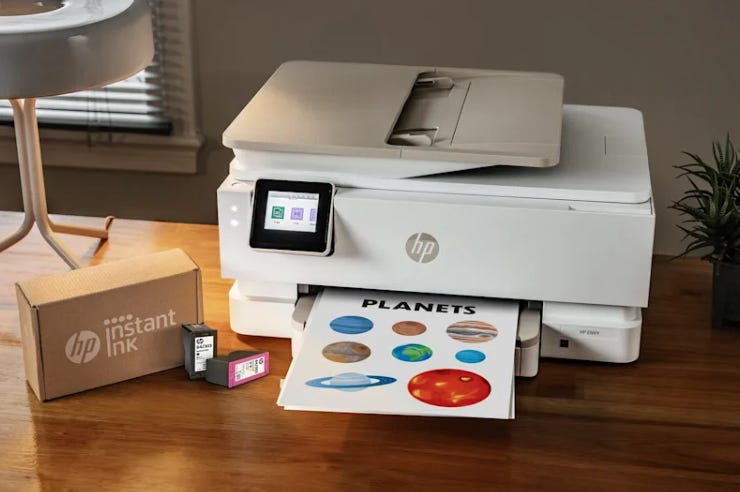
HP’s All-In printer plan goes even further. HP owns the printer while you’re subscribed, and if you cancel, your ability to print ends and you have to return the printer.
There are so many other examples as well. All of this changes what ownership even means.
I’ve written about this in more depth in The Death of Ownership, where I looked at how more of the products we use are becoming services we rent rather than things we fully control:

How to Avoid Buying Tech You Don’t Need
A quick disclaimer: We are not affiliated with any of the products or companies mentioned here, and aren’t being paid to recommend or criticize them. These examples come from our own research, experience, and the sources I’ve looked at while writing this piece.
Things That Should Make You Pause
A few things should make you stop before buying.
If a hardware product loses important functionality when you cancel the monthly fee, look at what you’re actually paying for. If the product depends heavily on a subscription to remain useful, it might be worth looking for alternatives that don’t.
The same goes for the company behind the product. If a brand appeared 6 months ago and most of its visibility comes from a sudden wave of influencer videos, take a closer look before buying. Look for independent reviews, long-term user experiences, warranty information, repair options, and signs that the company plans to support the product after launch.
One person recommending a gadget can be useful. 20 creators posting about the same product in the same week should make you curious about the marketing behind it. Look for actual testing and independent opinions rather than the same talking points repeated across dozens of videos.
Another good question to ask is whether you need the hardware at all. If a free alternative already does the same thing, spending money on another device might not make much sense.
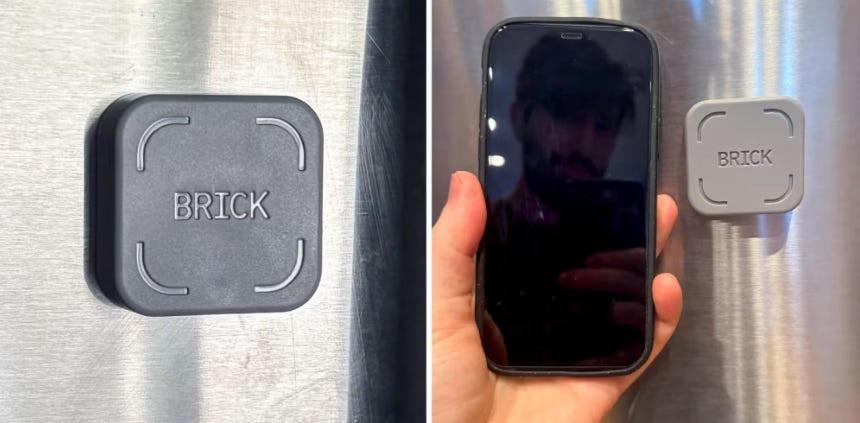
The Brick is a good example. It’s part app and part physical device, and one doesn’t work without the other. The device costs $59 and is designed to help people block distracting apps. But similar functions can already be handled through free software tools on a phone, with more flexibility and no additional piece of hardware.
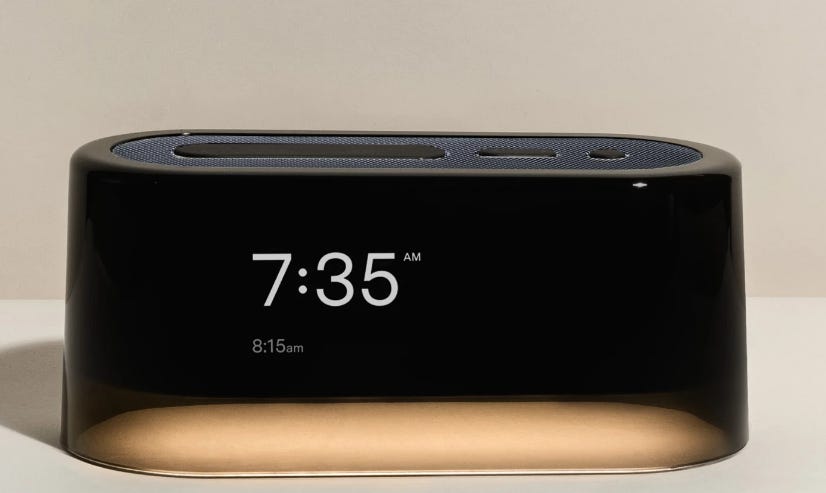
The Loftie Alarm Clock has a similar issue. The hardware costs around $200, while its Drift app-blocking feature requires a $10 monthly subscription. If the main reason you’re buying the device is the app-blocking function, free software alternatives can achieve something similar.
What Makes a Gadget Worth Buying
The opposite side is easier to explain.
Look for products with clear specifications, repair options, long-term software support, and companies with a track record of supporting their hardware. If the device works fully without an account, an app, or a monthly fee, that’s another good sign.
TRMNL is an interesting example. It is an e-ink device designed to display information from different services on a low-power screen. Its open-source approach also gives users more control over what the device displays and how they interact with it.
The same idea applies to more ordinary hardware.
I’ve used a Logitech G502 mouse and Razer BlackShark headphones for my own setup, and both have been good purchases for me. They weren’t products I bought because I saw one short video telling me they were the next must-have gadget. I researched them, compared alternatives, and bought them because they made sense for what I actually needed.

In short, whenever you are looking to use a product or software, that usually means asking a few questions like:
Does something I already own do the same job?
Will it still be useful in a few years? Does it require a subscription?
Can I repair or replace parts if something breaks?
What happens if the company shuts down the service?
Am I buying it because I need it, or because I’ve seen it 15 times this week?
Buy on Purpose, Not on Impulse
The little treat economy is only one part of the bigger picture. Tech has become incredibly easy to buy, whether that’s a subscription, or a physical product that comes with its own ecosystem of accessories and services.
None of that means you need to stop buying tech. I have a lot of gadgets myself, and I’ve spent a decent amount of money building my setup over the past year. My mouse and headphones are just two examples that I mentioned. I have plenty of other stuff too, but I didn’t want to turn this piece into a list of everything sitting on my desk.
The products and red flags I mentioned throughout this section are also only examples. The bigger point was to give you a framework for thinking before you spend your money.
And if you’ve done your own research but still aren’t sure about a purchase, you can always ask me, Yousaf Babur, or Saqib Tahir for a second opinion.
We all spend a fair amount of time looking at tech, and we’re happy to give you our take if you’re trying to decide whether something is worth buying.
With that being said, thanks for reading. I hope you enjoyed this piece.
See you in the next one.