



Hey there 👋
Sometime ago, I was reading a blog post that was related to football. But turns out the topic moved from football into something completely different.
It mentioned Ronaldo’s YouTube channel growth and how quickly it scaled after launch. That comparison then drifted into MrBeast, PewDiePie, and the bigger question of how attention moves once a large audience enters a platform.
A creator who already has global reach joins a platform built around individual discovery. As a result, existing audiences follow, algorithms amplify it further, and smaller creators operating in the same space lose relative visibility.
That led me back to a bigger pattern that has been building for years, the creator economy and how distribution works when attention becomes concentrated.
I had already written about influencer marketing and how trust functions as a form of value online. This is an extension of that thinking, focused less on marketing and more on structure behind that economy.
The goal here is to break down what the creator economy actually is, how it formed, and why the system behaves the way it does.
What Came Before the Creator Economy
Before 2007, independent creators already existed online.
Blogs, early video uploads, and podcasting communities had built audiences without relying on traditional media. Some blogs in the early 2000s reached large readerships, but the systems to support that attention were inconsistent.
At the same time, monetization existed, but it was uneven.
Google AdSense, introduced in 2003, gave publishers a way to display ads on their websites. It worked, but revenue per user was low unless traffic was substantial. Many early creators relied on a combination of small ad income, affiliate links, and direct sponsorship deals, often arranged individually with brands.
Same goes for podcasting: around 2004 and 2005, podcasts started to grow, but most early shows had no built-in monetization. They operated outside of formal revenue systems and people simply produced them because the medium was new.
Around the same time, YouTube got launched, but was acquired by Google in 2006. For its early years, creators uploaded content without expecting direct payment. That changed in 2007 with the YouTube Partner Program, which introduced revenue sharing for creators for the first time at magnitude.
Before that point, creating online content was closer to publishing as a hobby or side activity. Some individuals turned attention into opportunities later through books, consulting, or via some other work, but there was no consistent system connecting audience size to income.
What is the Creator Economy
Where the Term Came From
YouTube started using the term “creator” around 2011 as a replacement for “YouTube Star” It was a way to describe people building large audiences on the platform without relying on traditional celebrity structures.
But “creator” and “creator economy” are not the same idea.
“Creator” referred to the individual, while the “creator economy” refers to something broader, a system where millions of individuals can earn income through content, audience building, and platform-based distribution.
That second shift, from individuals to an economic category, only became widely established years later.
It took hold around 2020, when venture capital firm SignalFire published its Creator Economy Market Map. The report estimated more than 50 million people globally identified as creators and framed the space as a distinct, fast-growing economic category. From there, the term started being used more consistently across platforms and media coverage.
And the reason the term matters at all is because creators didn’t fit into existing categories. They weren’t traditional journalists or media professionals working inside institutions. They were individuals building media businesses around identity, content, and audience, without relying on institutional distribution.
A new category was needed because the old ones didn’t describe what was actually happening.
How Big is the Creator Economy
Estimates of the creator economy vary depending on what is included, but most large-scale analyses place it in the hundreds of billions of dollars.
Goldman Sachs estimated the creator economy at around $250 billion in 2023 and projected it could reach roughly $480 billion by 2027. Their research also suggested there are around $50 million creators globally, with most revenue concentrated in brand partnerships and sponsorships.
But the distribution of that income is uneven.
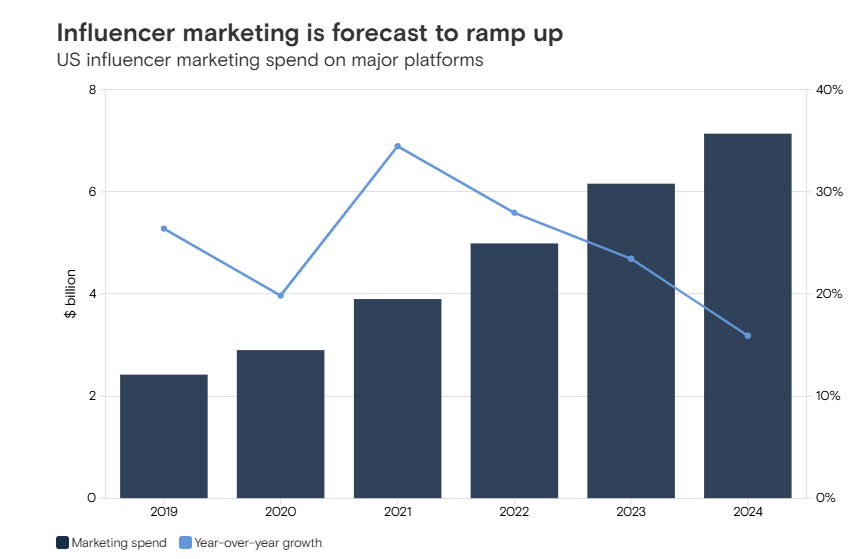
According to Linktree’s 2022 Creator Report, based on a survey of 9,500 creators, only a small share earn consistent full-time income from their work. Around two-thirds of creators describe it as a side activity. Even among full-time creators, only about 12 percent make more than $50,000 per year.
Separate estimates from Goldman Sachs indicate that only a small fraction of creators, roughly a few percent, earn above six figures annually.
The magnitude of the creator economy is large and the number of participants is even larger, but the income, however, is concentrated at the top.
What Made the Creator Economy Global
Media production used to be tied to geography. Film, publishing, and television were concentrated in a small number of cities, and getting into those industries required institutional access, or personal connections.
That changed once distribution moved online. A smartphone and an internet connection became enough to reach a global audience without institutional approval. Platforms like YouTube, TikTok, and Instagram removed the need for traditional intermediaries, while tools like Substack enabled direct publishing and monetization across borders.
Creators in South Asia, Southeast Asia, Africa, and Latin America started building audiences directly through these platforms. In many of these regions, mobile phones were the primary way people accessed the internet, which shaped both how content was produced and how it was consumed.
Distribution alone doesn’t explain the shift, though. The cost of creation collapsed at the same time. In the early 2000s, producing video or audio required expensive equipment, editing software, and technical expertise, which limited who could participate at scale.
By the mid-2010s, smartphones could record and edit high-quality video on their own due to the launch of free software products, which played a massive role in lowering the barrier for creators to work.
Internet infrastructure expanded alongside these tools, mobile data got cheaper, and upload speeds improved. In many regions, the smartphone became the primary gateway to the internet, reinforcing the shift toward mobile-first content creation.
In short, geography stopped restricting who could reach an audience. Cost stopped restricting who could produce something worth watching. Technology removed both barriers at once, and that combination is what actually made the creator economy possible.
How Removing the Middleman Created Independence for Creators
Before the creator economy, making content professionally meant working through gatekeepers.
Labels, publishers, studios, and networks controlled things such as distribution, funding, and access to audiences. Getting through them took a mix of talent, timing, and connections that most people never had.
In exchange, gatekeepers provided real infrastructure. Production budgets, marketing, legal support, advance payments. But they also kept ownership and distribution rights. Creators supplied the work and kept a fraction of the value it generated.
The creator economy removed that layer. For the first time at scale, creators could produce content without institutional backing, distribute it directly, and build an audience without anyone else deciding who got access.
That’s what independence actually means here. Not complete freedom, but the removal of institutional permission as a requirement for getting your work in front of people and keeping what it earns.
Creators vs Influencers vs Celebrities: What’s the Difference
Before we proceed further, it’s good to clear a few misconceptions about some terms that get used interchangeably, when in reality, they are totally different.
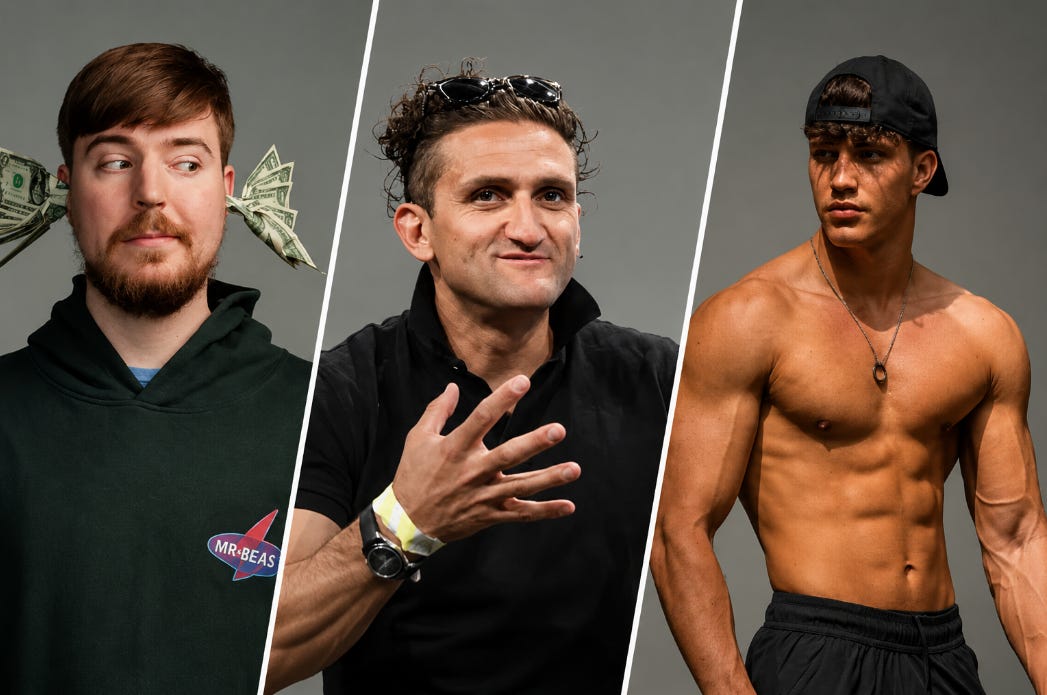
Celebrities are known for work outside platforms. Their audience exists because of offline recognition that later moved online, so their reach doesn’t depend on any single platform. Dwayne Johnson also known as “The Rock” is a good example of this.
MrBeast is also another example of Celebrity, though he started out as a creator and built his audience through the internet.
Influencers build audiences to shape behavior. Their value gets measured in attention and conversion, with brand deals and affiliate marketing at the center of the model. Casey Neistat is a good example of this.
Creators, on the other hand, build an audience around consistent output, and the audience follows the work. Joe Fazer is a good example of this.
I broke all of this down in more detail in the Business of Trust, if you want the full picture of how that economy works:

How Platforms Made the Creator Economy Possible
What Platforms Actually Gave Creators
Platforms provided four core functions that individual creators could not easily build on their own.
Distribution meant access to audiences without having to build traffic from scratch. Outside platforms, this required websites, mailing lists, and tons of other things. Platforms solved this by aggregating users in one place and routing content through existing attention flows.
Discovery came from recommendation systems. Content could now reach people who had no prior connection to the creator. In traditional media, discovery depended on publishers, editors, or programming decisions. On platforms, it was increasingly driven by algorithmic matching between content and viewer behavior.
Monetization infrastructure removed the need for external setup. Payment processing, ad systems, and subscription tools were built into the platform layer. YouTube’s Partner Program, for example, standardized revenue sharing so creators received a fixed percentage of ad revenue generated on their content.
Trust was the fourth layer. Content hosted on established platforms carried more default legitimacy than content hosted on independent sites. This reduced friction for audiences engaging with unknown creators.
The Platforms That Built the Foundation
YouTube introduced its Partner Program in May 2007, initially as an invite-only system for creators who already had significant audiences. It was the first structured link between independent content creation and platform-based income.
YouTube has since paid more than 70 billion dollars to creators, media companies, and music partners over a three-year period ending in 2023. Today, over 3 million channels participate in the program.
Patreon launched in May 2013, founded by musician Jack Conte and developer Sam Yam after Conte struggled to generate sustainable income from widely viewed online content. It introduced a direct support model where creators earn income from recurring contributions instead of platform-driven advertising alone. Revenue mainly depends on subscribers, which separates creator income from algorithmic performance.

@Substack launched in 2017 and extended the subscription model to written content. The platform is still growing as of 2026, as writers and journalists are moving out of traditional media institutions and into direct publishing.
In short, each platform solved a different part of the same problem. YouTube focused on ad-driven scale. Patreon focused on direct audience funding, while Substack focused on subscription-based writing.
How Creators Make Money
Advertising and Brand Deals
Platform advertising works through CPM, cost per thousand impressions. Creators earn a share of what advertisers pay the platform based on how many views their content generates.
CPM rates vary widely depending on niche. Finance and business content tend to sit in the $15 to $25 dollar range per thousand views because advertisers value those audiences more. Gaming content is typically lower, often around 2 to 5 dollars per thousand views. This difference is one of the main reasons niche selection has direct economic consequences beyond audience growth.
Brand deals operate separately from platform advertising. In this case, a brand pays a creator directly to feature or integrate a product. Pricing depends on audience size, engagement rate, and relevance to the product being advertised.
The relationship between audience size and revenue is not linear. A creator with 100,000 highly engaged followers in a specific niche can often command higher rates than a creator with one million followers in a general category with lower engagement.
Affiliate marketing sits between these two models. Creators share tracked links and earn a commission when purchases are made. According to Linktree’s 2023 Creator Report, around 25 percent of creators report affiliate marketing as a meaningful income stream.
You can read the full influencer marketing article here for a deeper breakdown of brand deal mechanics and affiliate disclosure:
Direct Support From Audiences
Direct support refers to income that comes directly from audiences without advertisers in between. Platforms like Patreon, Substack, YouTube Memberships, Ko-fi, and similar services enable this model.
Suppose a creator with 10,000 subscribers paying $5/month generates $50,000 in monthly revenue. That income is not tied to ad rates or algorithmic reach.
This model stabilizes income because revenue depends on subscriptions. And the other good thing about this model is that, it allows creators to produce primarily for paying audiences rather than advertiser, which affects what gets made and how consistently it is sustained.
Kevin Kelly described the underlying logic in his 2008 essay “1,000 True Fans,” published on his blog and later referenced in Tim Ferriss’ Tools of Titans. He believed that a creator does not need mass audiences to sustain a living. A relatively small group of highly committed supporters can generate stable income over time.
Products and Experiences
Products, courses, merchandise, digital downloads, consulting, workshops, and live events form a revenue layer that operates outside platform monetization systems.
Creators typically sell through third-party infrastructure like Shopify or Gumroad, or through their own websites. According to Linktree’s 2022 report, around 41 percent of creators report physical or digital products as a meaningful revenue source.
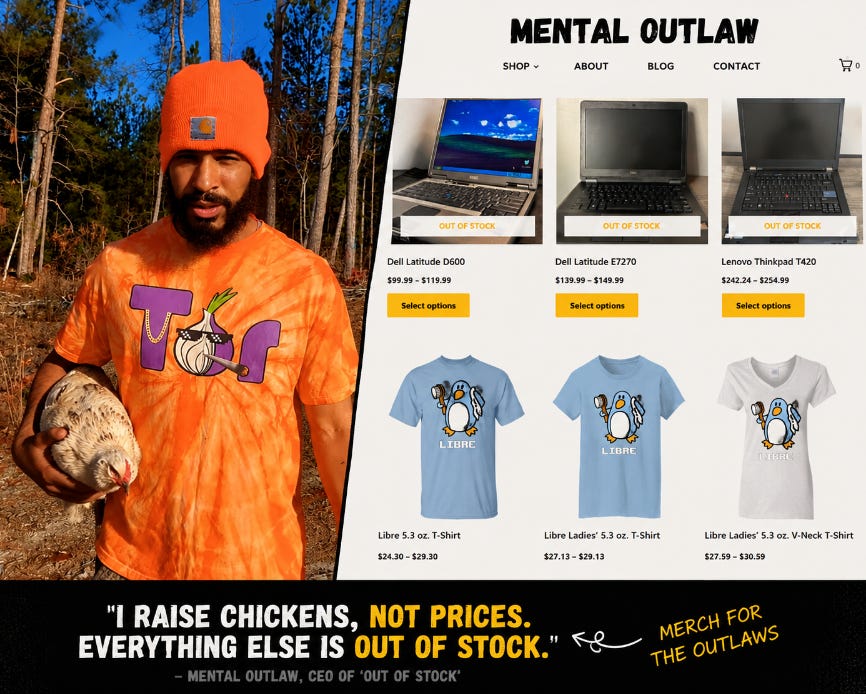
This is also one of the most independent revenue streams, but product-based income depends primarily on the direct relationship between creator and audience. If that relationship is strong enough, it persists regardless of platform changes. For many established creators, content becomes the top layer of a funnel that leads into direct sales rather than being the primary product itself.
The Reality of Making Money as a Creator
The creator economy has always been structurally unequal. Understanding this matters before Part 2 introduces AI as an accelerating factor because the model was already imperfect long before AI arrived.
Income distribution in the space follows a winner-take-most structure. Reports found that only 12 percent of full-time creators earn above $50,000 per year. Goldman Sachs estimates that only around 4 percent of global creators, roughly two million out of fifty million, earn above $100,000 annually. Between those two ends sits a large group of creators with audiences, consistency, and engagement, but without stable income.
Every monetization path in the system rewards scale in some form. CPM advertising pays per view, which naturally favors high-volume channels. Brand deals scale with reach and perceived influence. Recommendation systems tend to amplify content that already performs well, making initial traction harder for smaller creators. According to data, it takes creators an average of 6.5 months to earn their first dollar, and more than ten months to become self-sustaining. Brand partnerships often appear much later, typically around the two-year mark.
Now, don’t get me wrong, the model still works, but only under specific conditions.
A niche newsletter with 20,000 subscribers charging $8/month flips the entire game. If even 10 percent convert to paid subscriptions, that produces roughly $16,000 in monthly revenue. Add a few brand deals per quarter and occasional digital products or courses, and the result is a sustainable six-figure operation without institutional backing. The key variable is not scale alone, but audience specificity and trust built over time.
Linktree’s findings support this pattern as well. Niche creators are significantly more likely to reach six-figure income levels than broad-appeal creators.
Why?
Because a creator focused on “cybersecurity for small businesses” or “personal finance for freelancers in Southeast Asia” is not competing in a saturated attention field. The audience is smaller, but more intent-driven.
The niche, trust-based model is the exception, and it’s out of reach for most creators. It requires years of consistency, a specific enough audience, and enough trust that people convert into paying subscribers. Very few get there and the conditions that make even this narrow path work are exactly what AI is disrupting, and about to disrupt even further.
What’s Changing and What’s Coming Next
The creator economy was imperfect from the start. Income distribution was uneven, platform dependence was built in, and the creator middle class always existed in a fragile position between scale and stability. Still, it worked well enough to become a viable alternative to traditional media careers.
That balance changed as the system matured.
Platforms moved from chronological feeds to algorithmic ranking systems that prioritize predicted engagement. That change weakened the direct connection between creators and the audiences they had built over time.
At the same time, ad markets became more crowded as supply of content increased faster than demand for attention which led to lower returns per view across many categories.
Then the cost structure of content creation collapsed further. Tools that separated professional production from amateur output became widely accessible. The barrier to producing “good enough” content stopped acting as a filter.
AI now adds a new layer to everything that is happening in the creator space. It changes how content is produced, and more importantly, how much of it exists.
Part 2 of this series looks at what happens when those pressures compound, why the economics get harder, and how AI is adding another layer to an already changing system.