



Hey there 👋
If you’re into PC gaming these days you might have gone over headlines calling for Intel’s comeback.
And honestly, I get why you might be skeptical. Intel has been saying it’s coming back for years now and most of the time it was just corpospeak.
But this time something actually feels different.
See, Intel just launched their latest desktop processors and once you go over their specs and the price, you have to give them a hand. It’s exciting news from Intel since quite some time.
So let me take you through the whole story. Not just the chips that launched last week, but how we got here.
In today’s article I’ll share how Intel went from owning the chip market to becoming a meme, how AMD quietly took over, and now what these new chips actually mean for anyone buying a PC in 2026.
I’ll also talk about something that could be even bigger. NVIDIA making CPUs (Yes, the GPU company). It could be the most interesting thing to happen to PC hardware in a long time.
But first, let me explain what a CPU actually is because not everyone knows and that is completely fine.
What Is A CPU Anyways?
Before I even start let’s just establish that the words ‘processor’ and ‘CPU’ stand for the same thing.
In any computer, CPU is the brains of the operation, a tiny chip that does billions of small mathematical calulations in a second to get you to browse the internet or play games or whatever you do on your computer
A CPU generally dictates how fast and powerful your computer would be. Your PCs, smartphones, laptops - basically every computer needs a processor to function properly.
If you want to understand CPUs at a more deeper level, you can checkout my full blogs where I dive deep into Cores, Threads and what you should know when selecting a CPU for your PC. That article is linked here.
The x86 Duopoly
For about two decades now only two companies have been making CPUs for regular consumers using PCs. Those are Intel and AMD.
And it’s not because other companies cannot make CPUs for PCs but rather both Intel and AMD keep a secret to them that they don’t share with others.
That secret is the foundation of the processors both companies make. That is the x86 instruction-set architecture.
Think of an instruction-set architecture (ISA) like an underlying blueprint or manual for making processors.
At this point, x86 is decades old but only Intel and AMD have a license to it. It’s age is the reason it is the dominant platform in desktop PCs even to this day.
Having access to x86 makes Intel and AMD sort of a monopoly (duopoly to be exact) because only these two companies have license to it.
Even if x86 is decades-old, it is being challenged by a new player: ARM. It is the one your MacBooks use.
If you’re curious about ARM, I’ve talked about it too here on SK NEXUS, you can read the full article here.
That is partly why historically there has been little to no competition in the CPU market. The usual trend is that the dominant player gets lazy with time and stops innovating.
However this is changing because a new player is entering the ring. I’ve talked more about it later in the NVIDIA section.
Intel Before Ryzen
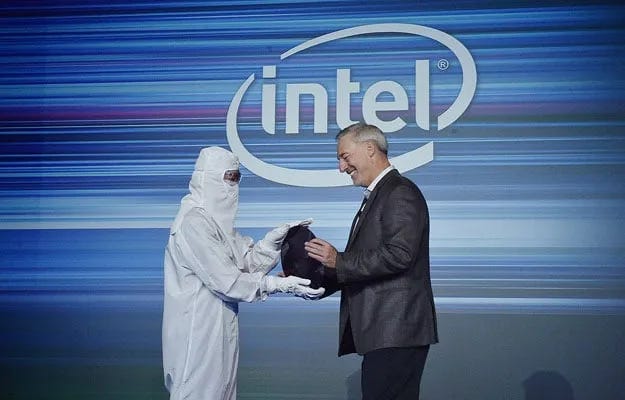
For a long time, Intel has been the dominant CPU maker in the desktop and enterprise computer markets. The company used to own the PC world.
It was called ‘Chipzilla’ for its market dominance because it single-handedly controlled somewhere around 80 to 90 percent of the CPU market for decades.
However, Intel’s insane success made it lazy.
If you bought an Intel CPU in 2015 and then looked at what Intel was selling in 2017, the improvement was honestly pretty borderline.
Just to give you an idea how lazy Intel got, I wrote a deep-dive article discussing the major issues with Intel that made it lose the ‘Chipzilla’ title, the deep-dive article on Intel is linked here.
Intel was stagnating from the technology side in the mid 2015-era and around that time AMD showed up with a punch to Intel’s face.
AMD’s Ryzen Changed Everything
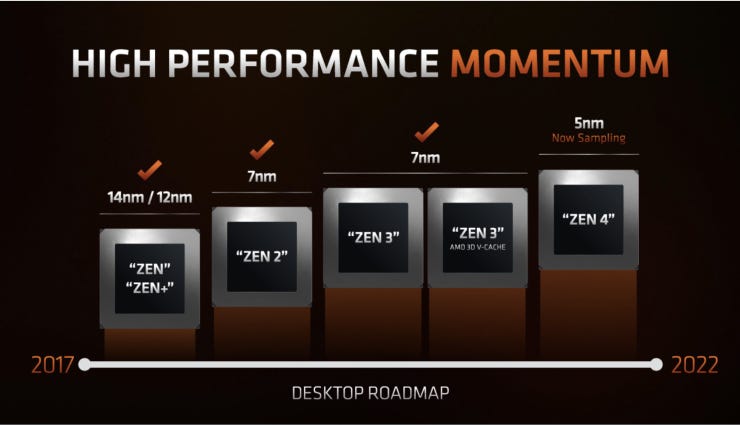
In early 2017, AMD released its Ryzen processors. Those were the first generation processors on their new architecture they called Zen.
Ryzen brought something Intel wasn’t offering at those prices: more cores, more threads, better multitasking, and a lower price tag.
The second generation Ryzen processors (Zen 2) in 2019 were a big leap forward. Third generation Ryzen processors (Zen 3) in 2020 finally took the gaming crown away from Intel.
By 2020, recommending Intel over AMD for most PC builds was genuinely hard to justify.
AMD had more than doubled its market share in the desktop segment.
Intel tried to respond by stuffing more cores into its chips and pushing clock speeds higher. But efficiency was still not there.
The chips ran hot, used a lot of power, and fell behind in too many comparisons.
And that’s when things started to get genuinely bad for Intel.
Intel’s Dark Years
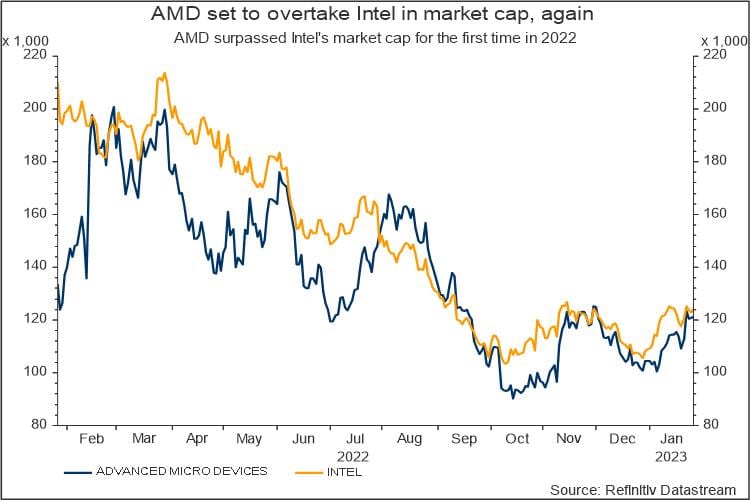
From around 2019 through 2024, Intel was struggling real hard.
But the worst part of this whole era was what happened with Intel’s 13th and 14th generation processors.
People randomly started noticing that their latest-gen Intel CPUs were quietly dying. Not just slowing down or underperforming. Physically, permanently degrading over time.
The 13th and 14th generation i9 processors (Intel’s top consumer chips) were the main culprits. Systems would crash. Games would fail. Blue screens of Death became a daily thing for some users.
What was happening is that these chips were being pushed with too much voltage for too long. This was causing permanent physical damage to the intel inside (pun intended).
And the worst thing was that this damage could not be reversed by any software update. Intel first tried to shift blame to motherboard manufacturers. Then it released patches. Multiple rounds of them across 2024.
Eventually Intel admitted there was a fundamental firmware-level issue with how the chips handled voltage, extended the warranty on affected chips to five years, and told owners to update their BIOS.
The update patches could prevent future degradation on newer chips but they could not undo damage that was already done. If your chip had already degraded, it stayed degraded.
And that is when consumers started losing trust.
AMD had none of these issues during this period. Ryzen chips just worked. Stable, efficient, reliable.
AMD’s market share was also growing.
Intel went from being the leader in chip manufacturing to a company looking to just survive especially after Ryzen gave it a punch to the face.
We covered Intel’s decline in a lot more detail starting from the time they missed the smartphone wave and lost Apple as their customer.
If you’re interested in learning more about Intel’s issues, here’s our deep-dive article which you can read here.
Intel’s 2026 Comeback
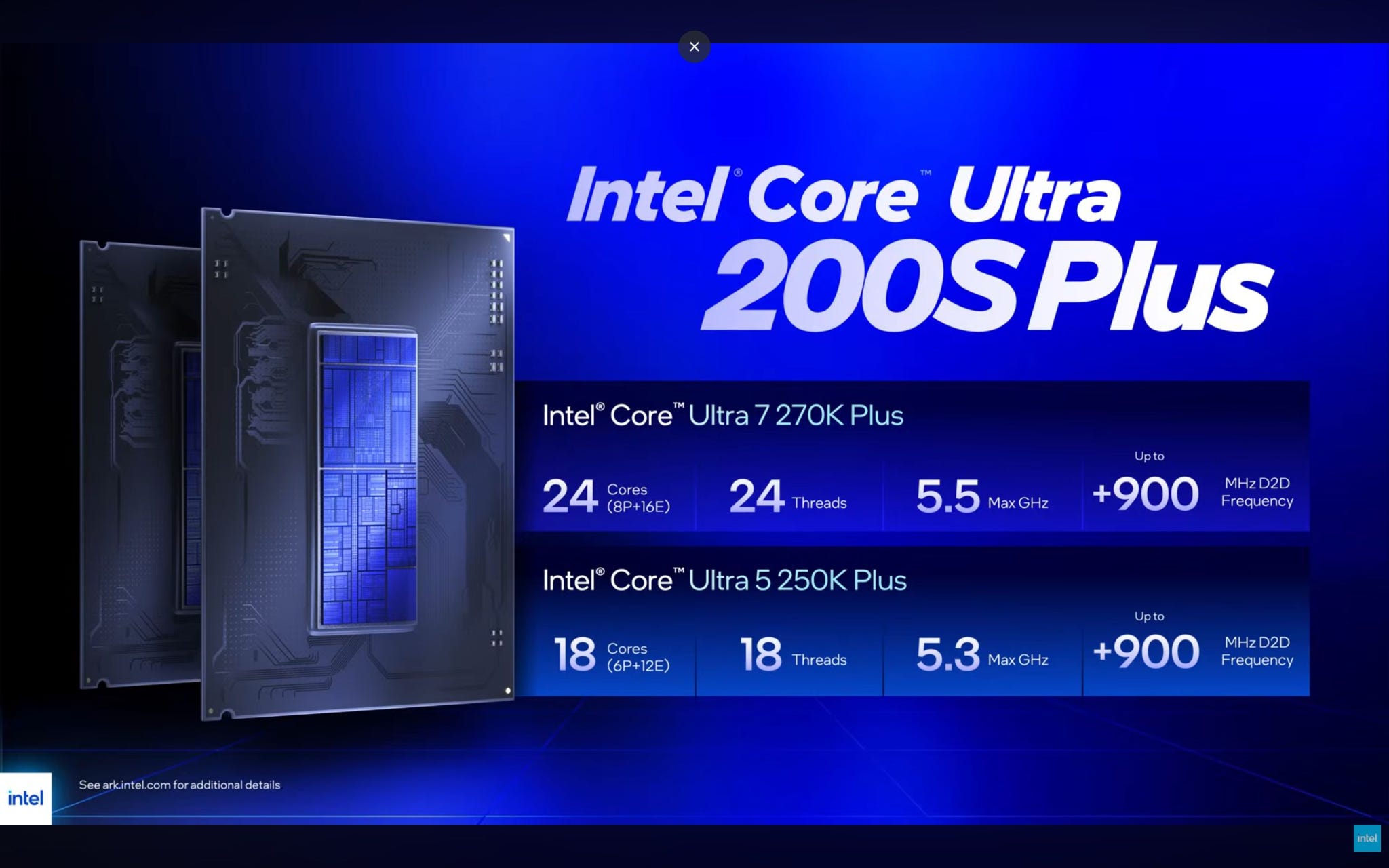
This March, Intel launched two new desktop chips:
Core Ultra 7 270K Plus at $299
Core Ultra 5 250K Plus at $199
Keeping the weird naming scheme aside, the chips are actually impressive. LinusTechTips also titled their review video as ‘Intel is back’.
GamersNexus reviewed the 270K Plus and called it “Not a Waste of Sand.” And that’s coming from a reviewer who termed the previous generation Intel processors as ‘A Waste of Sand’ :p.
Tom’s Guide also said Team Blue is getting its desktop swagger back.
So you might be asking: What actually makes these chips different from what came before?
The 270K Plus is a 24 cores beast with 8 performance cores and 16 efficiency cores.
For $300. That is the same core configuration as Intel’s previous flagship chip, the 285K, which launched at over $600.
Intel basically figured out how to offer its best silicon at half the original price.
In multi-threaded workloads, so things like video rendering, photo editing in batch, 3D work, compiling code, the 270K Plus beats AMD’s Ryzen 7 9700X by over 100 percent.
TechSpot showed the 250K Plus was 85 percent faster than AMD’s Ryzen 5 9600X in Cinebench multi-thread. Both Intel chips cost the same as their AMD competition.
To be clear, multi-threaded work is the stuff that uses many cores at once. It’s what content creators, editors, and developers care most about, not our average Bashir. But Intel is now dominating at this price.
Intel also launched a driver suite with these new processors. Think of it like a software driver that handles advanced optimizations for your processor.
It’s Intel’s equivalent of what AMD has had for its Ryzen platform for a while. A bit late to the party but it does the job.
Is Intel Better Than AMD Now?
Honestly, this is where the honest answer is not as straightforward as you’d want it to be.
In productivity workloads (general tasks like browsing, content consumption) at the $300 price point, yes, Intel is genuinely better right now. AMD has nothing at $300 that matches the 270K Plus even in rendering and similar tasks. Nothing close.
In gaming however, AMD still has the edge. Especially with their X3D chips.
The Ryzen 7 9800X3D costs around $480 and it is the best gaming CPU you can buy right now. It beats the 270K Plus in most gaming benchmarks. But it costs $180 more.
The 270K Plus is not that far behind in gaming though. It’s competitive. And for someone who uses their PC for a mix of gaming and productivity work, the Intel option at $300 suddenly makes a lot of sense.
A review described the 270K Plus as a “corker of a comeback for Intel, particularly in the realm of productivity.”
The value picture is genuinely different from what it was a year ago.
Intel is now the chip you would recommend to productivity-heavy users at $300. AMD is still the chip you recommend for pure gaming if budget allows.
Just look how the tables have turned and we’re seeing Intel be the value brand.
Not A Bed Of Roses
There is something important I need to tell you before anyone runs out to buy one of these chips.
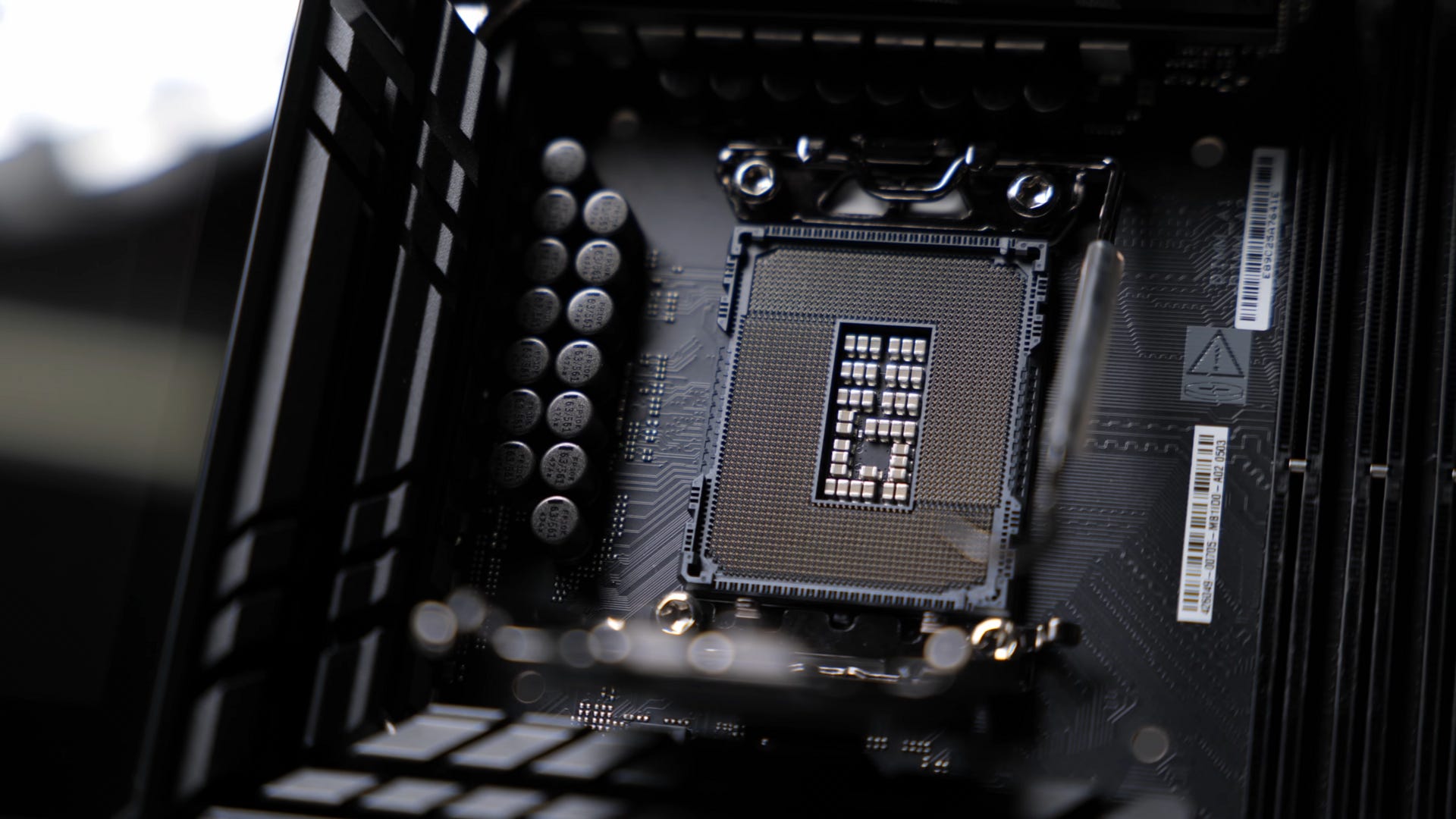
The motherboard these Intel chips launched on, called LGA 1851, is a dead-end platform. Intel has already said it’s moving to a new socket with its next generation of processors.
What this means practically: if you buy a 270K Plus today and want to upgrade your CPU two or three years from now without buying a new motherboard, you cannot. The next Intel generation will need a new motherboard.
AMD’s current motherboard platform, AM5, still has more life left in it. AMD has promised at least one more CPU generation on AM5. So AMD users can upgrade the CPU later without replacing the whole motherboard.
This matters if you are someone who upgrades bit by bit. If you buy a chip and use it for five or six years without touching it, the platform situation barely affects you.
The 270K Plus is strong enough to last that long. But if you like swapping parts every couple of years, this is worth knowing upfront.
GamersNexus said it clearly in their review: “If Intel can repeat a launch like the 270K Plus but on a platform with some actual life to it, they’d be negating the number one complaint.”
Also worth noting: early reviews showed the chip running slightly below its advertised clock speeds in some configurations. Not dramatically but reviewers did flag the small differences.
And there is always the question of whether the listed prices hold once the chips actually land on shelves at scale.
And honestly that is the biggest concern. Because of AI we’re already in a crisis- like situation and then there are two major wars happening just before us.
Supply issues can push prices above MSRP quickly. And by the time this stuff gets to our local shopkeepers we’re likely to see a significant price increase which is just sad.
NVIDIA Joining The CPU Chat
Now here is something no-one saw coming. There have been rumors that NVIDIA is going to launch its laptop CPUs.
Yup, that graphics cards maker which just hit 5 trillion dollar market cap. The same people behind your RTX GPU.
Wondering how a GPU company just became the most valuable company in the world? Then, you may checkout my recent article on NVIDIA that answers this burning question that many people have.
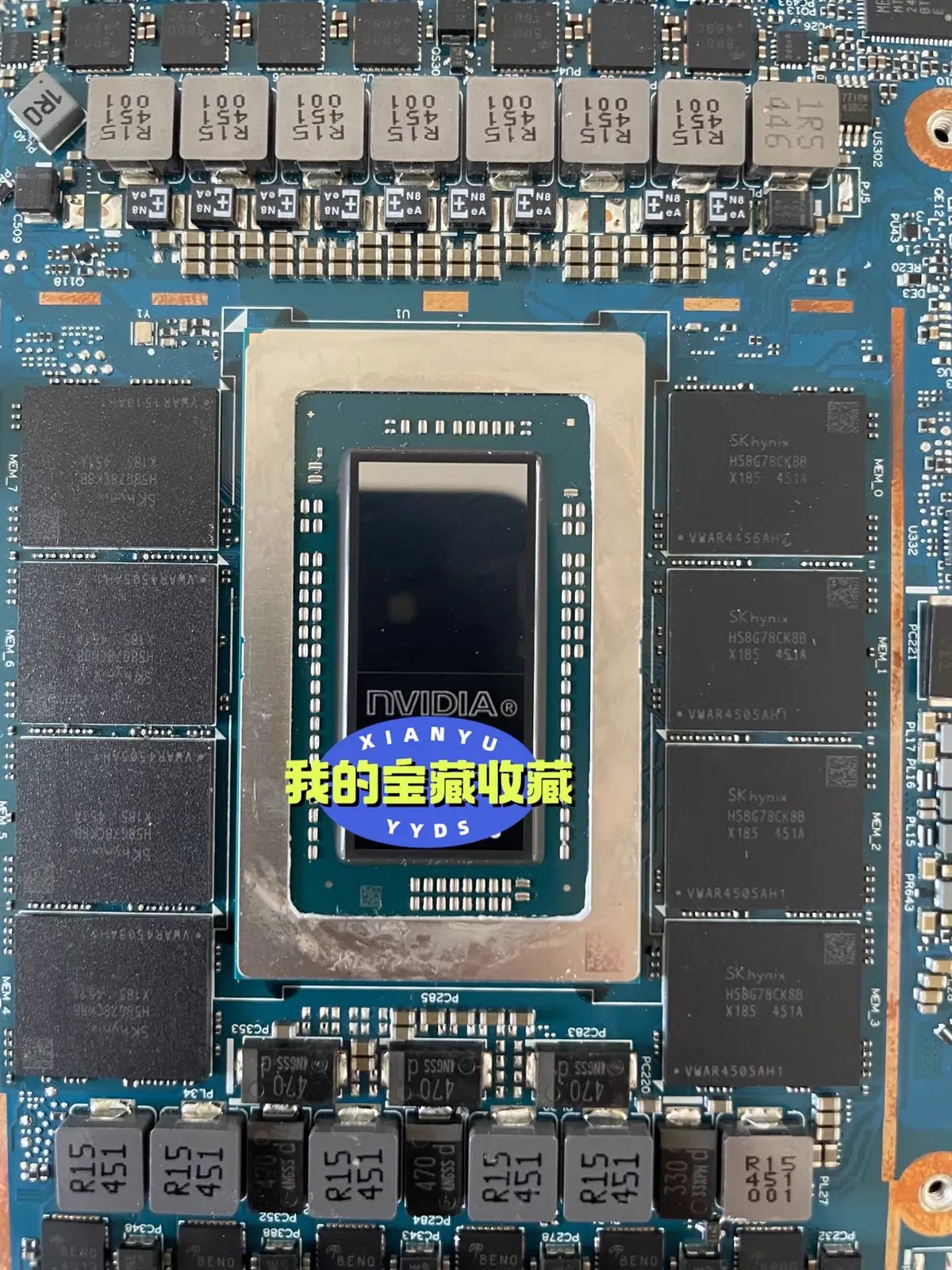
They are making their own processor chips called the N1 and N1X and these are confirmed for Dell and Lenovo laptops that we may see somewhere around next year.
A Dell 16 Premium laptop with an N1X chip inside was spotted in a supply chain document from late 2025. Multiple OEMs are reportedly preparing products around this processor.
What makes this interesting is what the chip is reportedly capable of.
The N1X is expected to pack GPU performance in the ballpark of an RTX 5070/5060 TI, take a second and read that again, RTX 5070 performance by an integrated chip!!
If you read our MacBook Neo article, you already know what happens when a company puts CPU, GPU, and RAM all within one chip using a shared architecture.
Performance goes up. Power consumption goes down. Battery life improves dramatically. The machines become thin and quiet. That is what NVIDIA is attempting for Windows laptops.
The gaming implications alone are significant. Right now a gaming laptop needs a dedicated GPU which adds cost, weight, and heat. Just try and use a gaming laptop and an ultrabook side-by-side.
An N1X laptop with integrated RTX 5070 class performance could in theory give you serious gaming in a machine that looks and feels like a normal thin laptop.
Though I’ll be honest there are still real questions.
Windows on ARM is not perfect yet. App compatibility has improved a lot since the early days but gaming on ARM is largely unheard of.
The N1X has reportedly hit some engineering delays and may not land until late 2026 or early 2027. However there are reports that Dell and Lenovo are up for a reveal at Computex 2026 coming up in June.
However, it may be some time until we see products with these chips become available for purchase.
But the direction of travel is clear. NVIDIA entering this space forces Intel and AMD to think differently about what an integrated chip can do.
Competition Gave Us Better Processors
If you’re a regular reader of SK NEXUS you’d have noticed a trend of us shouting that competition in products is a good thing for the end-user. And that’s something we really believe in.
At the end of the day, it’s a bloody competition that delivers great products.
If Ryzen didn’t give a solid punch to Intel we’d not have seen processors like the 270K and 250K Plus from Intel certainly not at this price.
When Ryzen came to the scene Intel had to improve almost immediately. It added more cores to its chips for the first time in years. Prices dropped. Performance jumped faster than it had in a long time.
That is what competition does to a market.
The 270K Plus at $299 offering double the multi-threaded performance of a same-priced AMD chip is a direct result of Intel needing to fight again.
A year ago that chip would have cost $600. Competition brought the price down.
So, no matter how big of a ‘Chipzilla’ you are, the product is what matters in the end.
The CPU wars being back is good news. Not just for people who enjoy reading nerding out on specs but those who are on a budget and want a good value for their money.
More competition, better products, lower prices. That is the story here. And honestly, it is only going to get more interesting from here now that NVIDIA is joining the chat.
As always your comments are what I look forward to when writing these articles. Your feedback directly helps us become better writers so please be generous with that in the comments down below.
intel dead, no comeback happening haha.