



Hey there 👋
Let me begin with a question:
How many times have you picked up your phone today?
Ten times? Twenty? More?
Do you ever feel like your battery is Goodenough?
Every single one of those times, a tiny chemical reaction fired up inside your device to give it the power to work. You did not think about it. I don’t think about it and maybe, no-one else does.
And that is kind of the point of this article today.
Batteries are some of the most invisible pieces of technology in most of our tech products. And they are also some of the most important ones especially in mobile devices.
Everything from smartphones, laptops, to even our BP monitors run on batteries. Especially in tech, the battery dictates our purchase decisions too.
The thing is that we are at a genuinely interesting moment in battery history right now because the chemistry that has powered your phone, laptop, and earbuds for the last thirty years is hitting its limits.
There is an innovation race going on between China and the US, as one controls the entire supply chain of batteries we use today while the other is working hard on challenging that with a new innovation.
And in that race we’re seeing some of the most interesting developments when it comes to the technology that will power our devices going forward.
So that’s what I’ll talk about in today’s article.
What a Battery Actually Is?
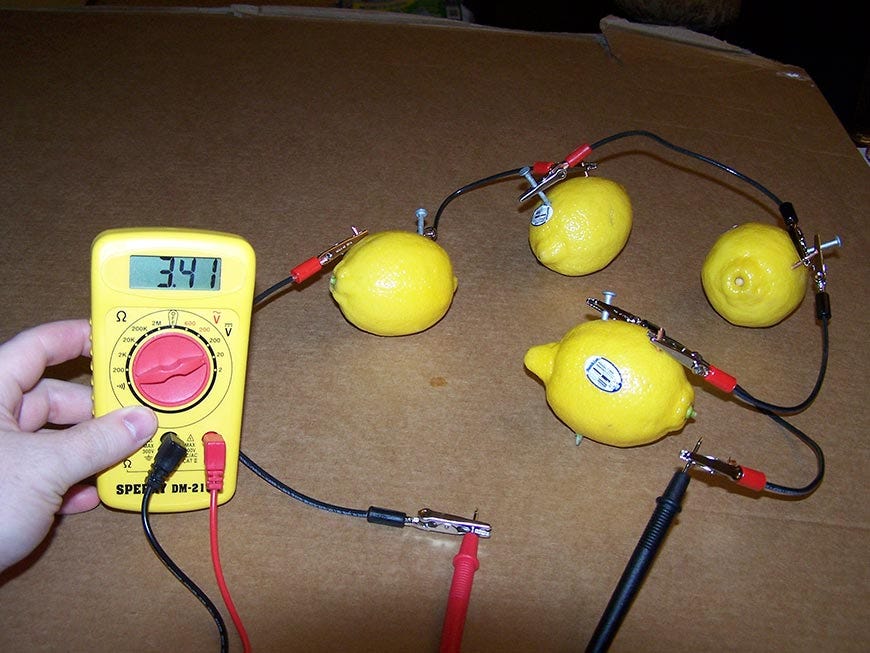
Before getting into the cool stuff let’s try to see what a battery actually is.
To explain it simply, a battery is just a controlled chemical reaction that produces electricity.
That is it. That is the whole thing. Not really but you get the point.
Actually, two metal points - a positive one called the cathode and a negative one called the anode - sit inside a material called an electrolyte.
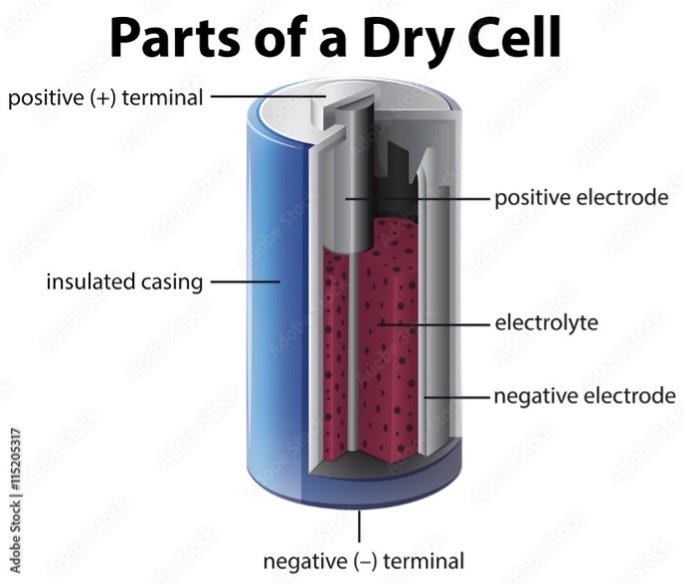
Ions (charged atoms basically) move between the two electrodes through that electrolyte, and that movement creates an electric current that powers your device.
Rechargeable batteries work by reversing that reaction when you plug in. The ions travel back to where they started, and the battery is ready to go again.
Non-rechargeable batteries like your AA Toshiba cells that you get from your local hardware shop cannot reverse this reaction.
Once the chemistry is done, it is done. They are disposable and that is why you throw them away.
The whole field of battery technology is basically about finding materials that can do this reaction better - store more energy, do it more safely, and do it more times before wearing out.
Just a Pinch of History
I know that most of you think of history as a boring subject and I won’t bore you guys much but just bear with me for a second.
So we know that the first real battery was built by an Italian scientist named Alessandro Volta in 1800.
Volts were named after our guy Volta.
So Volta basically stacked copper and zinc discs on top of each other, separated by cloth soaked in saltwater. That was the first battery as we know them.
It produced a steady electric current and the scientific community lost its mind because nothing like that had ever existed.
Volta called his invention ‘The voltaic pile’ It was clunky. It leaked. It corroded quickly. But it worked. And off course it took the world by storm.
From there however, the progress was slow but steady.
The invention of battery was a disruption and after that progress started to take its course inside battery technology.
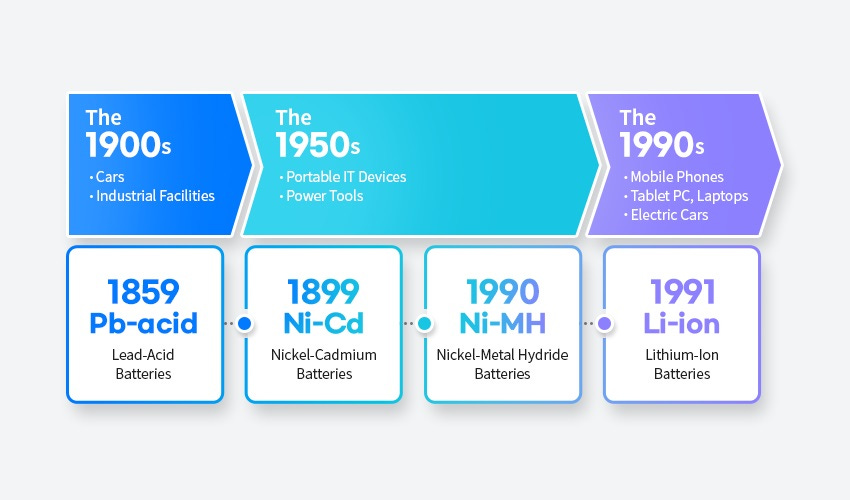
In 1859, a French physicist named Gaston Plante invented the lead-acid battery - the first rechargeable one.
The same battery design that Plante invented still sits in your car right now, 165 years later. That tells you how good it was.
Around 1899 we had another guy named Waldemar Jungner who invented the nickel-cadmium battery. These batteries were lighter than lead-acid, rechargeable, and eventually banned in many places because cadmium is extremely toxic :/
We still find Nickel-cadmium (NiCd) batteries as smaller rechargeable cells or in toys, digital cameras, and flashlights, etc.
And then almost nothing major happened in battery tech for nearly a century.
Progress happened slowly. Electronics kept evolving.
Batteries mostly stayed the same until Lithium-Ion entered the chat. From a chemistry POV, Lithium-ion batteries were fundamentally different from their predecessors.
Sony was the first company to commercialize the lithium-ion technology back in 1991 and this was the turning point for the industry and everything for battery tech ever-since.
Why Lithium-ion Specifically Won
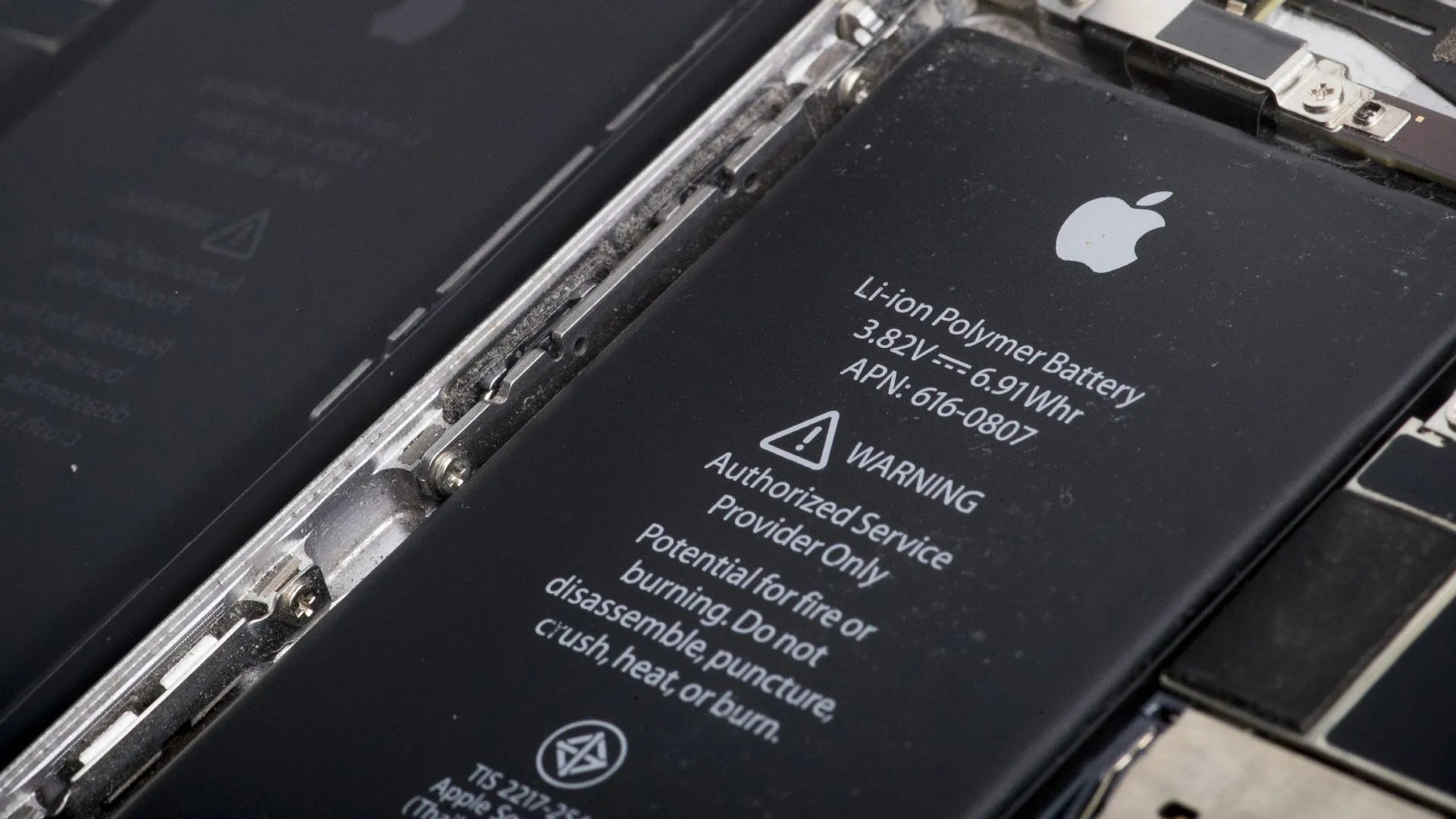
Lithium-Ion batteries were a totally new chemistry back when they started to be commercialized in the early 90s.
Lithium-Ion batteries are named so because of their use of lithium and also because of lithium being the lightest metal on the periodic table.
That matters because when you are building a battery that needs to sit inside a phone or a laptop, weight is everything. Who appreciates a heavy phone or a laptop anyways?
Lighter material means more energy stored per gram. This property is known as energy density and lithium-ion’s energy density was unlike any battery that had come before it.
Sony’s first commercial lithium-ion cell in 1991 had an energy density of around 80 Wh/kg. That sounds like nothing but it was a revelation compared to what existed before.
I can go about explaining the unit of energy density but since it’s not a math article I won’t bore you with the details. For now you can just focus on the digit before the unit to get a general idea of how batteries improve over time.
Today’s best lithium-ion cells are above 300 Wh/kg. Almost four times better. From the same basic chemistry (lithium-ion), just refined over thirty years of engineering.
That refinement is what gave us better smartphones. Laptops that last more than ten hours. Wireless earbuds. Electric vehicles.
All of it runs on the same fundamental idea Volta had when he stacked those coins, just made dramatically better by lithium.
There is one catch though.
Lithium-ion uses a liquid electrolyte inside. And the problem with that liquid is that it can be flammable. That is why phones occasionally catch fire.
This is exactly why airlines have specific rules about lithium batteries in checked luggage. That is why every electric car fire you have seen in the news burned so intensely.
Lithium ion is a brilliant technology but it’s dangerous because that liquid electrolyte inside it can burn and does burn.
Still though everything from our Macbooks, iPhones, Solar systems use Lithium-Ion batteries now. It’s the de-facto choice of our time.
The Big Problem with Lithium Ion
Here is where things get uncomfortable for lithium-ion chemistry.
We have been working with the same fundamental battery chemistry for over thirty years now, that shows that it works.
And the graphite anodes inside most lithium-ion batteries today, graphite being the material that stores the lithium ions on the negative side, are approaching their theoretical max basically.
You cannot squeeze much more out of graphite. Physics will not allow it. And then there is the supply chain problem.
Most of the world’s lithium comes from Chile, Australia, and China. The mining process is water-intensive, and a lot of it happens in some of the driest places on earth.
Cobalt, another key ingredient in lithium-ion batteries, is mostly mined in Congo under conditions that have attracted serious international scrutiny for years.
None of this is a secret. The battery industry knows about it. Governments know about it.
It doesn’t matter when companies like Apple say that they value the climate, or the conditions of miners who source them the raw material for batteries in their products. That’s just how things are at the moment.
And then consider the scale of what is coming. Electric vehicles need batteries. Energy storage solutions like your WAPDA or even your solar setup at home need batteries.
By the way, If you’re someone like me who’s tired of WAPDA burning your tech and want to know how to protect from WAPDA killing your electronics, you can checkout a recent article I wrote here at SK NEXUS.
Every new smartphone, AI gadget, basically every new product category in tech needs batteries.
Lithium-ion in its current form cannot scale to meet all of that demand. Not cleanly, not safely, not at the pace we need it to be.
Silicon-carbon Batteries Are Already Here
We know that we’re hitting the physics of lithium-ion batteries. And this was the moment where many of the smart people knew we had to build something new.
The first real upgrade to lithium-ion in decades is not some exotic new chemistry from a research lab. It is a smarter material choice.
Standard lithium-ion batteries use graphite as the anode material. Silicon can store about ten times more lithium ions than graphite. That means more energy in the same space, which means a bigger battery inside the same size phone.
The problem with pure silicon is that it swells up to three times its own size during charging and then shrinks back during discharge.
Do that a few hundred times and the material cracks, the battery degrades fast, and you end up with a phone that barely holds a charge after six months.
The fix researchers landed on is clever. Blend silicon with carbon in a new structure. The carbon buffers the expansion, keeps the silicon stable, and retains most of the energy storage benefit.
That is what silicon-carbon anodes are. That is what is quietly showing up in your phones right now.
Samsung is reportedly targeting silicon-carbon batteries for the Galaxy S27 in 2027.
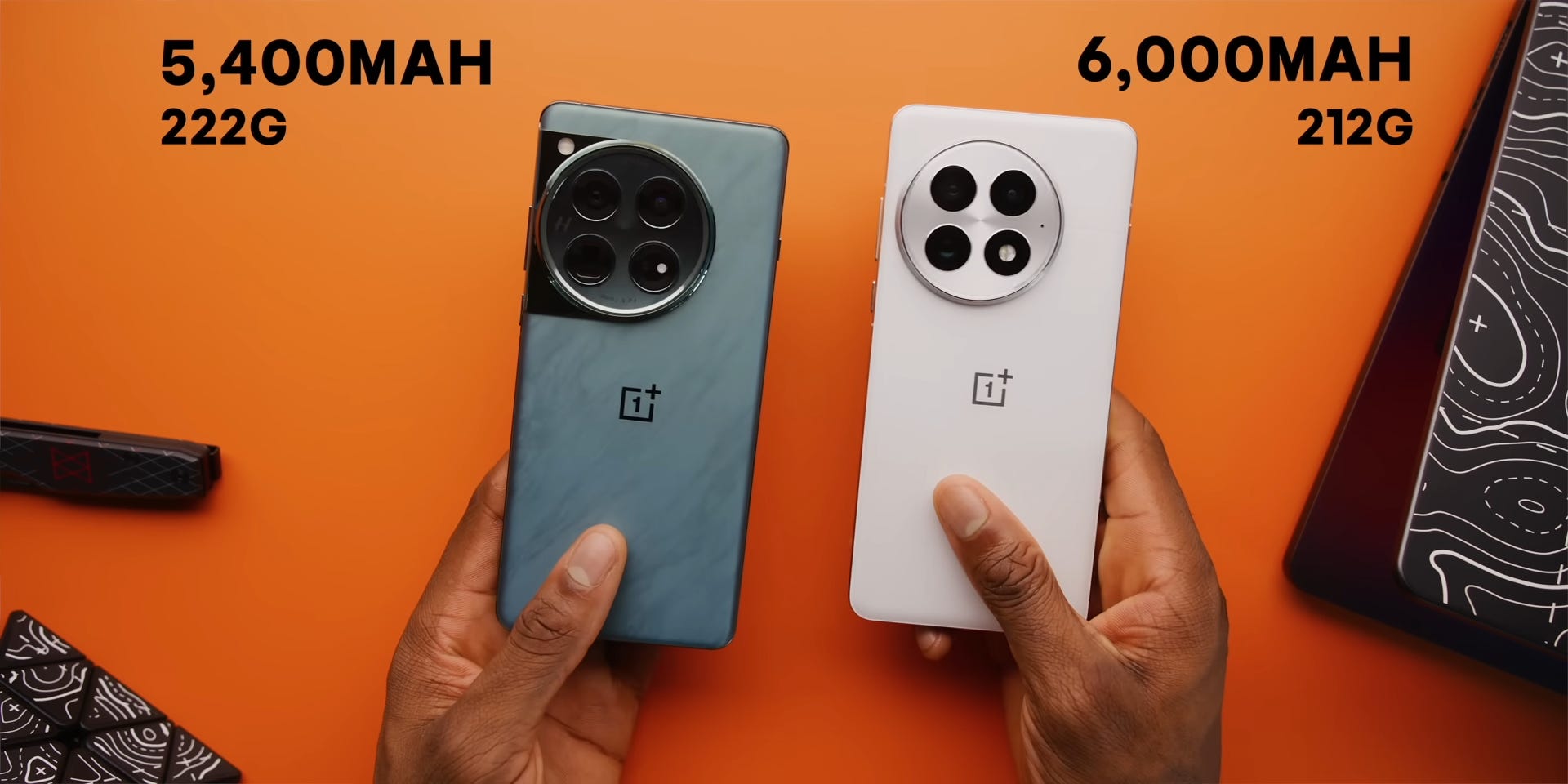
The Redmi Note 14 Pro’s silicon-carbon battery is 24% larger in capacity than its predecessor while physically occupying the same space.
The OPPO Find N5 used silicon-carbon to fit a larger battery inside a foldable that is just 4.21mm thin when unfolded.
Silicon-carbon batteries pack around 40 to 55% more energy in the same volume compared to standard graphite lithium-ion.
The battery tech in your next phone will not just be marginally better. It will be noticeably, meaningfully better. Without the phone getting any thicker.
You might not realize it that much because for an average person smartphones are already at the point where average phones easily last a day.
But laptops especially Windows laptops could greatly benefit from silicon-carbon batteries that store more while weighing around the same as previous ones.
The thing about silicon carbon batteries is that it’s not just in the future. It is happening right now. We have small smartphone players testing these with their products while big ones like Apple and Samsung wait it out for the results to mature.
Solid-state Batteries Are Kinda Here Too
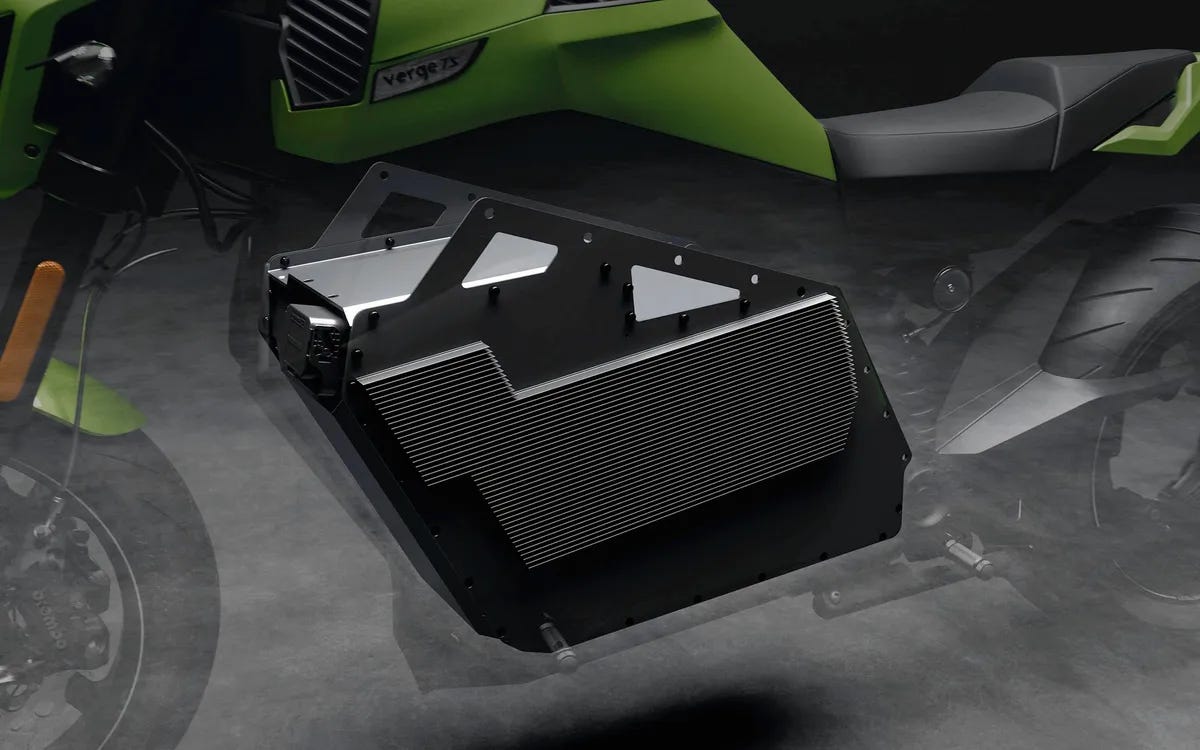
Silicon-carbon batteries are an evolution of lithium-ion. But Solid-state is a different category entirely.
Right now, every battery you own has a liquid electrolyte inside - the material that lets ions move between the two electrodes.
That liquid is what makes lithium-ion flammable. It is also one of the things limiting how much energy you can safely pack in because if we go above the limit fire breaks out.
Solid-state batteries replace that liquid with a solid material which could be ceramic, glass, or some other polymer. This one change has many differences for the battery.
No liquid means no flammable material. No thermal runaway. No phone fires. No EV fires that burn for hours because the liquid electrolyte keeps feeding the flame.
Solid electrolytes also allow for a lithium-metal anode instead of graphite. Lithium metal can store ten times more energy than graphite.
Combine that with the solid electrolyte and you get energy densities that graphite-based lithium-ion cannot come close to.
Just for reference, today’s best lithium-ion cells sit around 300 Wh/kg.
Toyota’s solid-state batteries in development are hitting 450 to 500 Wh/kg. BYD’s solid-state cells have achieved 400 Wh/kg in testing. CATL is targeting up to 500 Wh/kg.
Toyota is also claiming that charging for ten minutes would give a range of 1,200 kilometers in an EV. That is not a typo.
Big manufacturers like BYD, Toyota, CATL, are all targeting small-scale production around 2027 with broader rollouts closer to 2030.
Toyota’s solid-state batteries even received production approval in Japan in late 2025.
The solid-state battery technology is already here and it’s only a matter of a couple of years when we start seeing them used starting with electricity-hungry EVs and then to our peasant devices :p
Why Is Solid-state Not Everywhere?
The obvious question is if solid-state is so much better, why is it not in your phone right now?
Because building solid-state batteries right now is extremely hard, expensive and phone customers aren’t asking for it right now.
For a more technical answer:
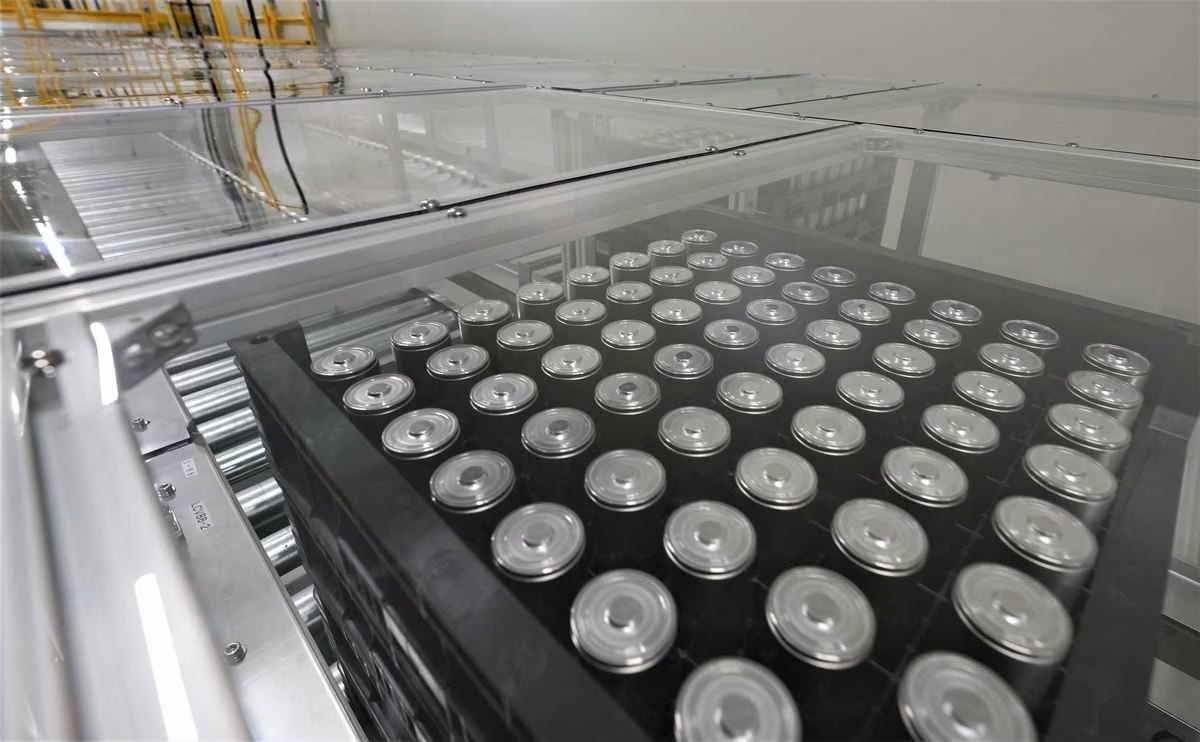
The solid electrolyte and the electrodes inside a solid-state battery need to stay in perfect physical contact with each other through hundreds of charge and discharge cycles.
In a liquid system, this happens naturally - liquid fills every gap. In a solid system, tiny imperfections in contact mean ions cannot move properly, and the battery stops working.
Manufacturing solid-state cells requires completely different production equipment from everything the industry has already built for lithium-ion.
Factories that make lithium-ion batteries cannot simply retool. New facilities, new machinery, new processes - all of that costs enormous amounts of money and time.
And then there is the cost.
The material cost of solid-state batteries right now is estimated at $400 to $500 per kWh, compared to around $100 per kWh for standard lithium-ion. That gap has to close before solid-state can show up in mainstream phones and affordable EVs.
A senior scientist of battery company CATL said that the technology’s maturity is currently a 4 out of 9. They want to get to 7 or 8 by 2027.
To put it simply:
For solid-state batteries the whole supply chain needs to be built around solid-state tech and building that would be slow and expensive, although it’s inevitable because the tech is real.
The Next Decade Of Batteries
For me personally, the next decade is going to be really interesting from the technology POV.
Lithium-ion batteries have been with us for quite some time ever since Sony first commercialized them back in the 90s.
In that time, lithium-ion batteries have not just drastically improved but they’ve also evolved into better versions like Lithium Iron Phosphate (LiFePO4) which is the latest standard that is getting more dominant.
The purpose of this piece was to discuss the emerging technology that is being built in front of us and while we’ve talked about the tech and some estimates from experts please take them with a grain of salt.
The industry believes that Silicon-carbon batteries are going mainstream between now and 2030. Your next phone will have a noticeably better battery than your current one without the device getting any bigger.
Charging speeds will also get faster because silicon anodes handle higher charge rates better than graphite.
Solid-state batteries will first appear first in niche applications like high-end EVs, possibly some wearables and drones before gradually moving into mainstream consumer electronics.
Another angle that makes me happy about improving batteries is a local one.
See, Pakistan has an electricity grid problem. I won’t go into much detail but the fact is that our grid-electricity just sucks. There are constant shutdowns, load-shedding and whatnot.
UPS has been a solution forever but with China’s incredible success in producing lithium-ion batteries as well as ever-efficient solar panels, Pakistan has been among the biggest importers.
Houses that can afford the system have given up the government’s unreliable grid and have flooded their rooftops with as many solar panels as they could afford.
Just take a walk in any big city and you’d notice quite a lot of panels. With that the affluent ones have installed batteries in capacities that can power their entire households’s electricity requirement.
That’s thanks to the competition and innovation that China brought to lithium-ion that we’re able to enjoy batteries that now last more than a decade on average costing a couple hundred thousand rupees.
And the rising competition between the US and China for the next generation of battery technology is only to be seen as the years go by.
The Pakistani government has also taken a note. Just a few months ago they released their five-year policy that focuses on lithium-ion cells (foundation of lithium batteries) being produced locally which atm are totally imported from China.
All the major companies in the country are launching their versions of lithium batteries. Right now, the lithium cells are totally imported but with time we can see that localize here in Pakistan.
Maybe I can write on that when we have some good progress on this front. If that’s something that excites you, do let me know down in the comments.
More from SK NEXUS


As always I’d love your thoughts on my writing or your questions around battery technology. If you have any feedback to share please feel free to engage in the comments down below or make your voice heard in a fun poll down below: