



Hi there👋
At SK NEXUS, we like to think of ourselves as tech optimists.
We cover what’s exciting, what’s shifting, and how it all ties back to you.
Every once in a while, tech throws something at us that feels less like innovation and more like a red flag. And that’s when we step in to cover what’s really going on.
Our purpose isn’t to spread fear; it’s to spread awareness.
Because if the average Joe (or anyone, really) isn’t paying attention, these changes go unnoticed.
So here’s the deal: read this closely, share it with your people, and keep the conversation going.
Awareness is the first line of defense - and if enough of us care, pushback becomes possible.
You think you’re making choices online. In reality, those choices were made for you long before you clicked.
Look at your Netflix homepage, you think you are browsing what you want to see but in reality, you are browsing what the algorithm wants you to see. That “personalized” ad after you just talked about something near your phone isn’t a coincidence, it’s a calculated push.
Even the designs of the apps are engineered to keep you hooked - So, you can be tricked into scrolling endlessly and watching that one last reel.
This article is about pulling that curtain back:
How our so-called “free choices” are shaped, and sometimes completely decided before we even realize it.
And once you reach the end of this piece?
You will get the forbidden sight and see through all the traps.
Dark Marketing - The Silent Persuader
Before you understand how the system works, you need to know what it’s built on. At its core, dark marketing runs on two engines:
Manipulative design
Persuasive psychology
These aren’t buzzwords - they’re the invisible gears that quietly control your decisions.
Manipulative Design
These are tricks baked into the apps to get you to do what the company wants, not what you want. Think of the tiny X to close an almost invisible pop-up, or the bright, glowing Accept All button, while the Reject one is hidden in the corner.
All these aren’t coincidences
It’s a part of the design that was carefully crafted to shape your path without you noticing.
Persuasive Psychology
This is where they don’t just design the interface - they design your behavior.
The endless scroll on social media isn’t accidental, it’s modeled on slot machines to keep you hooked. Notifications are red because your brain is wired to see them as urgent. The goal isn’t to serve you - it’s to manipulate your attention, emotions, and even your habits.
Together, manipulative design and persuasive psychology create the backbone of what I call dark marketing - a system that doesn’t just sell to you, it whispers in your ear on what to buy.
The Nudge You Never Noticed
Here’s the truth - the majority of the time, you are being slowly pushed towards making a choice. Companies know exactly what you want, and they keep putting it in front of you until you finally give in.
When you see your favorite jacket on the homepage, you might tell yourself: “nah, I don’t need this” - but a few days later… It’s in your closet.
That’s not a coincidence.
That’s the design.
Social media, in particular, has borrowed this trick straight from the casino playbook. Endless scrolls and dopamine-driven triggers aren’t just “features” - they’re the digital equivalent of pulling a slot machine lever. The main goal is to create a psychological trigger so you can keep coming back for more.
How about you take a moment and look around:
Countdown timers pushing you to “buy before it’s gone.”
Fake scarcity banners screaming “only 2 left.”
Apps forcing personalization so you can’t escape the loop.
All of this is dressed as choice.
But choice doesn’t look like a funnel that only goes one way.
Algorithms Shape Your Desires
So, you thought you chose what you saw on your feed? Wrong!
Algorithms don’t show you what’s popular - they decide what becomes popular.
Your feed isn’t just based on your taste, algorithms silently curate it to keep you hooked.
They learn your pattern - what you like watching, what you binge-watch at 2 a.m., and what you like sharing. And then they weaponize all that information. The more they know, the more they can nudge you towards staying in a never-ending loop of wanting to see more & more.
Well, what are the effects? There are many:
Fear of missing out
Echo chambers
Herd behavior
Your views become narrowed over time, and the crazy thing is - you think it’s your view, but in reality - it’s all engineered.
Take YouTube’s autoplay, dragging you into hours of “related” content, or the Instagram “Explore” section, trapping you in a never-ending spiral of the same vibes.
The Subscription Trap
Subscriptions look harmless - pay a little each month, get access to everything.
But if you dive deeper, you’ll see the trap: the “forever subscription” that bleeds you quietly, the illusion of ownership where your movies or apps vanish the moment you stop paying, and the endless tiers that turn convenience into chaos.
What feels like freedom is really a leash - and once it’s on, it’s hard to take off.
Renting, Not Owning: SaaS, Music, Streaming, Even Printers
You’re not buying - you are renting.
Every month, you give companies a piece of yourself to get access to services.
They call the shots - they can make your songs, that piece of software, or that digital magazine go poof!
Welcome to the illusion of ownership: it feels yours, but in reality, it isn’t.
I know this sounds crazy. But today, your car, your software, even your printer aren’t yours; they are shackled by subscriptions and license walls.
You don’t own - you lease.
And that’s not convenience.
That’s leverage.
Choice Without Ownership
We used to think buying meant forever control - but today, everything has changed.
The physical media, like games, discs, etc are fading fast. Now, our digital “choices” are shadows: once your content lives on someone else’s server, they hold the keys, not you. Welcome to a world where every option you make puts your life at the mercy of someone else’s hands.
Let’s dive in.
The Vanishing of Physical Media
Physical media used to be the proof of control, but now the industries are racing into digital-only territory - driven by convenience but also by control.
A recent Wired deep-dive shows how Nintendo’s Switch 2 will lean on “game-key cards.” So it’s like saying “goodbye” to reusable discs - and many publishers are quietly dropping physical releases altogether.
This isn’t just about losing old-school media.
It’s about access slowly vanishing.
Digital games vanish when servers die. According to the VGFH, digital-only titles vanish completely when platform support ends. According to another estimate, 87% of U.S. games released before 2010 are out of print, and many were digital-only to begin with.
Note: Ownership is a huge piece of this puzzle, but it’s not the main objective here.
The real focus of this article is on the ways you’re pushed into buying - the traps, and manipulations that shape your choices. Ownership comes later in the chain, but it’s still important to understand, which is why I touched on it briefly.
If you want to dive deeper into that side of things, I’ve already broken it down in detail here: The Death of Ownership: Why Your Tech Isn’t Really Yours Anymore
Dark Marketing’s Invasion of Daily Life
Dark marketing isn’t limited to one corner of your life - it exists in every area of your life, shaping decisions you don’t even realize you’re making.
The mobile game that keeps you hooked, the shopping app nudging you into “limited time” deals, the Buy Now Pay Later button making debt feel painless, the subscriptions that never seem to end - each one is a lever.
On their own, they look harmless.
But.…together, they’re a system designed to sneak into your life to change everything.
Mobile Gaming – Casinos Disguised as Apps
Mobile games aren’t just “fun little distractions.” They’re carefully engineered traps. One of the clearest examples is the Hook–Habit–Hobby model, a framework openly taught to developers to maximize addiction and spending.
Torulf Jernström once laid it all out in his infamous talk:
Hook – Quick wins and easy rewards pull players in.
Habit – Daily rewards and progress bars keep them coming back.
Hobby – Spending money becomes part of the game to stay competitive or unlock extras.
And that’s only step one. The Hook–Habit–Hobby model is just the foundation - on top of it, developers layer even more tactics. Let’s dig into those next.
Engineered Pressure: FOMO, Friends, and Psychology
These games don’t just entertain you - they study how your brain works and then turn those insights against you. Every design choice is calibrated to keep you playing and paying, so you can stay stuck inside the cycle.
Social Pressure - You always want to get better, or level up. But as games lean more towards pay-to-win, progress stops being about skill and starts being about spending. That puts players in a never-ending loop: compete, fall behind, pay to catch up, repeat.
FOMO - Limited-time events, exclusive skins, and countdowns push urgency. You’re told: spend now or lose forever. The fear of missing out isn’t an accident - it’s intentional.
Targeting the Vulnerable - Casual players and kids are the easiest to manipulate. Shiny visuals and simplified mechanics keep them hooked.
The Main Hooks That Keep You Spending
It always starts the same way - The first spend. Something so small it feels harmless. But once you’ve crossed that line, spending again doesn’t feel like a big deal.
It’s estimated that 98% of players enter a game thinking they’ll never spend a dime. Developers know this, which is why the best deals always appear at the start. The goal isn't to profit from that first purchase - it’s to break the barrier and turn you from a “non-spender” into a “spender.”
Once that wall is down.
The never-ending spiral begins.
Although almost every game out there now uses these tactics, two clear examples come to mind:
Diablo Immortal
Pokémon Unite
If you want to see more of how this plays out, check out this Reddit post.
And here’s the thing- these tactics don’t stop at games. The same mechanics that keep you spending in video games are baked into your everyday apps to keep you hooked. In simple words… life itself is being gamified. If you want to see how deep this goes, I’ve already broken it all down in detail - The Hidden Game We All Play
Shopping Apps - Temu & Shein
Open Temu or Shein, and you’ll see it instantly: everything is a trap. These apps aren’t just online stores - they’re casinos disguised as shopping platforms.
Countdown timers scream “only 3 hours left!” even though the same “deal” will refresh tomorrow.
Pop-ups brag “7,326 people bought this in the last 24 hours” to push the herd mentality.
Shopping carts whisper: “Add just $10 more to unlock free shipping” - pulling you into buying what you don’t need.
We also got “lucky draws,” spin-the-wheel gimmicks, and fake discounts that exist only to keep you clicking.
The design philosophy is simple:
Once you open the app, you’re not supposed to leave without buying something. Every notification and pop-up is tuned to pressure you into a purchase.
Psychology at Play – FOMO Everywhere
It’s the same pattern here, too.
The same psychological tricks that fuel mobile games show up in shopping apps - just dressed differently.
As retail analyst Neil Saunders put it:
“The problem with dark patterns is that they play on people’s emotions, creating a sense of urgency or a fear of missing out.”
That’s the real engine behind these apps, they’re not just selling products - they’re selling pressure. And it works - because the more anxious you feel about missing a “deal,” the more likely you are to click buy now.
The Addiction Loop
Shopping apps aren’t just about buying - they’re about browsing.
That endless scroll of clothes and prices taps into the same brain pathways as social media feeds. People call it “window shopping,” but the truth is it’s an engineered loop: you keep looking, keep comparing, and sooner or later, you click buy.
The more time you spend inside the app, the more chances it has to push offers and exclusive deals to you. According to a 2022 report by the European Commission, 97% of the most popular shopping apps and sites use at least one dark pattern to keep users hooked.
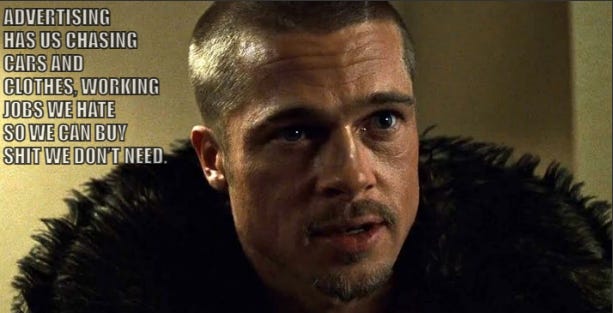
All this endless scrolling, engineered hooks, and the false sense of choice - it reminds me of a certain someone - “Tyler Durden” and he was right…
Hard-to-Cancel Subscriptions & Lock-In Tactics
Canceling a subscription shouldn’t feel like defusing a bomb. Yet companies bury the “stop payments” button deep in menus, and they intentionally make everything much more complex than it should be - for their own benefits.
This isn’t complexity - it’s control.
Intentional trap setups: Call customer service, navigate endless screens.
Most users aren’t tech-savvy; they decide to give up and keep paying…
Recently, there has been a rise in authorities catching up with this whole issue. Multiple Companies agreed to refund customers and simplify cancellations after being accused of obstruction.
The Prime Maze and the Bundle Trap
In 2023, the FTC accused Amazon of knowingly designing a “cancel maze” - forcing users through endless pages, and upsells just to quit. Every step was engineered to delay, confuse, and frustrate until you finally gave up.
But it’s not just Amazon. Bundles are another subtle trap. Music, video, even gaming - packaged together to look like a “deal.” In reality - You end up locked in.
Cancelling means losing not just one service, but a whole stack of them.
That fear of losing everything at once keeps people subscribed far longer than they want.
Buy Now, Pay Later – Debt Wrapped in Convenience
Buy Now, Pay Later sounds like freedom. No credit cards, no interest (at first), just split your payment and move on. But that’s the trap - it removes the sting of spending, encouraging you to buy things you normally wouldn’t.
Let’s break down how it works.
The Psychology Behind BNPL
BNPL platforms aren’t just financial tools - they’re psychological machines.
They’ve mastered the art of rewiring your decision-making and exploiting your psychological behavior
Pain of Paying - Normally, handing over cash or seeing a big payment hurts. BNPL dulls that pain by slicing payments into smaller, less noticeable bites.
Temporal Discounting - Humans naturally value the present more than the future. BNPL leans on this bias: “Enjoy now, deal with it later.”
Artificial Urgency - Flash sales, countdown clocks, and “only X left” messages push you into quick decisions without thinking long-term.
Pretty Interfaces - Clean, colorful UIs guide your eyes toward the Buy Now button and away from the fine print.
How BNPL Really Makes Money
BNPL isn’t a “favor” to the consumer. It’s a business model built to profit from your habits.
They win no matter what:
Merchant Fees - Stores pay BNPL providers a cut for every sale, since offering easy payments boosts purchases.
Late Fees - Once you’re comfortable delaying payments, discipline slips. Miss a deadline, and BNPL takes advantage.
Data Harvesting - Your spending habits, preferences, and patterns are tracked, packaged, and sold. It’s not just debt - they’re literally monetizing your psychology.
Loan Bundling - The debts themselves are resold to bigger banks and financial institutions, turning your “small payments” into big profits on the backend.
The Illusion of Saving
Let’s be real - BNPL is not about helping you - it’s about tricking your brain. You didn’t “save $100”; you just spent it. The system makes you feel like you’ve made a smart choice when in reality you’ve stepped into their trap.
Financing a big purchase? Maybe that makes sense.
But when you’re financing a $15 burrito for $3.75 over four weeks, that’s not convenience - that’s dumbness. Because the person splitting a burrito is probably splitting clothes, gadgets, and everything else, too.
Individually, these don’t look dangerous.
But when you stack them up?
It’s a debt spiral wrapped in the language of “freedom.”
The Bigger System - Choice Was Never Yours
All these tactics aren’t random - they add up to a system designed to manufacture desire. The ads you scroll past, the “recommended for you” feeds. They don’t just nudge you, they shape you.
You think you’re making a choice, but the choice was already made for you.…long ago.
That's the irony:
First, they let you believe you’re in control (You're not)
But once you finally “own” the thing you bought. (You're still not in control)
And look around you - Digital locks, subscriptions, licenses. Ownership was stripped away years ago. First, they engineered the purchase, then they engineered what ownership even means.
What a fascinating world - we live inside an illusion of choice.
Breaking the Illusion
If you made it this far, you’ve got a vision most people don’t. You can see the traps for what they are. Consider this your digital candy - the kind that doesn’t rot your brain.
Truth is, you can only fight this if you’re aware, because once you see the patterns, you stop falling for them. That was my goal today: to make you aware so you can fight back against all these manipulations.
And here’s a simple trick:
Next time you’re about to buy something, don’t go numb. Pause and ask yourself, who’s in control right now? If it’s not you, take it back.
The system only works if you play blind. Now you don’t have to.
Your Turn To Talk
So... I have talked enough, now it's your turn.
Let me leave you with a few questions:
How many of your “choices” were really yours?
Next time you see a flashing deal, will you pause or will you play blind?
If debt and dopamine are the system’s weapons, what’s yours?
Drop your thoughts in the comments - I’d love to hear them.
If you want more content like this, hit subscribe and restack. I’m on a mission to help people see through the noise and actually understand what’s going on behind the curtain.
I love doing this - digging, breaking things down, making the complex simple. But for this to reach more people, I need your support. Subscribes and restacks aren’t just numbers - they’re what keep this mission alive and spreading.
So if you found value here, back me up. Let’s get more people aware, more people secure.
Another brilliant article!
I'm busy designing a webpage for my writing. I hated Amazon the moment I saw it. And other retailers are no better, just not as scrupulous and demon-like.
It's taking me ages, but the whole point is to leave out all the psychological triggers and emotional hooks you've mentioned here, and actually give people choice.
The only thing is that people are so accustomed to the hooks and loops that maybe when they're actually given a choice they won't know what to do, and even be suspicious.
So, yeah, articles like this are needed. Definitely restocking.
"Canceling a subscription shouldn’t feel like defusing a bomb. Yet companies bury the “stop payments” button deep in menus, and they intentionally make everything much more complex than it should be - for their own benefits."
absolutely. this is one of the tactics that bothers me the most. anytime its easy to sign up and difficult to turn off. I've resubscribed to services in the past once i needed them again purely because i knew they had such an each off button.
Great read guys! Lets see where this new liability takes us.