



Hey there 👋
A year ago we wrote about Linux and how it was slowly entering into mainstream conversations. If you want to check that out, that article is linked here.
At the time it felt like a trend. A few influencers switched.
A few governments started paying attention.
Steam Deck was making gaming on Linux actually work.
We asked whether this was finally Linux’s moment.
Well, it is now August 2026. A lot has happened. So let’s check in.
The Steam Machine just launched. SteamOS is now officially open for anyone to install on their own PC.
The creator of Ruby on Rails is moving parts of his company to Linux.
Linus Sebastian from Linus Tech Tips ran a 30-day Linux challenge with his team.
And Steve Burke from GamersNexus is openly talking about Linux gaming on his channel.
None of these are small on their own but together they point to a real shift.
Steam Machine
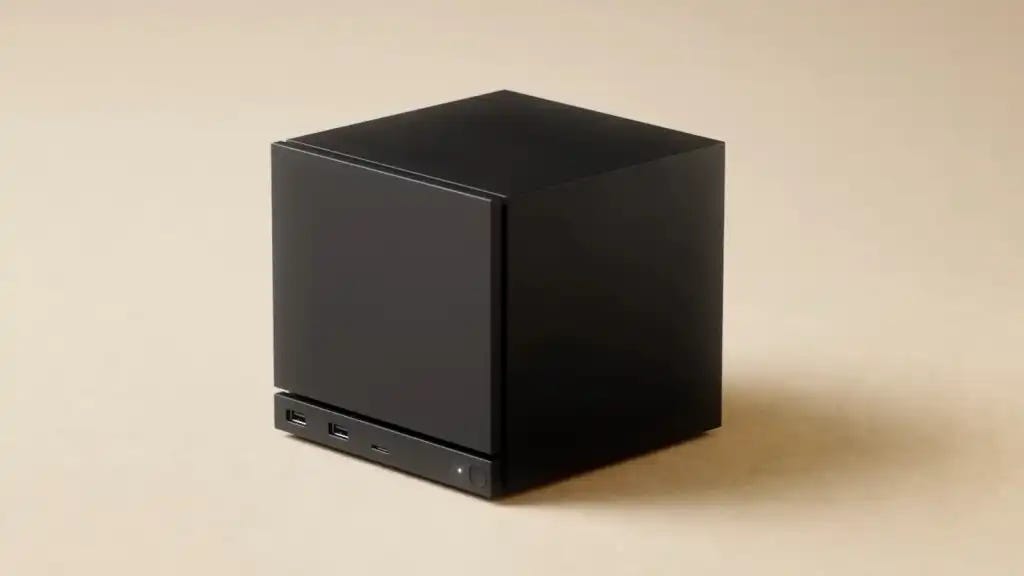
Valve launched the Steam Machine this June.
It is a compact gaming PC the size of a small cube that runs SteamOS and sits under your TV.
Starting price is $1,049 which is more expensive than most people expected. The original internal target was closer to $750 but the global RAM shortage pushed costs up significantly before launch.
Still, the Steam Machine sold out in under 10 minutes despite the price.
That tells you something. There is real appetite for a gaming device that is not a PlayStation or Xbox. And one that runs on Linux.
On the same day Valve announced the Steam Machine, they also confirmed that SteamOS 3.8 is now officially available for anyone to install on most AMD or Intel-powered PCs.
You do not need to buy the Steam Machine to run SteamOS. You can download the image, flash it to a USB drive, and install it like regular Windows.
Valve engineer Pierre-Loup Griffais told The Verge that “starting with the SteamOS 3.8 release, you can put together your own Steam Machine using whatever PC parts you want.”
This means people with compatible PCs can make a Steam Machine at home.
If you are so excited to make your own Steam Machine that you can’t wait to read this article in full, you can check out my SteamOS install guide linked here.
The Steam Ecosystem

SteamOS is built on top of Arch Linux. It uses something called the Proton compatibility layer to run Windows games on Linux without asking game devs to do anything special.
The result is that the vast majority of your Steam library just works on SteamOS. Games you already own. You don’t need to buy anything new.
The Steam Deck proved this concept worked. The Steam Machine is the living room version of the same idea.
And now SteamOS being available for anyone to install extends that even further. For Linux broadly this matters a lot.
Gaming was always the biggest hole in the argument for switching to Linux.
People were willing to accept a worse browsing experience or different office apps. But losing access to their game library was a dealbreaker.
Valve spent years closing that gap. Now it is mostly closed for most games.
There are still anti-cheat complications. Games like Valorant and the Call of Duty franchise use kernel-level anti-cheat systems that require Windows.
For now, those will not work on SteamOS. So competitive multiplayer is still a weak spot.
But for single-player games, indie games, and most of the broader library, SteamOS works really well.
As a long-time Linux user, I’m consistently surprised by how many of my games straight up just work on Steam.
Did you know Valve just announced a new VR headset?
Valve’s new VR headset is called the Steam Frame. It’s going to be one of the best gaming headsets around, because it packs some genuinely unique features.
I covered the Steam Frame’s specs and features in detail linked here.
Valve Fixing Nvidia and AMD for All

One of the bigger announcements around the SteamOS 3.8 launch was the Nvidia situation.
Historically SteamOS and Linux in general have had poor Nvidia support.
So much so that the founder of Linux (Linus Torvalds) had this to say about Nvidia in 2012:
“Nvidia has been the single worst company we’ve ever dealt with”
Most Linux gaming setups defaulted to AMD graphics for this reason, because AMD’s drivers are open source and baked into the Linux kernel already.
Griffais confirmed that Valve now has a “growing team” working directly with Nvidia to bring proper driver support to SteamOS.
The goal is that Nvidia GPU owners will eventually be able to run SteamOS on their existing hardware.
The realistic timeline is that this is not happening in 2026. Most reporting puts realistic Nvidia support sometime in 2027.
The technical challenge is that SteamOS uses an immutable file system, meaning the drive is read-only to protect users from borking their install.
And Nvidia’s proprietary drivers do not slot into that immutable setup easily. Valve and Nvidia are working through it, but it takes time.
For AMD the story is better right now.
SteamOS 3.8 ships with AMD graphics drivers and Linux kernel 6.16 which includes solid support for AMD’s RDNA 2, RDNA 3, and RDNA 4 graphics cards.
So if you have an AMD GPU, you can install SteamOS on your existing PC today and get the Valve experience.
Intel support also landed in 3.8 which expands the pool further.
If you have an Nvidia GPU, you are waiting. But at least Valve is now officially working on it with Nvidia directly.
Because Valve has opened SteamOS to the general public, I installed it myself and made a detailed guide on how to install Steam OS.
The guide has real screenshots too so you can easily follow along at home. The complete install guide is linked here.
The LTT Linux Challenge
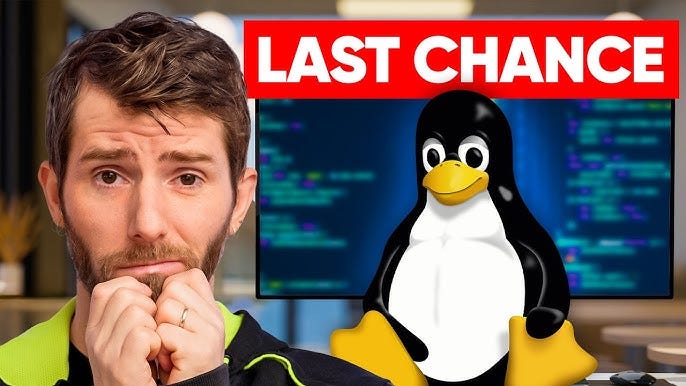
Linus Sebastian of Linus Tech Tips ran a 30-day Linux challenge in 2026 with his team.
This is actually the second time LTT has done something like this. The last major one was in 2021.
The 2026 version involved multiple staff members each picking a different Linux flavor and trying to use it as their primary operating system for a month.
The results were mixed in a way that was very useful for understanding where Linux actually stands.
Some staff had relatively smooth experiences. Gaming worked well, particularly through SteamOS and Proton.
Basic productivity tasks were fine. The interfaces on modern distributions have gotten pretty good.
Other staff hit walls. Video codec issues came up. Network share access was more complicated than it needed to be.
Application compatibility for certain professional tools was still a problem. Installing software in ways that make sense to Windows users is still not obvious on Linux.
One memorable moment involved Linus himself struggling with the choice of distribution at the start.
The Linux community has hundreds of versions and there is no obvious single answer for a newcomer.
That fragmentation is real and it matters.
What the challenge revealed is that Linux in 2026 is genuinely usable for a lot of people.
But the definition of “a lot of people” still has boundaries.
If you mainly browse the web, use streaming services, play games through Steam, and write documents, Linux will almost certainly work for you.
If you depend on specific professional software, particularly in creative fields, you will still run into problems.
The reaction from the Linux community to the LTT challenge was interesting too. Parts of the community were helpful and constructive. Other parts were defensive or dismissive when problems were raised.
This is a known pattern and it was called out directly in the series.
What Regular People Struggle With Moving to Linux?
The LTT challenge made this very visible but it is worth talking about the actual friction points that still exist on Linux.
Software compatibility is still the biggest one.
Microsoft Office has no Linux version. Adobe has no Linux version. If your job depends on these tools you are stuck.
LibreOffice is a usable alternative for many tasks but it is not the same and anyone who works with shared Office files regularly will notice the gaps.
Anti-cheat systems block competitive gaming. This is not Linux’s fault but it is a real limitation.
Installation and updates work differently on Linux.
Linux uses package managers and app stores that work well once you understand them but feel foreign at first.
Installing software the way you would on Windows, by downloading a .exe file from a website, is not how most Linux software works.
Hardware compatibility has improved enormously but is not perfect. Most modern hardware works fine.
But niche peripherals, certain printers, and some laptops with unusual hardware configurations can still cause headaches.
And the distro choice problem is real. Someone new to Linux has to pick a version before they even start, and there is no clear best answer that works for everyone.
Ubuntu is the safe starting point for most people but even that requires a learning curve.
None of these are unsolvable. Many of them have gotten significantly better in the last three years.
But they are real and pretending otherwise does not help anyone.
Omarchy, DHH and the Return of Hacker Culture
This is the part of the Linux story in 2026 that is really surprising.
David Heinemeier Hansson, usually known as DHH, is the creator of Ruby on Rails and co-owner of 37signals, the company behind Basecamp and HEY.
He is a well-known programmer in the web development space.
In 2025, DHH released Omarchy.
It is an opinionated configuration of Arch Linux combined with a tiling window manager called Hyprland. Just think of Omarchy as another flavor of Linux.
DHH describes it as his personal ideal developer environment bottled up and made available for others.
He then went further and announced that 37signals is moving its entire ops and Ruby programming teams to Linux via Omarchy over the next three years.
He said that by 2028 the vast majority of the company’s programmers and all of its ops team should be running Linux.
This is important because DHH is not a teenager experimenting with an operating system.
He is a professional in his forties who previously used Mac, ran his company on Apple hardware, and now is moving away from it.
His stated frustrations with Mac included the direction Apple has taken with hardware and software.
He was frustrated by the increasing integration of services he did not want, and a broader feeling of losing control of his own machine. Sound familiar?
Omarchy delivered a petabyte of ISO downloads in a couple of months.
That is a real number. People are not just reading about this, they are installing it.
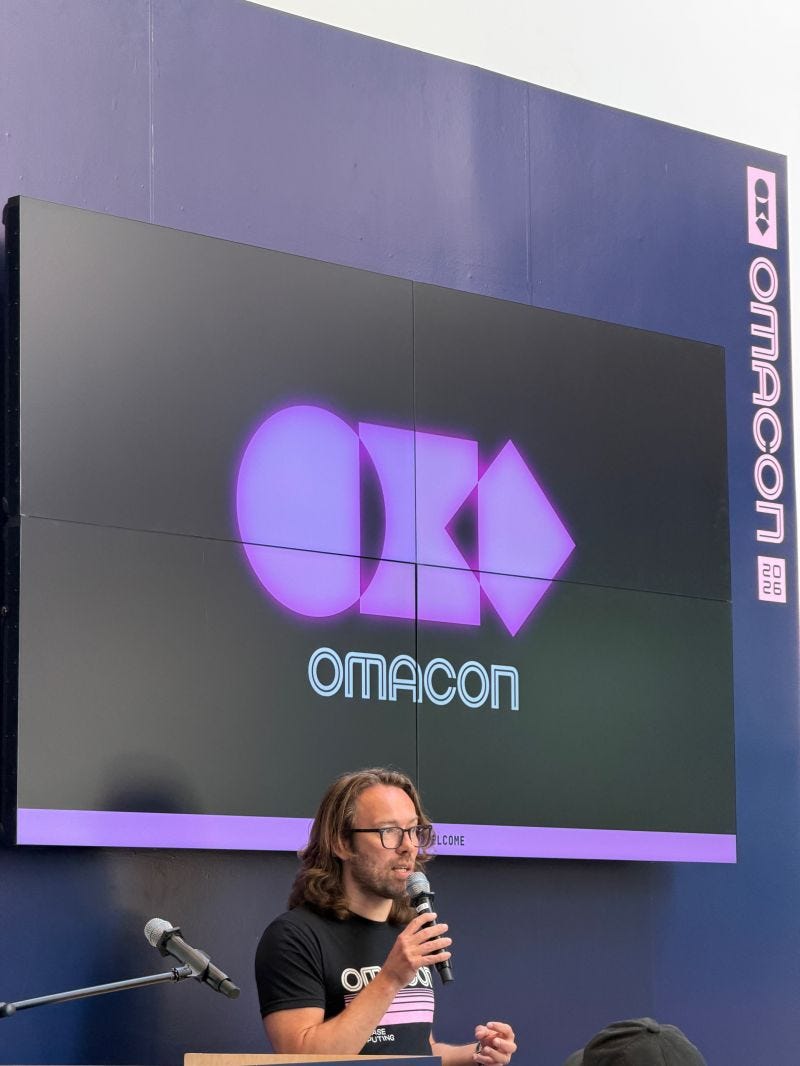
DHH also organized what he called Omacon in New York in April 2026.
It is a gathering specifically around Linux and Omarchy. The idea was to celebrate a return to hacker culture.
It was a celebration for people who like to tinker with and own their tools rather than rent a managed experience from a tech giant.
The concept lives.
A common thread runs through all of this, through Valve opening SteamOS, through DHH building Omarchy, through people getting frustrated with Windows and Mac subscription models and telemetry and AI features added without asking.
People want to own their computers again.
Why Important People Are Moving to Linux?
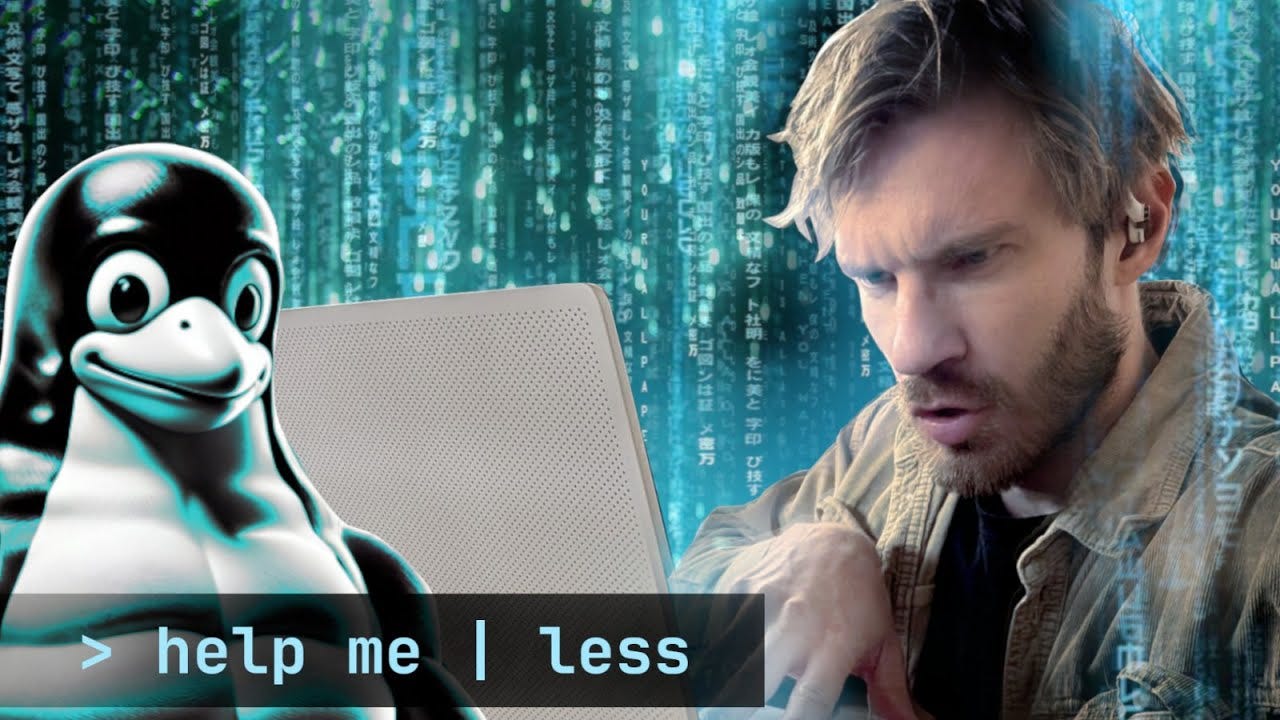
When a guy with 110 million subscribers says something, it becomes important. And that’s what happened last year with Felix Kjellberg aka PewDiePie on YouTube.
PewDiePie has been vocal about using Linux and literally named the video:
“I installed Linux (so should you)”
And the overall pattern among those who joined Linux is worth noticing.
DHH left Mac for Linux and is in the process of moving his company over to it.
Linus from LTT spent a month on it publicly.
Steve Burke from GamersNexus has been discussing Linux gaming seriously and benchmarking Linux performance explicitly on his channel.
Linux didn’t get infinitely better overnight.
The alternatives just got worse for more people.
Linux kept on improving its interface gradually and it’s in a usable state for many people.
Windows 11 has been as unpopular as ever, thanks to the AI features, telemetry, and bloat.
And since Windows 10 support ended last year, there’s been a proper campaign by Linux distros welcoming people off it.
Microsoft Recall, the feature that automatically screenshots everything you do, damaged trust badly even after it was made opt-in.
Mac hardware remains excellent but Apple’s increasing control over what can run on Apple Silicon and the subscription creep in Apple services remain.
The general sense of being managed rather than owning your machine has pushed some people to reconsider.
Linux had a usability floor that stopped most people from seriously considering it. That floor has been rising steadily.
Somewhere in the combination of Proton fixing gaming, desktop environments maturing, better hardware support, and tools like Omarchy, enough technical people started to feel this is a genuine cultural moment.
What This Means for Everyday Users?
Let’s be direct about who this actually matters for right now.
If you are someone who mainly uses their computer for browsing, watching content, messaging, and gaming through Steam, Linux is a real option today.
SteamOS and many others like Bazzite have made this accessible in a way it was not before.
If you are a developer who works in a terminal environment and does not need specific Windows or Mac software Linux has been the power user’s choice for years.
Omarchy is the latest version of an argument that has existed for a long time: that a well-configured Linux setup can be better for certain kinds of work.
If you depend on Adobe Creative Cloud, Microsoft Office in deep ways, or specific professional software that has no Linux version, Linux is not your daily driver yet. The gap is real.
The middle group is the interesting one. People who do not fall neatly into either of those categories. Regular users who do some gaming, some productivity, some creative work.
For them the answer in 2026 is probably that Linux is getting close but still requires tolerance and time to fix bugs and issues that they may face.
Is Linux Finally Ready for Everyone?
As someone who daily drives Linux I feel that Linux is ready for more people than it has ever been ready for. But that doesn’t mean everyone.
Applications are getting better. More tools are working on Linux. The GUI has matured too.
Steam and Proton have solved the single biggest adoption barrier for gamers. Companies like Valve are actively pushing compatibility further.
But it is not ready for everyone I think.
The Adobe wall is real. Most kernel-level anti-cheats still don’t work on Linux.
And the learning curve is still there. Just the sheer number of Linux flavors confuses newcomers.
What has changed is the size of the group for whom Linux does work. That group is growing. As things stand, that group is ~4% of the global desktop market share.
And just so you know, that number was around 1-2% for decades.
And for the first time in a long time the people joining that group include influential voices who are bringing attention and energy along with them.
Linus from LTT. DHH. Steve Burke exploring Linux gaming performance on GamersNexus. PewDiePie picking Hyprland for his setup.
The old converts arrived as developers and never left. This wave is coming from mainstream tech culture and finding a reason to stay.
Year of the Linux Desktop is getting closer little by little and I’m as excited as I could be.
It’s ready for more people than ever, including some you wouldn’t have expected, even if it’s not ready for everyone yet.
That is different from where we were a year ago. And it is worth paying attention to.
I hope this helped you understand where Linux stands in 2026.
If you enjoyed reading, sharing it with someone curious would be appreciated.
Further Learning
Valve says you can now build your own Steam Machine with SteamOS
LTT Linux Challenge 2026 Part 1 - Reacting to it - TuxDigital
I struggled with Hyprland for months, until this Arch-based distro fixed it
The Steam Machine is the most ambitious game console I’ve ever played
Nvidia has been the single worst company we’ve ever dealt with