



Hey there 👋
It’s been some time since IoT news started making headlines again, especially in the sea of anything AI.
Of course we just can’t get enough of discussing AI models these days, New iPhones are always in-trend and gamers are also pretty vocal about kidney-priced GPUs.
But a few months ago, something quieter happened in the hardware scene.
Qualcomm - the smartphone chip behemoth, the company behind many of the processors inside our phones - acquired Arduino, the tiny board that taught millions how to build electronics.
Arduino is the reason thousands of students first touched hardware.
It’s the reason hobbyists built smart homes before “smart home” was a thing. It’s the reason countless startups could prototype products without a mountain of cash.
At first glance, it sounds niche esp if you’re not into DIY electronics but let me share with you that it directly impacts some odd 30 million IoT developers, and not just them but the future of hardware in classrooms, startups and inside our homes.
Arduino’s acquisition isn’t your normal corporate transaction. It isn’t just about a big company buying a smaller startup. It’s about the future of accessible electronic hardware.
This article is an in-depth look at the acquisition coming from someone who owns and loves tinkering with his Arduino board.
What Is Arduino?
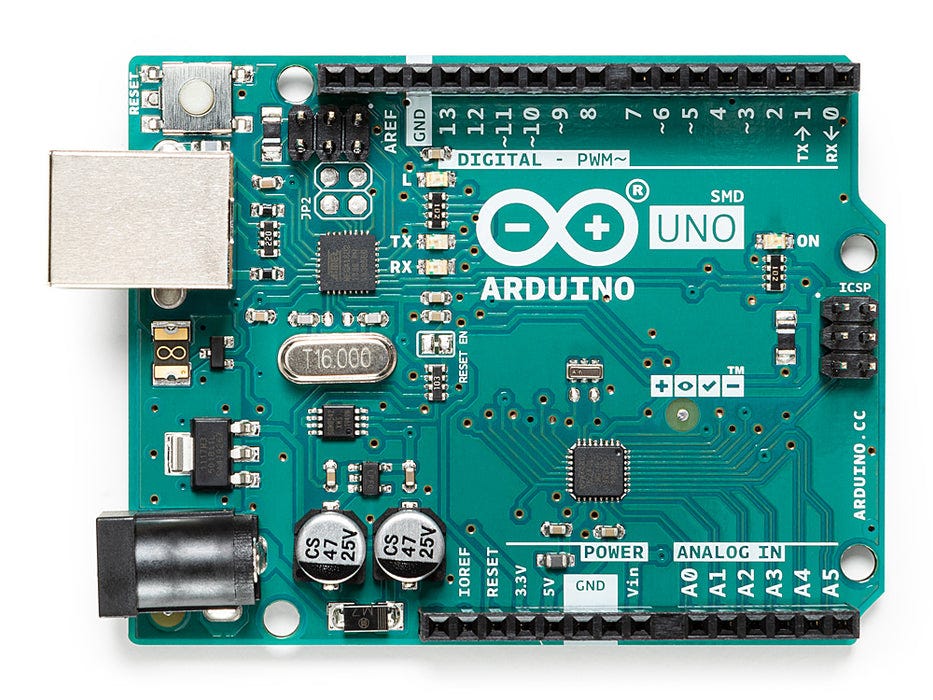
If you’ve never heard of Arduino, think of it like this:
It’s a palm-sized circuit board with a tiny microcontroller on it. You plug it into your laptop, write a few lines of code, and suddenly you can control lights, motors, sensors - basically physical stuff.
As my friend ChatGPT phrases it: Arduino is the Lego set of electronics.
So, Arduino is a microcontroller board with the ability to digitally connect and control other hardware connected to it. It could be easily programmed just through a USB cable.
Inside an Arduino board is something called a microcontroller. That sounds complicated, but it’s just a tiny computer designed to run very small but fast programs.
Most of your ‘smart’ electronics have some kind of a microcontroller baked-in. Your microwave has one. Your washing machine has one. Traffic lights use them. Cars use many microcontrollers to automate different tasks.
Microcontrollers are generally used to automate one small task like turning off a motor, controlling a switch remotely, etc. They’ve historically been accessible to large companies or specific industries.
What Arduino did was take that tiny computer that engineers used in factories and make it usable by normal people. No advanced lab. No corporate license. Just USB cable, simple software, and your imagination.
These days Arduino is more of an ecosystem now that is not just limited to the physical dev-boards but also includes their own programming software (Arduino IDE) and programming language (Arduino C).
Arduino is known for popularizing DIY electronics by making microcontrollers accessible outside just professional engineering circles.
Note: It’s easy to mix an Arduino with a Raspberry PI.
Even though both share many features and may look similar on surface, they are different devices. You may check our detailed article below on Single Board Computers to learn more:
The Beginner’s Guide to Single Board Computers

With each passing day computers are getting smaller and smarter at the same time. The earliest computers were the size of a double decker bus and they were replaced by PCs that sat on our desks.
Hardware scene before Arduino
Before Arduino showed up in 2005, programmable hardware wasn’t as accessible or friendly for normies. Specialized boards existed but they were expensive and locked down too.
Moreover, If you wanted to program a microcontroller, you had to use complicated programming languages (aka low-level languages) C or C++.
You also had to deal with vendor-specific software for each hardware and sometimes buy separate programming hardware.
Before Arduino, we had specialized boards that were not only hard to get a hold of by a normie but were expensive too. Back when the founders of Arduino started, some development boards would cost more than $100.
It wasn’t impossible but it wasn’t welcoming for our average Bashir. Nerds could go through these lengths but most high school students don’t want to.
Most development boards before Arduino were proprietary. Documentation was hard to find and communities were small.
In simple terms: hardware was for trained engineers not curious individuals sitting in their homes who want to experiment with their DIY skills.
The Open Source DNA
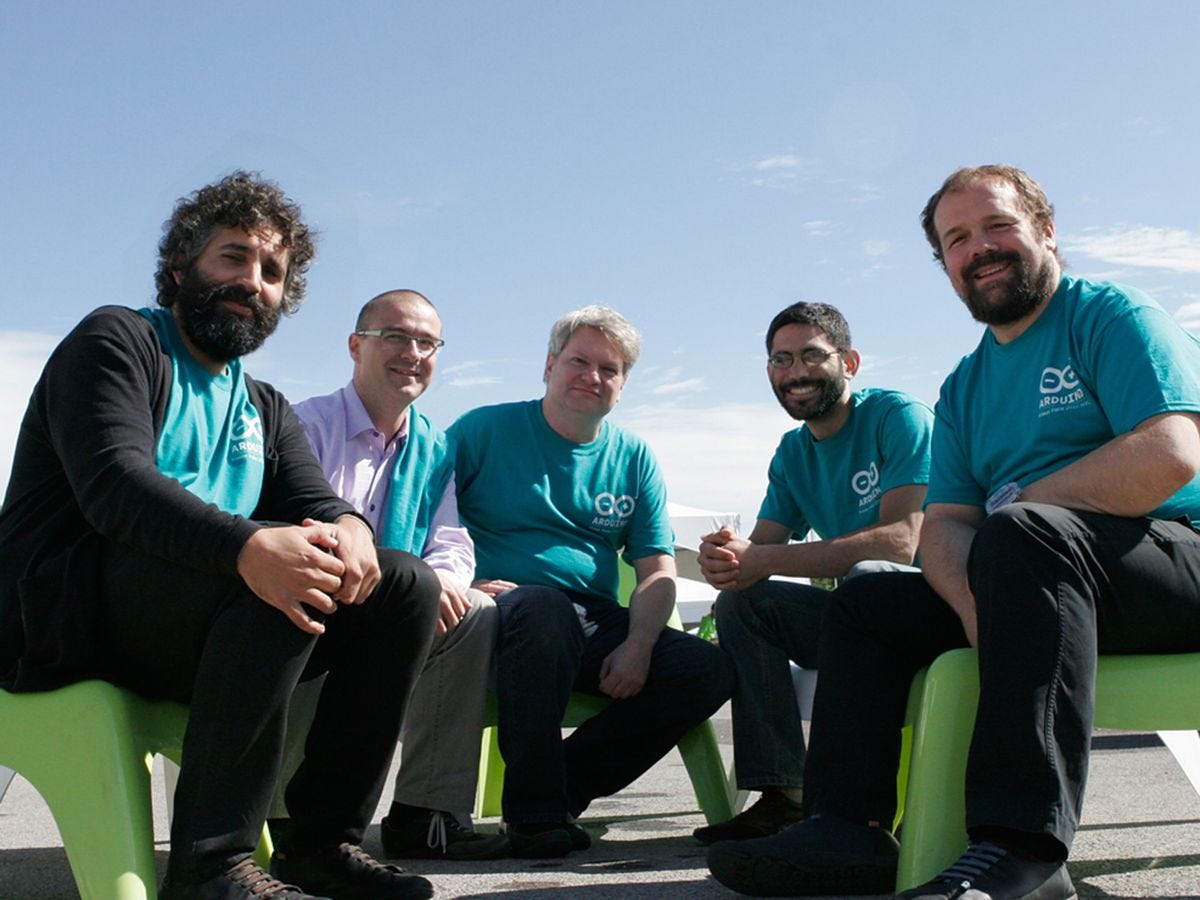
Arduino was created in-response to limitations in microcontroller boards of the time. The idea was simple: to create a more open and accessible microcontroller board that is easy to program for students.
One of the co-founders of Arduino was Massimo Banzi who was tasked to teach students computer electronics.
Early on, Banzi discovered that microcontroller boards of the time would cost about $100, didn’t have computing power for complex programs and weren’t compatible with the popular Macintosh computers at the time.
Banzi was lucky to have a colleague at MIT who had designed a simple programming language for new programmers. The better thing was that the project was open-source. That was the inspiration for Arduino IDE.
Note: IDE stands for Integrated Development Environment. In our case, an IDE is just a collection of specialized software that allows one to write and push their programs onto the microcontroller.
A student in Banzi’s program started working on a related project called Wiring, which had a user-friendly IDE and a simple circuit board.
The important thing here is that Banzi and his peers were strong believers in open-source software.
Because their goal was to create a quick and easily accessible platform and they feared the institute won’t be able to fund the project, the co-founders felt they’d be better off opening up the project instead of keeping it closed.
Here’s how one of the co-founders recalls their decision to go open:
“So we said, ‘Forget it,’” Banzi recalls. “ ‘Let’s make it open source.’”
How Arduino Hugged Open-Source
The initial Arduino software and more importantly - the hardware design itself was free and open-source for anyone to use and collaborate on. There was no complex licensing, no nothing!
The initial discussions around pricing the board wanted it to be priced around $30 or equal to going out to dinner at a pizza place. Right from the start, they wanted it to be student-friendly.
You plugged the board into your computer via USB. You opened the Arduino IDE. You clicked “Upload.” That was it.
It also shipped with example code. Want to blink an LED? There’s a template. Want to read a temperature sensor? There’s a template.
That meant people could study it, modify it, even manufacture compatible versions.
Tech publications have highlighted how Arduino’s open hardware model made it popular globally by lowering costs and encouraging clones.
Arduino’s Explosive Impact
Arduino solved the problem of making accessible boards but it didn’t stop there and instead built an ecosystem that combined that hardware with their software.
Their result was an affordable kit that was simple to program and play with even for a high school student.
Because the Arduino designs were open, other companies could make Arduino-compatible boards. These clones often cost one-third the price.
That meant students in developing countries like ours could afford them. Schools could buy them in bulk. Makerspaces could stock them cheaply.
Arduino’s community has also been central to its open identity. Makerspaces around the world love Arduino and there are thousands of projects built on Arduino that are freely available on the internet.
This sense of community work has also contributed to Arduino’s success. For a newcomer much of the work is already done by the community.
The Arduino community has a plethora of software libraries (pre-written programs) that beginners could just plug and play in their projects.
Impact on Education
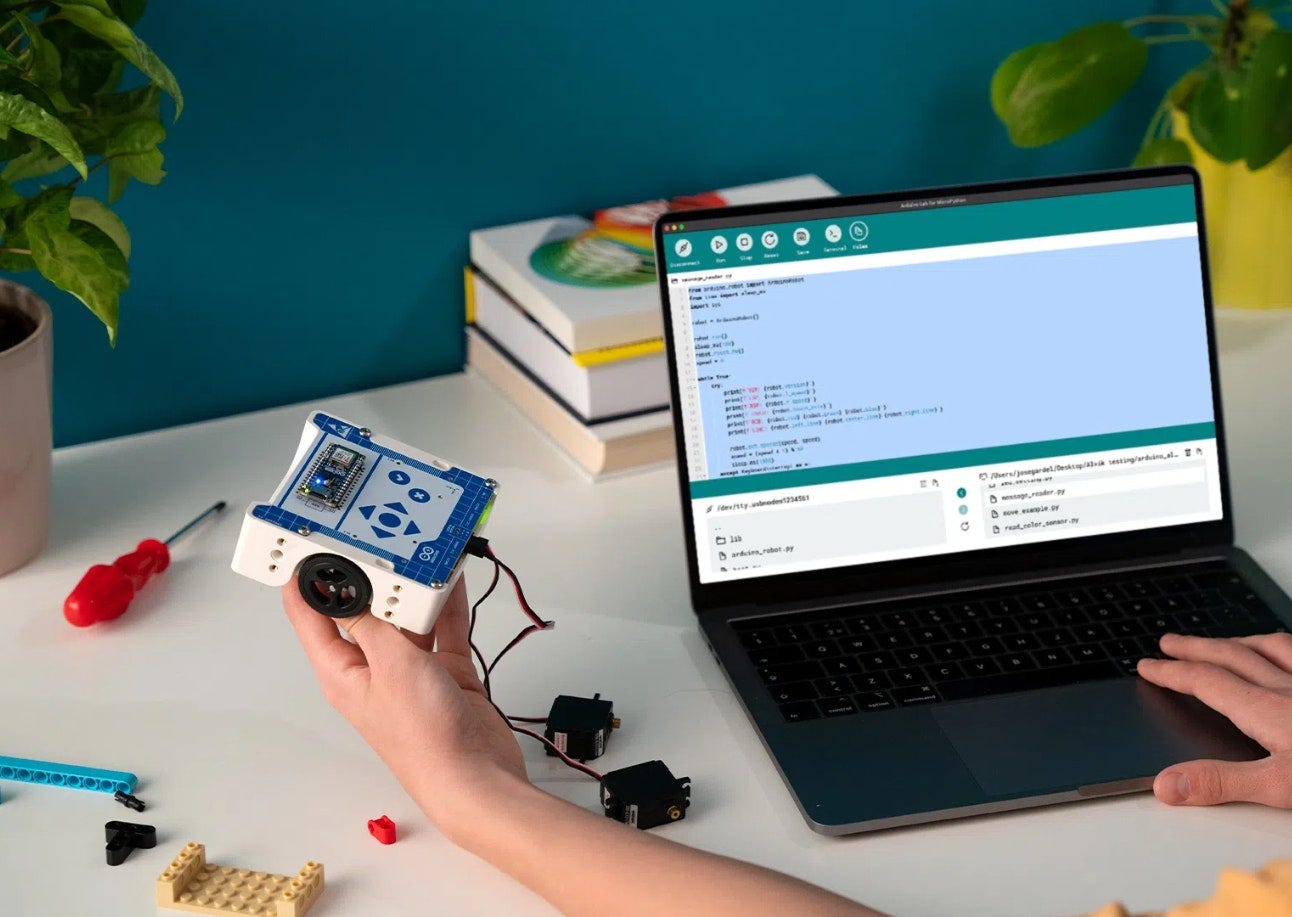
Arduino’s plug and play experience thanks to the community, is how you see high school students walking around with their prototype robots being controlled over an Arduino board.
Instead of static programs printing “Hello World” on a monitor, students could have their small programs control LED lights, steer their robots or fly their drones.
The Arduino community not only reduced the bar to experience Arduino but also made it fun for beginners.
In a way, getting into engineering and Computer Science courses was fun thanks to Arduino’s community that has their projects freely available on the internet.
This community and plug-and-play experience is why it’s hard to see an Electrical Engineering or a Computer Science without mention of an Arduino board.
Arduino became the gateway into engineering.
That’s why tech outlets have repeatedly described Arduino as foundational to the modern maker movement and STEM education growth.
For many startup founders today, Arduino was their first hands-on experience with how software controls hardware.
Impact on Small Businesses
For businesses, Arduino wasn’t usually the final product inside your house but for many small businesses it was often the starting point.
Startups used Arduino to prototype hardware cheaply. Instead of designing custom PCBs from day one, they tested ideas using Arduino boards.
Many home automation setups, environmental sensors and irrigation related startups played around with Arduino boards before finalizing their products.
Industry analysts have noted that Arduino dramatically reduced early-stage hardware development costs for small teams and startups.
In a sense, Arduino made it easy for hardware engineers to experiment and build and test early versions of their product.
It reduced costs and removed the friction one used to face before Arduinos were a thing.
So Why Did Qualcomm Buy Arduino?
Whether we like it or not, it’s a fact that every device wants to connect to your WiFi and call itself ‘smart’.
Smart devices are everywhere. Edge AI is rising. Even basic products now ship with sensors and connectivity.
Qualcomm wants to be central to that future and Arduino sits at the entry point of that future.
That’s why just last year in October, news came out that Qualcomm just acquired Arduino (the company).
We all know that Qualcomm isn’t a hobby brand. It designs smartphone processors which are way more powerful and complicated than an Arduino.
The company announced it was acquiring Arduino as part of a broader push into AI and IoT devices. From Qualcomm’s perspective, this makes strategic sense.
Arduino has millions of developers and students using its platform. They can influence them in earlier stages to be more familiar with their stack.
If those builders eventually build companies, whose chips would they be more familiar with?
Industry analysts say that this acquisition is Qualcomm trying to “meet developers earlier in the pipeline” of hardware innovation. If you didn’t get it, here’s a meme:

What Changes Technically?
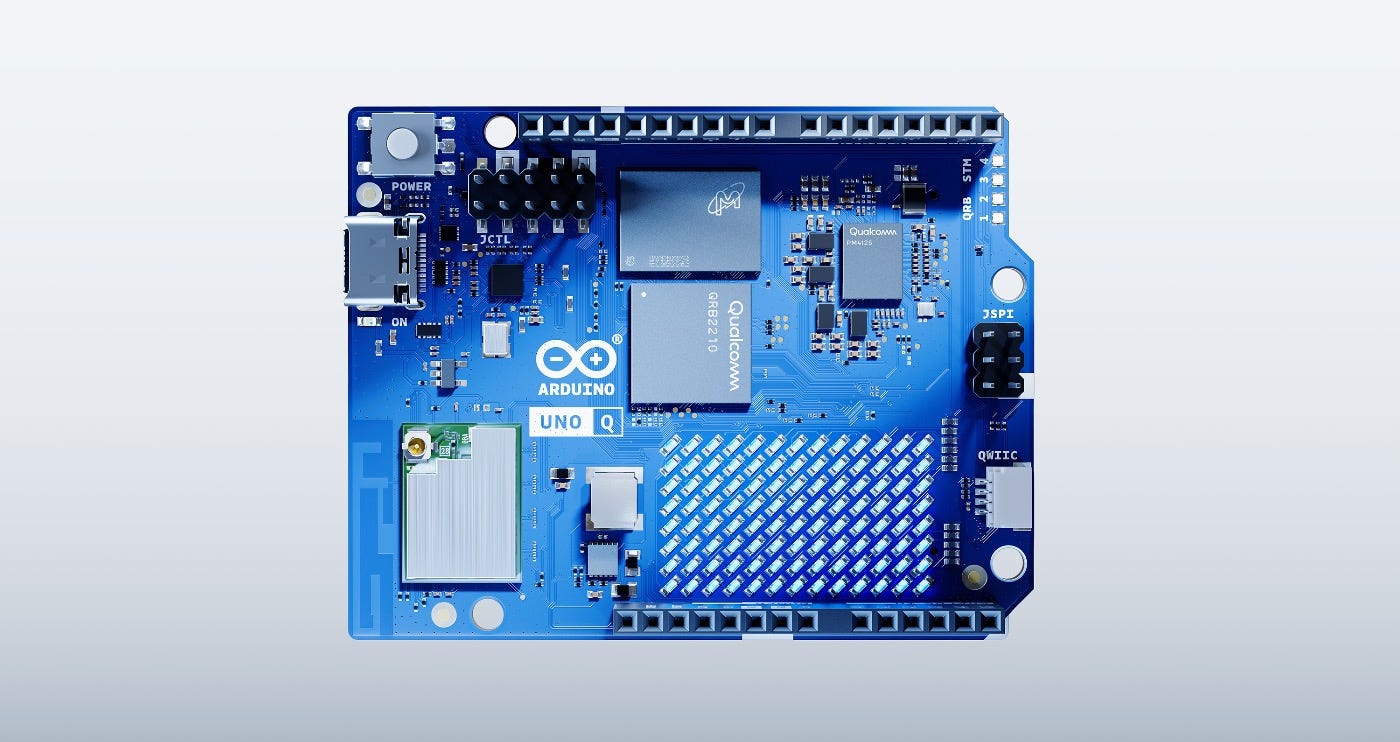
One early sign of direction was the announcement of the Arduino UNO Q, a board combining Arduino compatibility with Qualcomm silicon and more advanced capabilities like Linux and AI support.
The Verge reported that this board aims to blend Arduino’s beginner-friendly ecosystem with more powerful computing hardware.
That means future boards could include:
Better wireless connectivity
Built-in AI acceleration
Stronger integration with modern IoT stacks
For users, that sounds like progress.
But progress always comes with trade-offs.
The Openness Question
Here’s something that worries the open-source community.
Arduino built its brand on openness, free designs and community. Qualcomm built its empire on proprietary silicon and licensing.
So their concern makes sense:
Will Arduino remain open?
Reuters reported that Qualcomm said Arduino would continue supporting multiple chip vendors and maintain its mission.
On paper that sounds good, but corporations don’t think twice before contradicting their own statements.
And open-source communities generally don’t trust big companies nor their press releases. Trust is the most essential element to these small communities and that’s why they’re skeptical.
If openness shrinks, clone compatibility disappears, or licensing tightens, the ecosystem could fragment.
And once a maker ecosystem fractures, it rarely fully recovers.
What This Means For Students and Hobbyists?
At the moment we don’t have much to worry about. If you’re a student, here’s the short version:
In the near term, nothing dramatic changes. Arduino boards still work. Tutorials still exist. Their Arduino IDE still works as it should.
In the medium term, we can expect more powerful boards with built-in connectivity and AI features because Qualcomm already has a proven portfolio in that sector.
That could actually be exciting for us Arduino fans. But affordability and openness will determine whether Arduino stays true to its original mission or not.
For hobbyists and tinkerers like me, this acquisition could mean:
More powerful toys which means more complex projects.
For startups, it might mean smoother scaling from prototype to commercial silicon - especially if one wants to integrate with Qualcomm’s tech.
My Somewhat Optimistic Take
Arduino’s story is personal to me because Arduino UNO was one of my first interactions with a microcontroller board.
On a random night, I had a project idea related to RFID badges, I still remember going through it in detail with ChatGPT which had just come out.
The very next day I was able to buy an Arduino clone for ~900 PKR ($3) from my local electronics market and my project was ready that week.
And that was my first experience with Arduino. I didn’t have to find the schematics of the microcontroller or write Assembly language code just to build out my small project.
That heavy-lifting was already done by Arduino and the community. It was largely a plug and play experience for me.
The more important thing here is that because of Arduino’s open design we (in developing countries) can get Arduino clones for that cheap.
Arduino encourages others to use their designs. An original Arduino that costs me 9,000 PKR ($30) is available for 900 PKR ($3), and for me, both of them are identical in feature-set and performance.
That’s the power of that open-design philosophy.
It’s a fact that without Arduino, hardware would still feel scary to millions and engineering courses wouldn’t be that fun.
It’s a reality too that without companies like Qualcomm, many connected devices wouldn’t exist at scale. The company has shipped like hundreds of millions of processors, just let that sink in.
Arduino’s acquisition connects the biggest open hardware ecosystem with a technology behemoth.
If Qualcomm preserves Arduino’s open spirit, keeps boards affordable, and strengthens and not restricts the ecosystem, this could be an evolution.
If not, it risks becoming another story about corporate greed and a failure of capitalism.
For now, the DIY/maker movement just got a new owner. The next few years will show us which path this takes
And people like me who ever plugged in that little blue board would be watching closely.
As always thanks for taking out the time to go through my blogs. I appreciate all of my readers. I’d love to know about your thoughts down below. Your comments actually make my day.
Any feedback or criticism is welcome down below in the comments!
This acquisition is bigger than most people realize, and you've laid out the stakes well. Here's the angle I'd add from an Edge AI perspective:
Qualcomm isn't just buying a developer community -- they're buying the on-ramp to what I call the "Internet of Smart Things," AKA Edge AI. The original Arduino was the gateway to the Internet of Things: connect a sensor, send data to the cloud, done. But the Arduino UNO Q with Qualcomm silicon and built-in AI acceleration? That's the gateway to the next paradigm -- devices that think locally.
When you give 33 million developers access to boards with on-device AI inference capabilities at Arduino price points, you're not just selling chips. You're seeding an entire generation of builders who will design Edge AI into their products from day one. That's the real play here.
The openness question you raise is critical though. Edge AI only scales if the ecosystem stays open. Proprietary lock-in at the development board level would be a disaster -- it would fragment the very community that makes Arduino valuable. Qualcomm needs Arduino's open DNA more than Arduino needs Qualcomm's silicon. I hope they understand that.