



Hey there 👋
If you walk around a big phone market in your area you will see one number plastered everywhere.
Big numbers like 200MP and 108MP are everywhere because monkey logic dictates the bigger the number the better the stuff right?
It looks like every smartphone company wants to win the megapixel race.
Vivo’s X300 Ultra has a 200MP main camera. Samsung’s Galaxy S26 Ultra has a 200MP sensor too.
Xiaomi went the other direction on the main camera of their 17 Ultra and used a 1-inch 50MP sensor instead. It is widely considered one of the best camera phones you can buy right now.
This imbalance alone should already tell you something is off.
If megapixels alone decided photo quality Xiaomi would be losing badly with “only” 50MP, right?
While this megapixel war continues, professional photographers are walking around with cameras that often have fewer megapixels than your phone.
Many professional cameras sit in the 24MP to 45MP range.
So here is the obvious question nobody seems to ask out loud. If 200MP is genuinely better, why are professionals carrying cameras with a fraction of that number?
That’s exactly the question I asked a couple of weeks ago when I was researching digital cameras.
The answer is that megapixels were never the real story. They are the easiest number to put in an ad and that’s probably why companies do it.
That is why this article is about figuring out what actually matters when you are judging a smartphone camera.
This is the first article in a 3-part series.
In this first part, we will deal with the raw specs that you should and should not focus on in smartphone cameras.
Part 2 will get into the physical hardware behind those numbers.
Part 3 will cover the software doing most of the real work today.
What Exactly Is a Megapixel?

I bet you have heard about megapixels but never had it explained to you. That’s where I come in :).
So, a pixel is a tiny dot of color. Your phone screen, your camera sensor, every digital image is built from millions of these tiny dots sitting next to each other.
A megapixel is just one million pixels. A 12MP photo is made up of 12 million of these dots. A 200MP photo is made up of 200 million of them.
Think of it like a mosaic made of small colored tiles. More tiles theoretically means you can capture finer detail.
A mosaic with a million tiles can show way more detail than one with a hundred tiles.
Naturally one thinks, more tiles sounds like a clear win.
More data, more detail, better photos, right?
And you know what? That logic is correct as far as it goes. It just leaves a lot out.
But the incomplete part is where these flashy smartphone ads get us all.
More Megapixels Do Not Mean Better Photos!
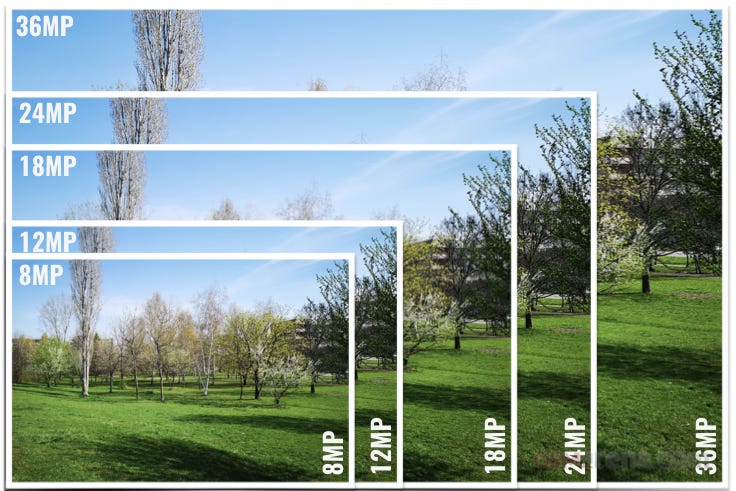
Let’s say you take a 50MP photo from a budget Android phone and a 24MP photo from a basic DSLR.
In almost every real comparison, the DSLR photo looks way better.
The DSLR photo has cleaner skin tones, more natural colors and better detail in shadows.
But you see, the DSLR is working with fewer than half the megapixels and still wins.
This happens constantly when people compare phones too.
DXOMARK (a camera testing lab) ranked the iPhone 17 Pro as one of the best camera phones of 2025.
Its main camera shoots at 48MP. Most everyday photos are actually saved at 24MP by default to balance quality and file size.
Compare that to the 200MP Galaxy S26 Ultra and you would expect the iPhone to lose badly on paper.
But test it out in reality and you’ll quickly see that IT DOES NOT!
DXOMARK scored the Samsung at 157, a full 11 points behind the iPhone.
So if resolution is not deciding the winner here, what is?
The answer is a good one and let me try to answer it in brief first and then we’ll get into the weeds.
So, image quality depends on how much light the camera sensor can physically capture.
It also depends on how good the lens is at focusing that light cleanly.
And it also depends on how smart the software is at turning raw sensor data into something that looks good.
You see the pattern?
There isn’t just one thing that would magically make the images better.
It’s a combination of factors and that’s what most smartphone discussions, especially in our country, miss.
Megapixels are the most hyped spec of all in a phone camera, but they are just one ingredient. And not even the most important one.
The Secret Is Sensor Size
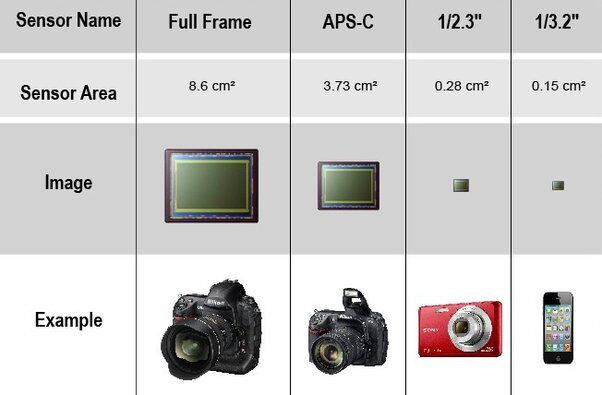
And this is the part smartphone camera marketing conveniently leaves off the box.
Every camera, whether it is in your phone or a professional camera, works by capturing light on a sensor.
The sensor is the actual physical chip that reacts to light and turns it into image data.
Megapixels tell you how many individual light-capturing points exist on that sensor. Sensor size tells you how big the entire chip is.
But there’s a catch here too.
If you keep the sensor size the same but increase the megapixel count, each individual pixel has to get smaller to fit.
Smaller pixels capture less light per pixel.
A useful way to picture this is two buckets sitting out in the rain. One bucket is huge. One bucket is tiny.
Even in the exact same rainstorm, the giant bucket collects far more water. Simply because it has more surface area to catch it.
Camera pixels work exactly the same way with light. A bigger pixel is a bigger bucket.
It physically captures more photons, the basic units of light. More captured light gives the camera more information to work with.
That leads to better detail, more accurate colors, and better performance in anything other than perfect sunlight.
This is exactly why Xiaomi’s 1-inch sensor on the 17 Ultra punches so far above its 50MP count.
Just compare it with the Galaxy S26 Ultra, which squeezes 200MP onto a much smaller 1/1.3-inch sensor.
Each of Samsung’s pixels is tiny, so each one catches less light.
This is the actual reason your 200MP phone sometimes takes worse low-light photos than your friend’s older iPhone. The culprit is the sensor size behind those megapixels.
The Vivo X300 Ultra shows the flip side. Its 200MP sensor is nearly 1-inch, and it ranks among the best camera phones you can buy.
Megapixels and sensor size are two separate things, and a 200MP sensor can be big too.
A big sensor beats a small one in low light and dynamic range, no matter how many megapixels either has. A high megapixel count crammed onto a small sensor is a trap.
Dynamic range is an important concept too in cameras.
It basically means how well a camera can capture detail in both the brightest and darkest parts of the same photo at once.
Take a photo of a friend standing in front of a sunny window.
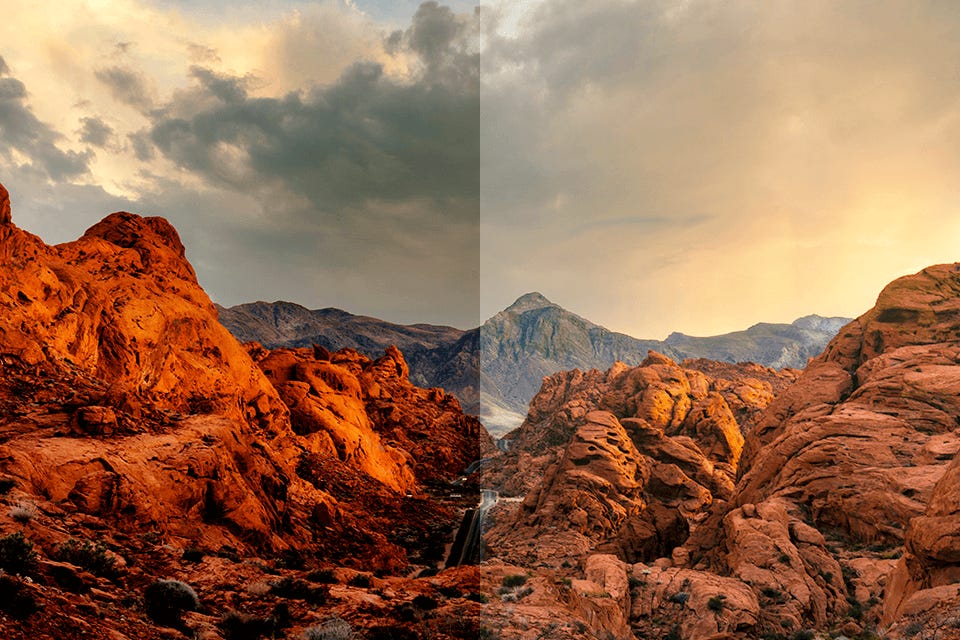
A camera with poor dynamic range will either blow out the window into a white blob or turn your friend into a dark shadow.
A camera with strong dynamic range can hold detail in both at the same time.
The Things Brands Do Not Advertise
Sensor size is a pretty important specification.
But it is far from the only spec quietly doing the heavy lifting. Aperture is another important one.
Aperture is the size of the opening that lets light into the camera. It is written as something like f/1.7 or f/2.8.
The lower the number, the wider the opening, and the more light gets in.
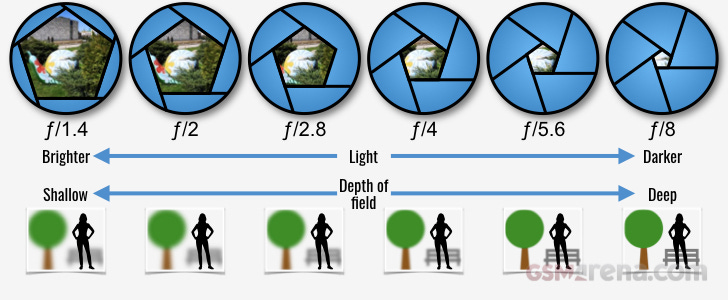
Apple’s iPhone 17 Pro main camera sits at f/1.78. Its ultrawide uses f/2.2.
A wider aperture genuinely helps in dim places and indoors. These are situations where photos usually go bad.
Optical Image Stabilization, or OIS, is a really important feature too. OIS physically moves the lens or the sensor itself to counteract your hand shaking while you take a photo.
Without it, anything shot in low light with a slower shutter speed comes out blurry. Because your hand is never perfectly still.

The iPhone 17 Pro uses sensor-shift stabilization on its main and telephoto cameras. That is a big part of why its photos stay sharp even in trickier lighting.
Frame rate and shutter speed matter mostly for video and action shots.
Frame rate is how many individual images get captured per second when shooting video.
30fps and 60fps are the common standards. Many flagships now shoot 4K at 120fps, and slow motion goes even higher.
Shutter speed is how long the sensor stays open to capture each individual frame. Faster shutter speeds freeze motion better but need more light to avoid a dark image.
This is exactly why sports and pet photos are so often blurry on phones with weaker sensors.
None of these specs get a giant number on the box the way megapixels do. But they are quietly responsible for most of what actually separates a good camera phone from a mediocre one.
What to Look at, Then?

By now the pattern should be clear to you.
Megapixels are a real specification and they do matter, especially if you crop heavily or print large photos.
But treating megapixel count as the main metric of camera quality is like judging a car purely by its top speed.
You are ignoring the engine, the comfort, and everything else that decides whether it is actually good to drive.
A Simple Checklist
When you are comparing phones, here is a simple checklist that you can follow instead of just chasing the biggest megapixel number.
Look at sensor size first, even if you have to dig for it in the detailed spec sheet rather than the headline marketing.
A 1-inch sensor at 50MP will usually beat a tiny sensor at 200MP, especially indoors or at night.
Check the aperture number on the main lens. Lower numbers like f/1.7 or f/1.8 let in more light, which helps in nearly every situation that is not bright daylight.
Confirm OIS is present, particularly on the main and telephoto lenses. This really helps those who have shaky hands or have to record and capture while moving.
Most importantly though, just look at actual sample photos.
Reviewers at sites like DXOMARK and GSMArena publish real comparison shots taken with the same phones in the same conditions. These tell you far more than any spec sheet ever will.
They show you what the camera actually produces rather than what the company claims it can produce.
Look, I understand that sifting through detailed spec sheets to find out the above-mentioned specs appears hard at first and is time-consuming.
For an average person, if they don’t want to bother with it they can just look at the sample images that the phone has taken.
It is one of the quickest ways to judge a camera’s quality.
It is certainly a lot better than parroting some number that doesn’t affect you that much directly.
A bigger sensor, a sharper lens, and smarter processing will beat a higher megapixel count almost every time.
The next time you see someone bragging about 200 megapixels, you will know exactly which questions to ask.
But there’s another question.
If bigger sensors are so clearly better, why doesn’t every phone just use a 1-inch sensor?
The answer is packed inside that camera bump, and it’s where Part 2 picks up.
Parts 2 and 3 of this series are for paid subscribers.
If you want to follow along, you can subscribe from the button below: