



Hey There👋
Welcome to the final part of our self-driving series.
So, more than a decade ago, Silicon Valley promised us fully autonomous self-driving cars. Cars that could drive themselves totally on their own.
The concept was of futuristic cars cruising smoothly around cities without need for humans to drive.
It was a promising concept, but the delivery, even after this many years isn’t what many had initially hoped for.
Instead of completely driverless cars driving us places, we have a mix of human and some levels of self-driving. For the most part, humans are still involved in the driving experience.
Even advanced self-driving services like Waymo with their Level 4 self-driving systems still have humans involved in the driving process although sometimes in a remote setting.
It took us years to reach the current level of self-driving that exists today but many of the companies that initially joined the self-driving industry have exited out of the race.
In this race of getting to develop self-driving experiments we’ve seen successes like Tesla and Waymo but there have been some big failures too.
Not a lot of people know about this, but Apple spent more than 10 years working on a secretive self-driving project called the Project Titan, a project that never shipped a product and officially exited a year ago.
And very few people know about the exit of Cruise AI, a startup backed by General Motors for 1 Billion dollars, yes billion with a B!
That’s why today I’ll talk about the history of two of the biggest companies to exit the self-driving race. I’ll largely focus on the biggest one (Apple) while also discussing General Motors’ exit from the self-driving race.
This article that you’re reading is the last in a series of 3 articles we did on SK NEXUS covering the self-driving industry

Our first article in the self-driving series, talks about the current overview of the self-driving industry. I discussed the key terminology, the levels of autonomous driving, the big players in the industry and, an overview of the tech they’re using.

In the second article, we did a deep-dive into the technology that self-driving companies use. We discussed the two popular approaches to solving self-driving (LiDARs and Computer Vision) and shared some perspective on both.
I encourage you to go through these articles in order just so we have a shared ground to begin discussing today’s article.
Apple’s Project Titan
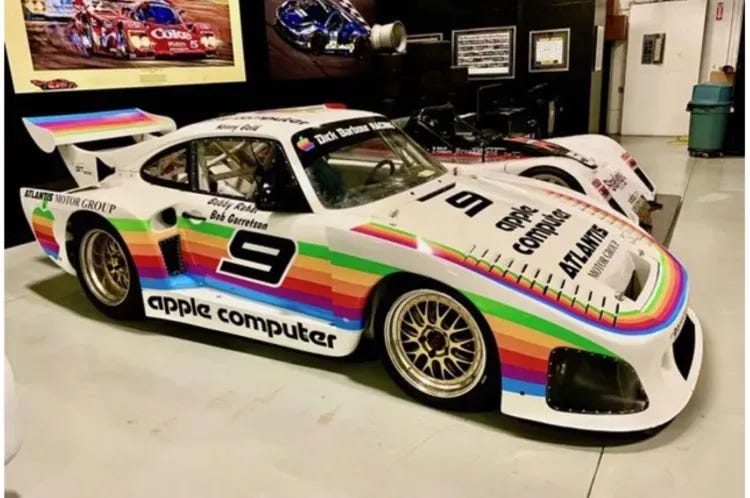
So, Project Titan was Apple’s attempt to build an electric, self-driving car. The initial idea was to build a proper self-driving car but that evolved into building a car with ADAS-like features.
The thing to know about Project Titan is that it was a secret project, so secretive that even today we don’t have a single official image of the car or the technology Apple developed.
So, the project was officially behind closed doors but its existence was obvious from public testing of cars and Apple’s hiring of engineers from the self-driving industry.
The industry had a keen eye on Project Titan for a decade but Apple didn’t announce a cancellation to the public.
But it was in 2024 when Bloomberg broke the news that Apple halted work on their electric car and announced internally that the 2,000 person team on Project Titan would be shifted to generative AI.
2013 - 2014: Hiring for Project Titan Starts
Apple is one of the companies that had eyes on the self-driving industry long before it came up. Reports on the Project Titan go as far as 2013.
Initially Apple executives are reported to have had meetings with Tesla which was trying to make a name for themselves in the EV industry.
The meetings weren’t fruitful and nothing much came out of it other than a few Apple execs leaving for Tesla.
Right around 2014, Apple started work on Project Titan by poaching people from traditional car manufacturers like Mercedes-Benz and Ford from many of their divisions.
Hundreds of people were now working on a self-driving minivan-like car. It was the same time Apple executives were on tour looking for partners around the world. Tim Cook is reported to tour BMW’s facilities also around 2014.
2015: Apple’s Secret Research Lab is Official
The Financial Times breaks in February that Apple has been hiring automotive experts to work in a secret research lab, and The Wall Street Journal immediately follows that up by reporting that the company is working on an electric vehicle that it describes as “minivan-like.” The WSJ report also claims that self-driving tech “is not part of Apple’s current plan.”
As with most things Apple, the news sent shockwaves across the automotive industry. The head of Mercedes-Benz parent company Daimler at the time, said one week later that he wasn’t losing any sleep over Apple’s interest in building a car.
It is important to note that even around this time Apple has its lips sealed over Project Titan. Tim Cook famously dodged the question when asked if Apple wants to buy Tesla.
The veil is lifted when a German magazine shares that Apple talked to BMW for their EV tech that powers its i3 compact car. The Guardian does come up with the documents confirming Apple’s interest in developing a self-driving car.
The New York Times reported in September that Apple is still split on whether it should build a self-driving car, an electric vehicle or both.
By this time the Titan project is up to 600 people and Apple is pulling people from other teams. Musk says that Apple is poaching its people.
2016: Focus Shifts
In September, the Financial Times reported that Apple approached McLaren about a potential acquisition or a strategic investment.
One month later, Bloomberg reports Apple is cutting hundreds of members of the Titan team as the company pivots away from building an electric car and toward developing an autonomous driving system.
This is a key moment in this story that shows that up till 2016 Apple was unclear about the future of Project Titan. As initially reported, they were split on a car or the self-driving tech.
Apple executives allegedly give the team until the end of 2017 to prove out the tech and “decide on a final direction.”
2017: The Self-Driving scene heats up
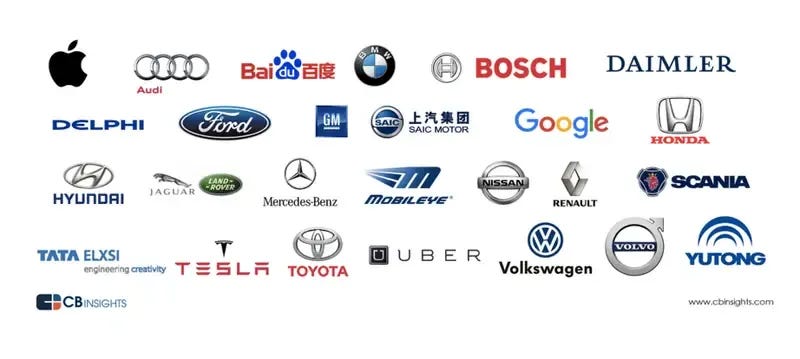
Apple received a permit from California’s Department of Motor Vehicles to test its autonomous driving tech using three Lexus SUVs in April of 2017.
It was the time when Uber was also building its self-driving after poaching experts from Carnegie Mellon University. Google’s Waymo also jumped in around this time with both of the companies accusing each other of stealing their technology.
Right around this time General Motors acquired Cruise for 1 Billion dollars. We’ll talk extensively about Cruise in a bit but right now, let’s switch back to Apple.
2017 is when Tim Cook publicly confirms that Apple is indeed working on an automotive project. He calls it “the mother of all AI projects.” But he dodges answering whether Apple will ever make its own electric car.
Around this time, Apple plans to operate an autonomous shuttle that would bring employees from one building to another on its campus, The New York Times reported. The company also started working on its own lidar sensor.
2018 - 2019: Hiring and Firing
In 2018 Apple expands its self-driving fleet which triples in size.
Around this time Apple poached Google’s AI chief John Giannandrea and now the Project Titan that started with a few hundred employees balloons to around 5,000 people.
Back in 2019 Apple started restructuring and more than 200 workers are fired from Project Titan.
The executives continue the narrative that the future products will “blow you away.”
Around this time, Apple acquired a self-driving startup Drive.ai.
2021 - 2022: Pandemic Shifts Focus Again
The COVID-19 pandemic puts a pause on almost any meaningful reports of what Apple is up to with Titan, as workers stay-at-home and most of the team goes remote.
During this time, though, Apple starts up a brief discussion with EV startup Canoo about a possible acquisition or investment. The talks ultimately go nowhere.
Once again, Bloomberg reports another pivot in December. This time, Apple reportedly scales back ambitions after realizing that a fully autonomous vehicle without a steering wheel or pedals is not feasible.
The company reportedly pivots to a car that would only be autonomous on highways, and Apple even considers using a “remote command center” to assist drivers or control the vehicles during emergencies. The target date slips to 2026.
2023 - 2024: Rest In Peace
Apple has steadily built its test fleet back up in California. But news about the project’s progress dries up. In September, analyst Ming-Chi Kuo shares that the “development of the Apple Car seems to have lost all visibility”.
He writes that he doubts Apple can mass-produce the car without an acquisition of another automaker. Behind the scene the board starts pressuring the company’s leadership for progress on Project Titan.
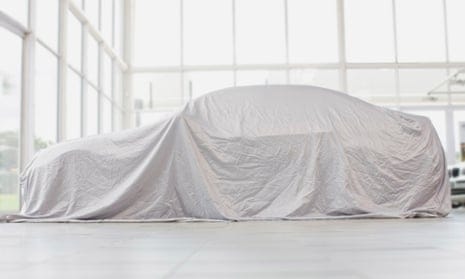
Apple reaches a “make-or-break point” with the project in January, Bloomberg reports, as the release date is pushed to 2028 and the team reportedly pivots again to an “EV with more limited features”.
This new goal came after “a series of frenzied meetings that included Apple’s board, project head Kevin Lynch and Chief Executive Officer Tim Cook,” according to the report. Apple still doesn’t have a formal prototype.
One month later, Apple killed Project Titan.
Cruise AI - General Motor’s 10 Billion Dollar Failure
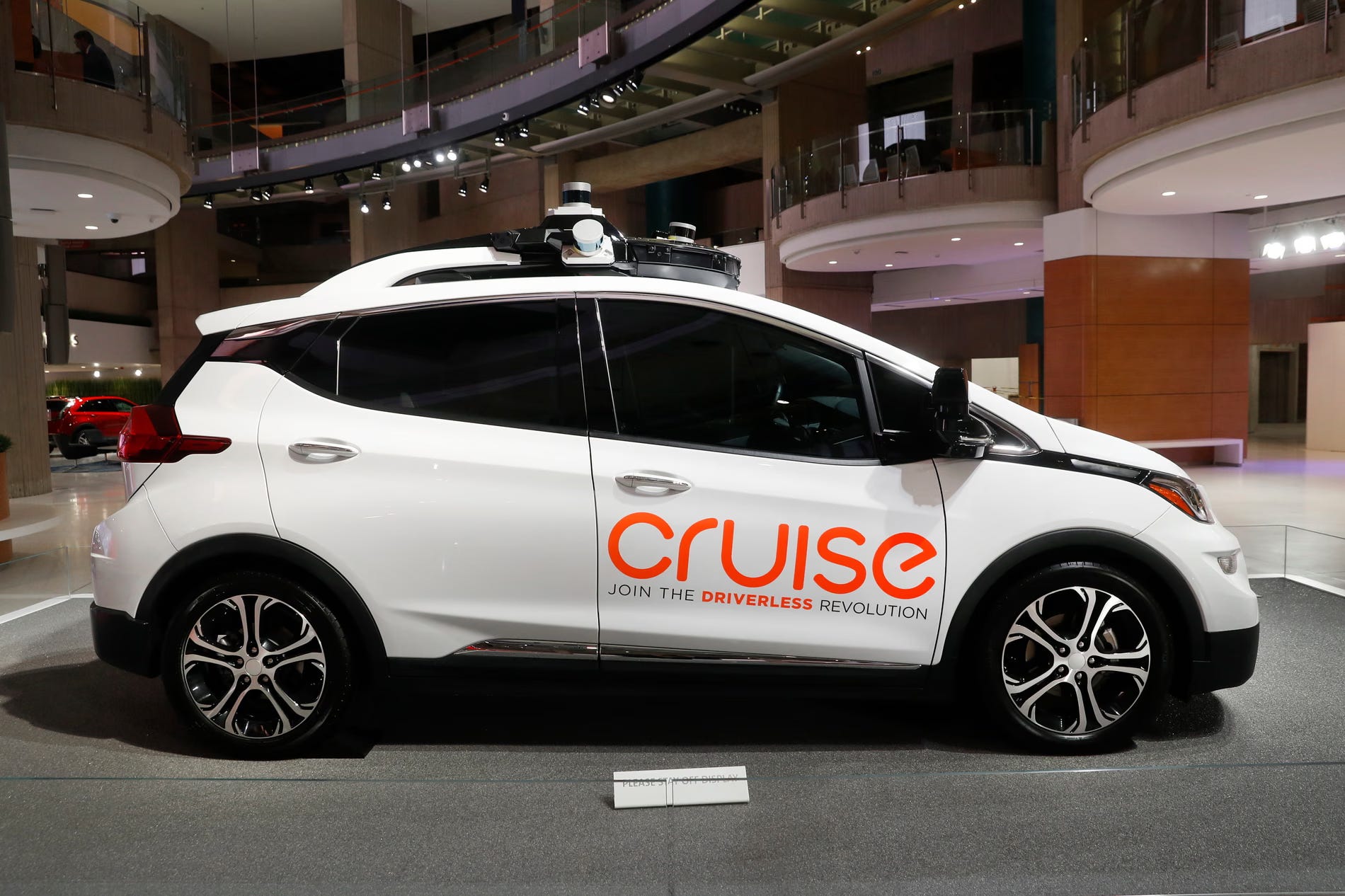
As like many others, Cruise AI came as a startup in 2013 focused on converting cars to self-driving systems. With time, its technology and ambition caught the eye of traditional automakers.
In 2016, General Motors Company announced it would acquire Cruise Automation “to accelerate autonomous vehicle efforts.”
Reports estimate the acquisition value at over US$1 billion, making it one of the earliest large bets by a car-maker on the robotaxi vision.
Cruise’s Promise
Right after the acquisition, Cruise aggressively scaled while hiring engineers, expanding testing to public roads, and branding itself as the company that would finally deliver “robo-taxis done right”.
The mix of the startup agility with GM’s capital and infrastructure made it a front-runner in the autonomous vehicle (AV) race.
By 2022, Cruise had secured regulatory approvals to offer driverless rides in San Francisco and was frequently cited as one of the two most promising players (along Google’s Waymo). The narrative was: legacy automaker + startup innovation = the future of urban mobility.
Cruise’s promise was a similar one. It wanted to commercialize driverless taxis in major cities around the world starting with charging passengers in San Francisco. It was among the first to roll out driverless vehicle service.
The Crash (Literally)
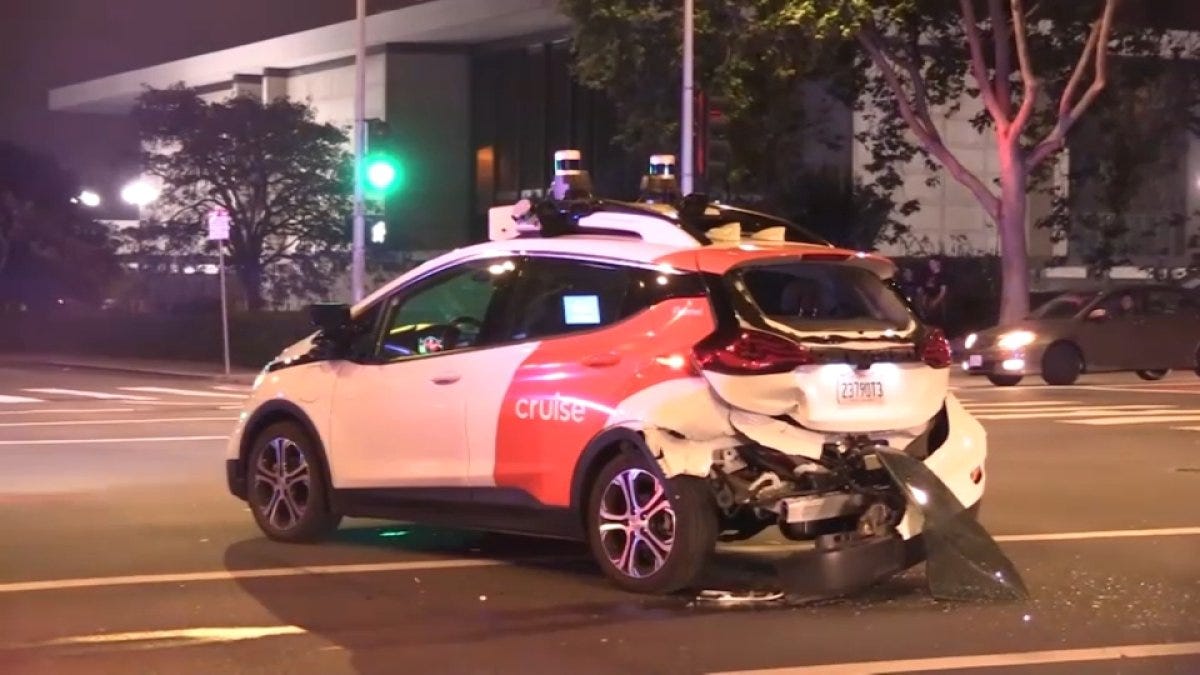
Cruise’s exit as a company was a tragic one when in October 2023, one of the Cruise robotaxi struck a human pedestrian and dragged her 20 feet before coming to rest with one of its tires on her leg.
Investigations later found multiple technical failures at Cruise. Their self-driving system failed to accurately detect the pedestrian’s location, misclassified the collision, lost track of the pedestrian.
The Cruise robotaxi then made a repositioning maneuver as if the situation were safe, despite the pedestrian being trapped underneath.
In response to the accident Califordnia DMV suspended Cruise’s permits for driverless operation in the state. Cruise announced a nationwide suspension of its driverless robotaxi fleet (while supervised fleets remained).
Cruise recalled its vehicles for a software update and issued internal reviews. Regulatory fines started to be hit by enforcement agencies.
Cruise CEO resigned in November 2023 and the company started restructuring and experienced layoffs.
This accident followed Cruise’s shut down as General Motors pulled out its funding.
The Drive Ahead
More than a decade, tens of billions of dollars, and countless hype cycles later, the truth is unavoidable:
Full self-driving is not solved.
Not even close.
Apple took their exit. Cruise couldn’t do it. Tesla keeps pushing timelines.
Project Titan and Cruise AI, are two of the biggest exits in the self-driving industry, but they are not the only one. In fact, many other came and went like the Uber ATG, Argo AI and many more.
Out of the tens of self-driving companies that existed back in 2016, only a handful have survived, with only a couple of main players that include companies like Waymo and Tesla.
In the short-term, we have a long way to go. Tesla has the biggest fleet on the road but their self-driving system is still at SAE Level 2, and their ‘Full Self Driving’ software is still in beta.
Waymo has achieved SAE Level 4 and is one of the major forces in the industry but their operations are limited to just a handful of cities and experts question their ability to scale their operations.
Waymo also has to rely on tele-operators that are humans sitting in a remote station. They supervise parts of the current fleet that drive passengers around cities without human drivers.
My Two Cents
For me personally, it is hard to predict how or when the promise of fully autonomous driving will fulfill itself. I am not an expert in any way but I think the future of the technologies involved is exciting.
Because we at SK NEXUS generally try to highlight the optimist side and actually there is good reason to be excited about the future of self-driving cars.
Because of self-driving cars we have seen innovations in other areas like LiDARs becoming significantly cheaper than they used to be. New versions of LiDARs like Solid State LiDARs are also being worked upon.
The sensors are getting cheaper and better while the software also gets tuned with each new update but making sure accidents like Cruise AI don’t repeat is crucial.
In the long-term there are definite improvements to be excited about but it’s clear that self-driving isn’t going to be an overnight revolution.
Even after the billions of dollars spent and years and years of effort, It seems that we still have a long way to achieve the dream of self-driving that our average Bashir imagines but there is no reason to be gloomy about it.
Even if we may not ever get into a completely self-driving car, we are sure to have hybrid solutions that are better than what we have traditionally used to drive our cars.
Honestly, I had to be on my toes for this series. It was not only exciting but challenging for me as writer to write on topics that involve technology and humans.
I hope you enjoyed reading this or another blog in the self-driving series. Engagement with my readers usually makes my day.
If you have any thoughts, opinions or questions related to the Project Titan or self-driving cars, please make sure to leave them in the comments down below.
If you don’t have something to write about down below, you are welcome to share this article to someone who would. Just use the button down below: