



Hey there 👋
There is a good chance you remember BlackBerry phones.
Maybe your parents had one. Maybe you had one. Maybe you just remember that thing everyone in the office carried around like it was a status symbol.
The tiny keyboard. The red notification light. The little roller ball. BBM.
For a few years in the mid-2000s BlackBerry was the coolest phone on the planet. Presidents used them. CEOs swore by them. Wall Street could not live without them.
Then the iPhone came out. And BlackBerry kind of just disappeared from daily life.
But they didn’t die. They did something much more interesting. They completely changed into a different company. And in 2026 they are quietly profitable doing work that most people never think about.
The software running the infotainment system in your car might well be BlackBerry. The encrypted phones and devices some governments use might well be running BlackBerry.
BlackBerry went from the most famous phone brand in the world to one of the most invisible software companies in the world.
This is the story of how that happened. And why it is actually one of the more interesting business comebacks in recent tech history.
Everyone Had a BlackBerry Once
To understand why BlackBerry’s fall was so dramatic you need to understand how dominant they once were.
In 2009 BlackBerry had 20 percent of the global smartphone market. In the United States it was even higher. Around 2009 BlackBerry had more than 40 percent of the US smartphone market.
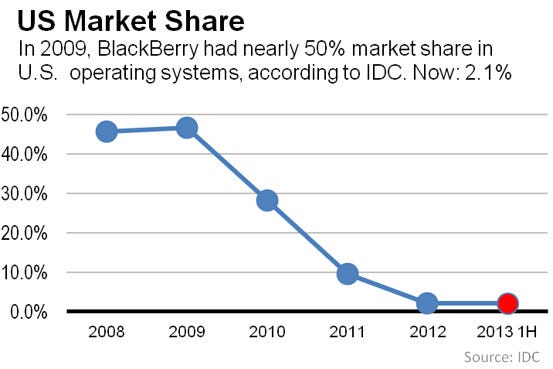
Think about that. This was not a niche product. BlackBerry was the smartphone market.
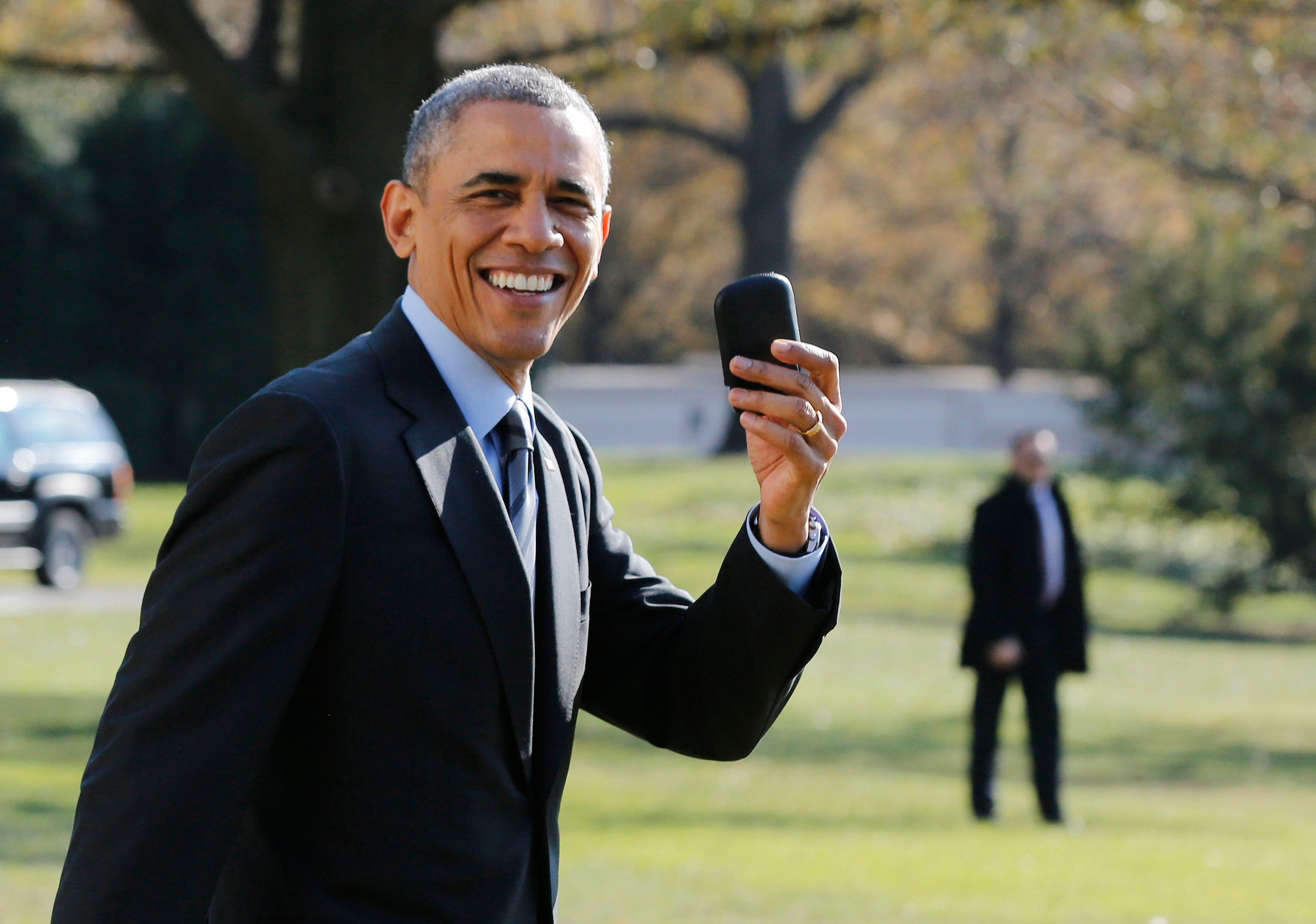
Their devices were everywhere. Barack Obama famously refused to give up his BlackBerry when he became president in 2009. The Secret Service eventually let him keep a modified one.
Wall Street traders, lawyers and doctors used BlackBerrys.
BBM or BlackBerry Messenger was the WhatsApp of its time. It was encrypted, fast, and free. People chose their phone carrier based on whether it supported BBM.
BlackBerry was seen as an important piece for business communication.
The company’s co-CEOs Mike Lazaridis and Jim Balsillie were on magazine covers. The company behind BlackBerry, Research In Motion (RIM), was one of the most valuable companies in Canada.
In 2008 Research In Motion was worth around $83 billion.
But then it collapsed hard. And the collapse was faster and more complete than almost anyone predicted.
For simplicity’s sake I’ll shorten ‘Research In Motion’ as RIM in the coming parts of the article. Typing out an acronym feels better than half a sentence I guess.
RIM was renamed to BlackBerry Limited in 2013 anyways.
Where BlackBerry Came From
BlackBerry did not start as a phone company.
Research In Motion was founded in 1984 in Waterloo. It is a small Canadian city best known for its university.
Mike Lazaridis was a student at the University of Waterloo when he founded RIM with his friend Doug Fregin. Lazaridis was an engineering student who dropped out just a few months before graduation to run the company.
He later received an honorary degree though (which must have felt nice).
Anyways, for the first decade RIM did pretty boring stuff.
They made modems for point-of-sale systems, wireless modems that let card machines in stores connect. They built wireless networking equipment. Useful technology but not exactly that exciting.
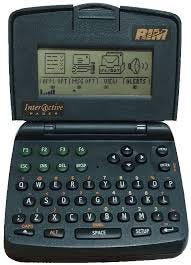
Their real breakthrough came in 1996 when RIM released the Inter@ctive Pager 900. This was a two-way pager that let you send and receive email wirelessly.