



Hey there 👋
Welcome to the holiday season. It’s usually the quiet stretch of the year where tech news slows down. Still, we got some highlights. Valve teased new hardware (more on that soon). Micron bowed out of its consumer business, which means RAM prices are about to punch everyone in the face. The Game Awards are around the corner, and the internet is praying Half-Life X is real.
All interesting. All worth knowing about.
But none of them change your daily life the way one silent technology does - the one thing every modern device relies on no matter what hardware you buy or which game gets announced.
And that tech is GPS.
The thing powering your Uber fares, your map pins, your deliveries, your flights, your banking timestamps, and half the apps you use without thinking.
Let’s pull back the curtain on the system you depend on hundreds of times a day but barely understand.
I belong to the Gen Z (people born around the early 2000s). A large part of my phone usage is ride-hailing, food deliver or using maps. Services like Google Maps are a second nature to people like me.
For centuries humans have traveled and used different sorts of devices and processes to figure out their location.
We looked at the stars to guide and us and looked at our compasses to figure out our location, but nothing ever came close to GPS in terms of convenience and accuracy.
Your Uber, Maps, the food delivery app in your smartphone, all these services rely on a fascinating technology that is largely hidden away from public discussions, and that is GPS.
I think sometimes we take these services for granted. We think that services like Google Maps were always there for us and it’s hard to imagine a time when they were not.
Basically, most of us who have a smartphone depend on GPS in one way or another, yet quite few understand how it works or what it is. This 24/7 free technology is among the coolest tech we have in this age.
To help you bridge this gap, I decided to write on the topic of GPS and uncover the details behind this interesting technology.
What is GPS?
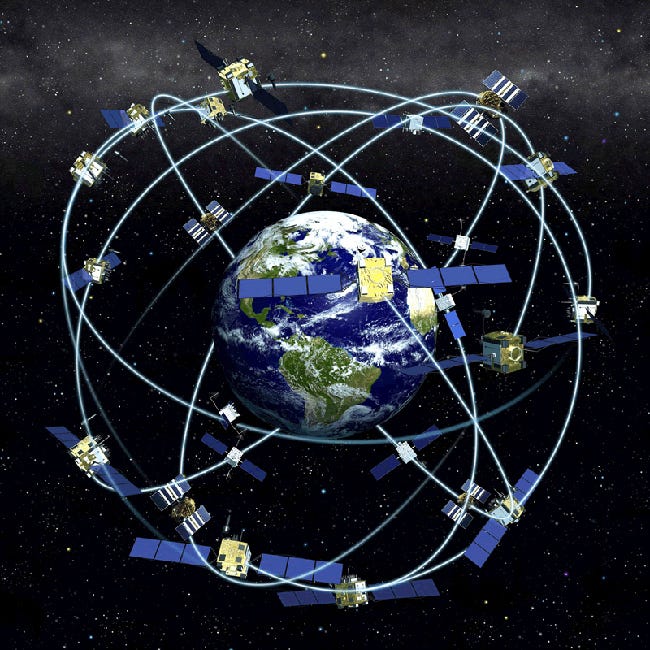
GPS stands for Global Positioning System. It is a web of satellites orbiting our Earth, Ground stations and related technologies that we use to figure out our exact location on Earth.
GPS works in all weather conditions as long as you’re able to communicate with the satellites. You basically just need a clear vision of the sky.
GPS itself doesn’t need an internet connection or even a telephone signal although it can provide much better results with them.
All of us who use a smartphone use GPS in various ways from Google Maps, Ride hailing, Food Delivery, etc. Whenever we fly our airplanes are using GPS too.
Militaries across the world use GPS for precise navigation inside planes, big ships, submarines, missiles and all kinds of scary stuff.
A brief history of GPS
If we look at some of the most disruptive technologies of the past century you’ll see a common pattern - the US Military.
Technologies like the Internet, Self-Driving cars had their seeds sown by the US Military, same is the case with GPS.
Originally GPS was made by the US Department of Defense (DoD) in the 1970s in response to a couple of navigation challenges.
The military wanted precise navigation that works across different weather conditions for their ships, missiles, submarines that all benefit from better navigation.
There were some earlier navigation experiments that the US military conducted but GPS was aimed to be more accurate and to achieve global coverage while requiring less ground infrastructure.
Work on GPS continued and the final system became operational in the 1990s while initially being a prime US military asset. With time, the US military allowed citizens the use of selected features of GPS.
By 2000, the US made the GPS functionality free-for-all across the globe seeing the impact this technology would have in the years to come.
To this day, the US DoD manages GPS for all of us around the globe.
How GPS Works?
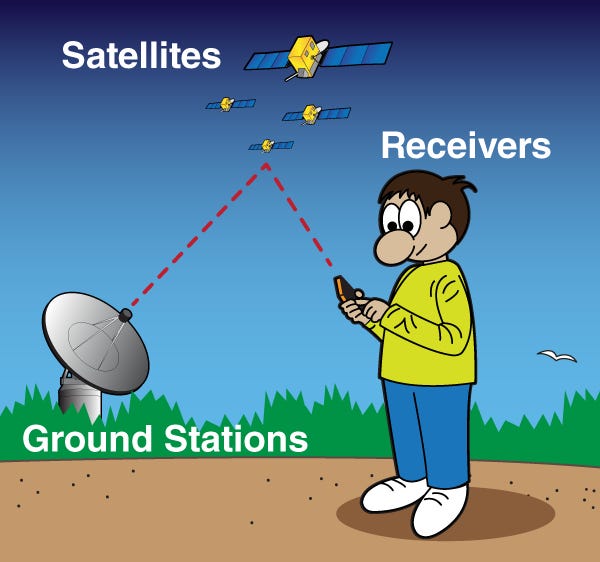
GPS is a groundbreaking technology and it is equally complex in its working. I’m not even qualified to explain the real science that goes behind its working (I’ll still try).
But I can share a really simplified version of how GPS works today. Even if you don’t get the full picture you’ll have a better idea of GPS than you had before.
The Three Players
Before we begin the discussion of GPS’ working, let’s discuss the three main players that we’ll talk about going on.
Satellites
In space, above our literal heads about 20,000 kilometers above the Earth, there are more than 30 satellites reserved for GPS that are continuously circling our planet.
These satellites are continuously orbiting the Earth and they are divided in such a way that at any given time four of them can see you no matter where on Earth you are.
The satellites are flying through space and they are constantly leaving messages that can be received by a GPS receiver like a tiny one that your smartphone probably has (you can’t see it, unless you’re JerryRigEverything).
The message from the satellite includes:
Where it is (inside its orbit)
What time it send the message
The satellite message also includes some additional data but we’d keep things simple here.
Ground Stations
Back on Earth we have ground stations. These are facilities that communicate with satellites in space and keep them in their right orbits.
You don’t want satellites drifting away from their orbits in space that’s why these ground stations continuously monitor them and adjust the satellites if needed.
Without ground stations, satellites could drift away and we’d be left with an inaccurate GPS system.
GPS Receivers
The third player is the GPS receiver. It is normally a tiny chip that could be in your smartphone, car, smartwatch, drone - basically anything that uses GPS for navigation.
The job of the GPS receiver as its name implies is to ‘receive’ signals from the GPS satellites. GPS receivers need signals from at-least four satellites at a time to pinpoint their exact location in real-time.
Putting It Together
Now that we know about the three main players, let’s talk about how all these work together in a GPS system.
Let’s assume you’re using your smartphone to figure out your location using GPS. We’ll refer to the smartphone as ‘Receiver’.
Receiver Listens For Satellite Signals
Your receiver device (like your smartphone) waits for signals from satellites above you. Each satellite constantly sends its position and a timestamp (the timestamp includes the exact time the message was sent).
Receiver Measures Time Delay
When a satellite’s message reaches your device, it arrives a tiny bit later than when the satellite sent it. Your device compares the time stamp in the message with its own clock and sees the delay.
Because radio signals travel at a fixed and known speed, that tiny delay tells the device roughly how far away that satellite is. The device does this for several satellites, so it ends up with several “how far” numbers.
The GPS receivers we use on Earth have a clock that is less precise especially when compared to the Atomic Clock that GPS satellites use.
Random Fact: On Earth, we generally use Quartz clocks which drift by a few seconds every month. GPS satellites use Atomic Clocks which are so precise that they only drift by one second every 30 million years!!
This shows that time is of the essence in a GPS communication and a few millisecond difference can change results completely.
Receiver Finds Location
After measuring the time delay between the satellites, the receiver uses signals from multiple other satellites and by the fourth one it has a good enough idea for the location.
By the fourth satellite, the receiver already knows three dimensions: Latitude, Longitude and Altitude. That is when our receiver draws the location on a map.
Even though I tried my best I think a visual representation of this concept is much easier to grasp. I have attached a few good videos in the ‘Further Learning’ section at the end of this article to help you in this.
GPS is Everywhere
Now that we’ve discussed some of the technical working that goes on behind GPS let’s go about discussing the actual importance that it holds in the lives of everyone living in the 21st century.
I’m not exaggerating when I say this but GPS seems inescapable. Honestly, my mind kinda stops when I imagine a life without GPS.
I try to imagine myself lost in my city, and just the thought of asking directions from a Lahori scares me ;)
Let’s discuss some of the industries where GPS has had a tremendous impact:
Cars, Aviation and Logistics
GPS has fundamentally changed the way we use our cars, smartphones, how we shop and even how we move large cargo.
All modern cars and smartphones now have some sort of built-in GPS functionality. Apps like Uber, Google Maps fundamentally rely on it.
Airplanes make use of GPS for precise flight paths and landings especially when weather gets bad. They also use it to avoid collisions and stay on their paths.
Large container ships in the ocean rely on GPS to stay on their course. Long-haul trucks and ground logistics vehicles also use GPS to plan the fastest routes and track deliveries in real-time.
Smartphones
Your smartphone quietly makes use of GPS sometimes even when you’re not conscious about it.
All your ride-hailing apps, food delivery apps rely on accurate functioning of GPS for fare tracking, ride searching, or to find you on the map.
Instagram uses GPS to provide your more personalized feed. Even your banking apps use GPS to confirm if that’s you or someone else.
Disaster Response
Whenever a disaster strikes, GPS comes to save the day. It’s a literal lifesaver.
Emergency responders like the Fire Brigade, Police, etc use it to locate people trapped after earthquakes, and coordinate rescue operations.
GPS was an actual lifesaver for many in the recent floods that we experienced here in Pakistan.
Military and Scientific Research
As we discussed above, GPS started as a military project and was just limited to military operations up till the 2000s.
Militaries around the world use GPS for precise navigation especially for specialized vehicles like submarines.
Armies also use GPS for better targeting of their weapons like missiles, even jets and sometimes even nuclear weapons (I know, scary stuff, right?).
It’s through the use of GPS that the USA and many other militaries have precise weapons that can be triggered to the exact location in a couple of minutes.
Agriculture
Even though this isn’t very popular in our country, Farmers around the world use GPS for “Precise Farming”.
Around the world, they use GPS-guided tractors and equipment that allows them to plant seeds, spray fertilizers, and harvest crops with centimeter-level precision.
This approach saves fuel, reduces waste, and increases crop yields. Farmers can map their fields digitally, monitor soil conditions, and even automate machinery to follow perfectly straight lines.
Finance
The finance industry also makes use of GPS for time-sensitive trades as they have to have access to precise timing to timestamp electronic trades for institutions like banks.
Stock Exchanges also rely on microsecond timing to record who bought or sold stocks/shares especially in high-frequency trading but I don’t know if our stock exchange uses it.
Still, the different industries that we briefly touched upon show that GPS isn’t just another piece of technology but it has developed into a core pillar of many societies.
It’s not wrong to say that GPS is a technological backbone for many of the industries that societies fundamentally rely on.
The Future of GPS
GPS III
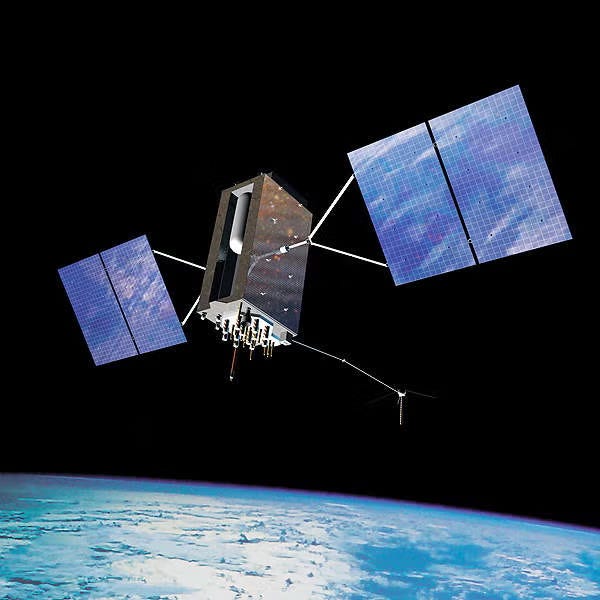
Even though GPS was built some half a decade ago, work on it continues as it evolves. The US spends more than $1B every year to support the GPS ecosystem.
Companies like Lockheed Martin have been working on GPS-III by sending in more capable GPS satellites into orbit.
Lockheed claims that these newer satellites would have 3X better accuracy and improved anti-jamming capabilities (which is an issue) along with improvements such as a modular design allowing more flexibility.
The GPS III satellites are also designed to work smoothly with other global navigation systems like Europe’s Galileo, China’s BeiDou, this means improved redundancy for us folks.
In addition to the newer satellites themselves, American companies have also started working on improving Ground Control Systems which can operate better in contested environments like war zones.
Every second billions of devices around the world turn to those 30 odd satellites for guidance. From smartphones, submarines to airplanes, a lot relies on GPS.
For those who understand the real science behind GPS, it truly is a marvel of modern engineering. Pin-point timing across moving orbits between planets is unprecedented in our history at-least.
Even if you can’t see those invisible radio-waves that power your smartphone’s GPS, you can enjoy this article and appreciate the work that went behind this tech.
I hope I contributed to your understanding of GPS. Please do share your thoughts related to this tech in the comments below and while you’re at it, a share to someone else who’s curious, would be appreciated :)
Great post! Even though I was already familiar with how GPS works, it was still interesting to read!