



Hey there 👋
I’ve been reading about Lula’s campaign accusing Meta of tilting Brazil’s election, and that got me thinking about the internet and how its algorithms can shape what you think.
For example, suppose you’re watching a conspiracy video. Then the platform recommends another conspiracy video, and then another. And before you know it, you’ve gone down a deep rabbit hole.
With the passage of time, the algorithm starts influencing the content you see and the ideas you’re exposed to, which can shape how you understand the world.
Eli Pariser gave this problem a name back in 2011. He called it the filter bubble. In his book The Filter Bubble, he described how two friends searching for “BP” on Google got different results. One saw investment information, while the other saw coverage of the oil spill.
The Wall Street Journal explored a similar problem in 2016 through its Blue Feed, Red Feed project. It showed how liberal and conservative-identifying Facebook users could see different content about the same topics and news events.
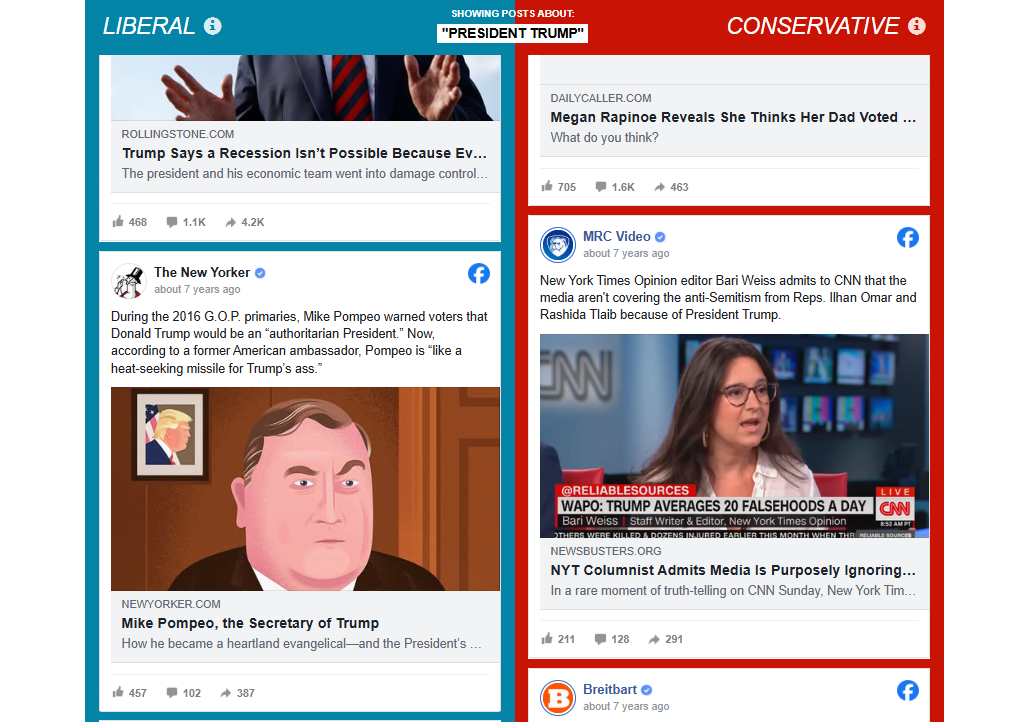
This can create conditions where extreme ideas can emerge. People don’t necessarily start out looking for extremist content or wanting to become extremists. But repeated recommendations from algorithms can gradually shape what they see and how they understand the world.
In this article, we’ll look at how media has been used to radicalize people, how social media and AI have changed the process, what’s happening today, and what you can do about it.
Let’s get into it.
Heads up before you go further: this piece is here to inform you about how technology is being weaponized, and to pick apart how it has been used across the world. If anything comes across as political or as taking a side, that was not the intent.
Radicalization Before the Internet
Radicalization through mass media existed long before the internet. Radio, newspapers, and television have all been used to spread propaganda and influence how people see others.