



Hey there 👋
Every few years the tech world falls in love with an idea and swears it is about to change everything.
It is AI today. NFTs and crypto had their turn a few years ago.
Virtual reality is one of those ideas too.
It has been “about to change everything” for more than a decade now.
You have seen the ads. Someone straps on a headset, waves their arms around, and it’s all just heaven. Big companies threw billions at it. Facebook literally renamed itself over it.
Recently I was talking to a friend who owns a Quest 2 and he said he has only used it twice since he got it.
Now look around. How many people do you actually know who own a VR headset? And how many of them still use it?
That gap is what this series is about. VR got good and cheap. And most people still said no thanks.
This is the free part, and it is the setup.
We will go over what VR actually is, how a headset works without the boring jargon, and how we got promised a future that never really showed up.
The next two parts are where we dig into what went wrong and where this whole thing is headed, including my own brief experience with a borrowed Quest 2.
Strapping a Computer to Your Face
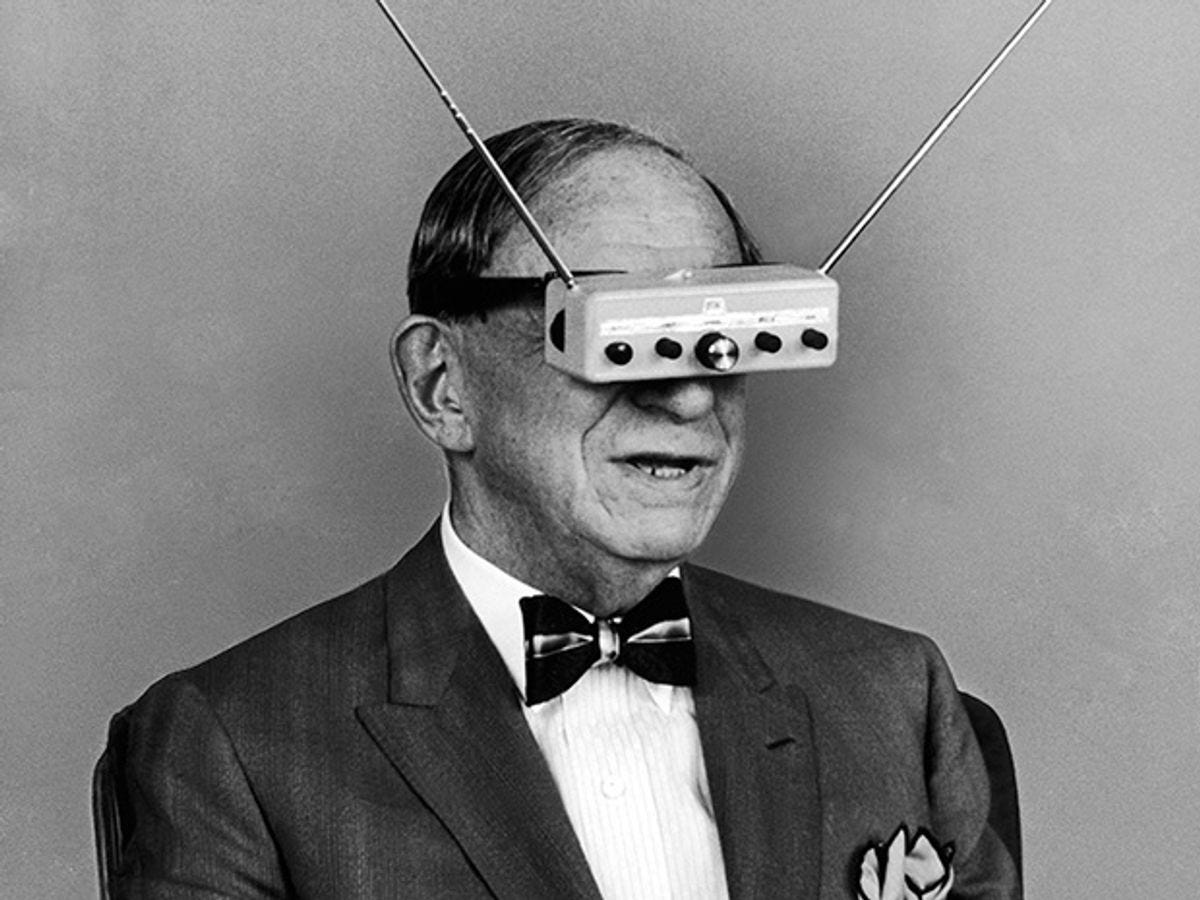
At its simplest, VR is a way of tricking your eyes and brain into thinking you are somewhere you are not.
A VR headset is basically a small computer with two screens inside it, one for each eye.
You strap it to your face and the screens sit a couple of centimeters from your eyeballs. Little lenses bend the light so your eyes can actually focus on something that close.
The lenses exist because you can't focus that close.
The screens show you a 3D world. Turn your head and the world turns with you.
Look up, you see the sky. Look down, you see your virtual feet. That is the whole magic trick in one sentence.
Another way to think of VR is this.
Your phone and your TV are windows. You look at them.
VR is different because it wraps around you. You look around inside it. That jump from looking at to being inside is the entire point of the thing.
How a Headset Tricks Your Brain
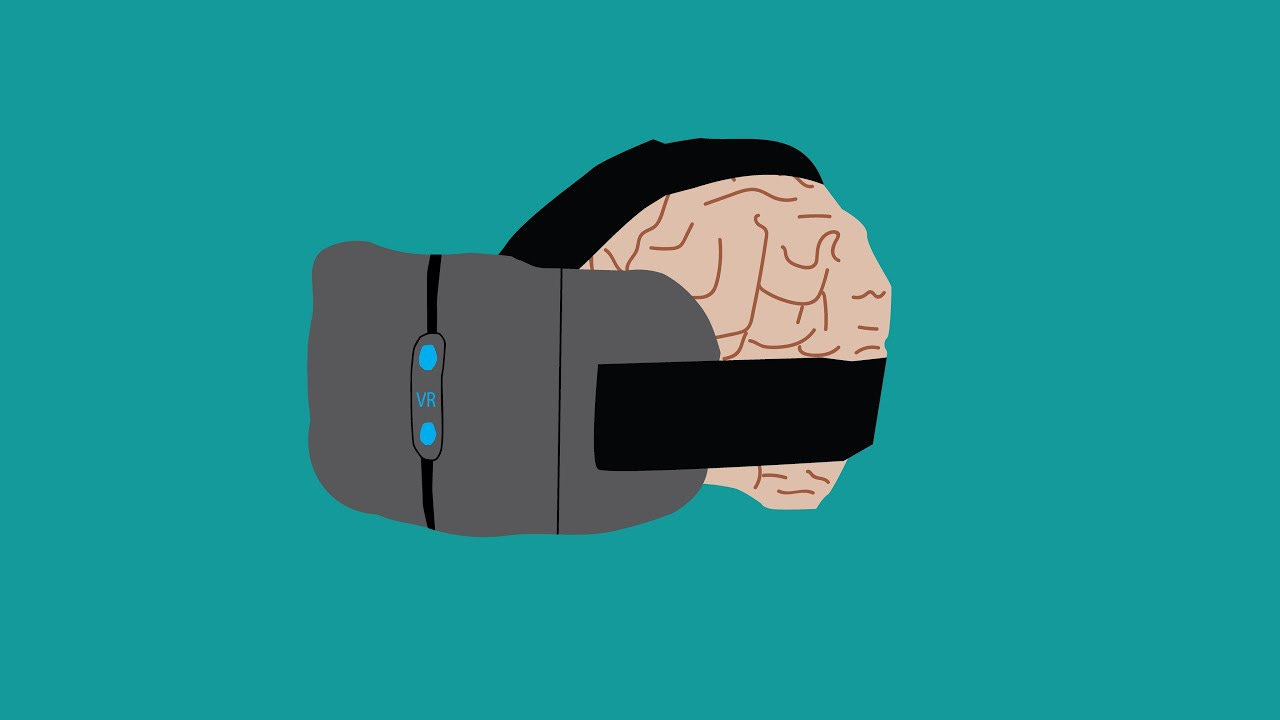
The reason VR feels real comes down to two things working together. Your eyes and your movement.
First, the eyes. Each screen shows a slightly different image, one for the left eye and one for the right. Your brain stitches those two flat pictures into one 3D image, the same way it does in real life.
That is what gives you the feeling of depth, of stuff being close or far away.
Second, and this is the big one, the headset tracks your movement.
Sensors inside it constantly measure where your head is and which way you are looking. Move your head and the picture updates right away to match.
That instant update is everything. If there is even a tiny lag between you moving and the picture catching up, your brain notices. And when your brain notices, it gets confused.
That confusion is a big reason some people feel sick in VR, which we will get into properly in Part 2.
Modern headsets also track your hands. Some use controllers you hold, others use cameras that watch your real fingers. So you can reach out, grab things, throw stuff, or poke at a menu.
That feeling of “my hands are in here with me” is what turns a cool screen into something that feels real.
The Word Everyone in VR Keeps Repeating
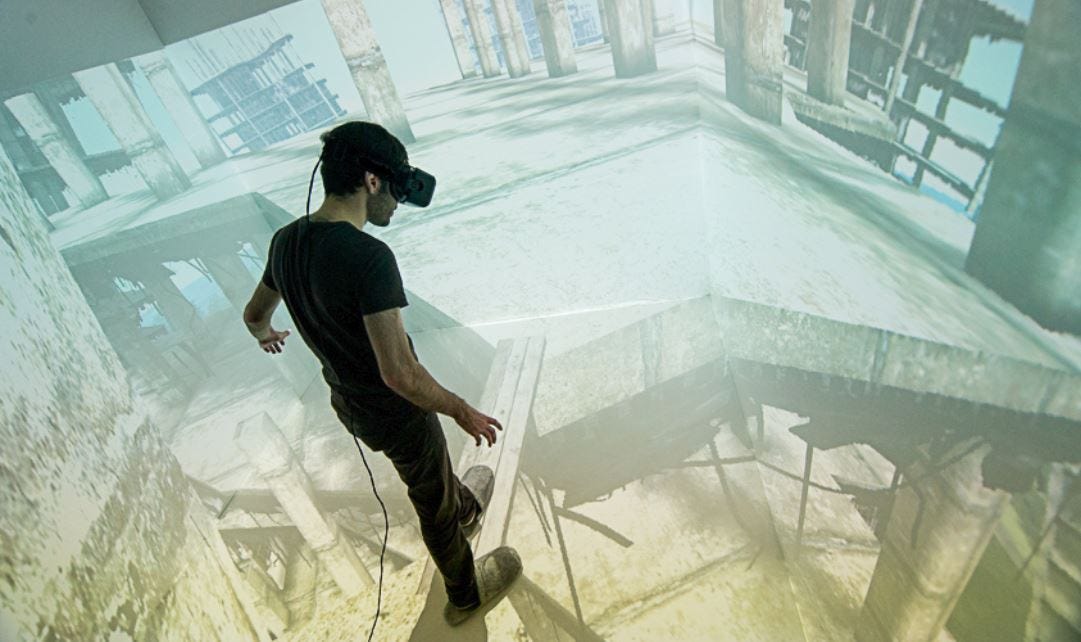
There is one word people in VR say over and over, and it is “presence”.
Presence is that moment when your brain stops treating the headset as a screen and starts treating the virtual world as a place you are actually standing in.
It is a weird feeling the first time it hits you.
The classic example is a virtual plank sticking out of a tall building. You know for a fact you are standing on your bedroom floor.
But some older, dumber part of your brain is fully convinced you are about to fall off a skyscraper, and your knees go wobbly.
That is the thing no normal screen can do. A movie can make you cry. It cannot make you flinch and step back because a train is coming at you.
When VR nails presence, it is genuinely unlike anything else, and that feeling is what got everyone so excited in the first place.
The catch is that presence is fragile. It can break with a lag, a cable tug or a notification buzz.
As your brain snaps back, you are just a person wearing a heavy gadget on your face. Holding that illusion steady is one of the hardest jobs in all of consumer tech.
The Two Kinds of VR
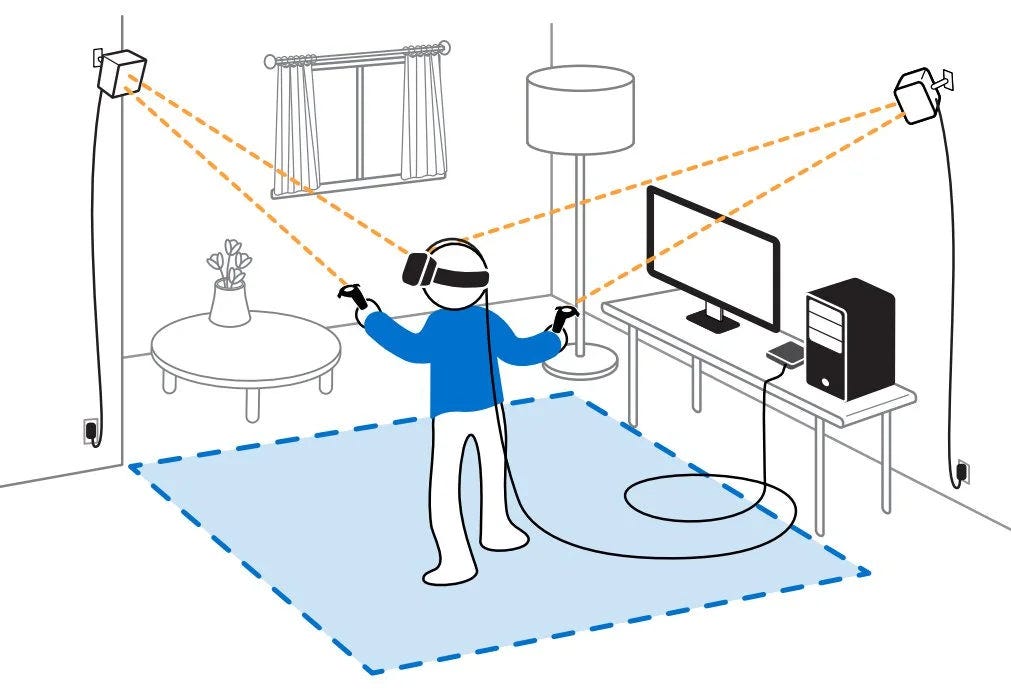
For years there were basically two flavors of VR, and the difference mattered a lot.
The first kind is Tethered VR, aka PC-Connected VR, or PCVR for short.
This is a headset that plugs into a beefy gaming PC with a cable. The PC does all the hard work and the headset is just the screen on your face.
And you can’t just use a normal USB-C charging cable with your VR headset. You need a high bandwidth cable that supports data transfer at high speeds.
If you just use a normal USB-C cable your VR may not work at all. If USB-C types confuse you, here’s a dedicated article to lessen that confusion.
These look amazing because they borrow the muscle of a big machine. The downside is you need an expensive PC, and you are stuck on a leash.
The second kind is standalone VR. This is a headset with the whole computer built inside it. It needs no PC or cable.
You pick it up, put it on, and you are in. Everything runs on the headset itself.
Standalone is the thing that turned VR from a rich-hobbyist toy into something normal people could actually buy.
Picture it like this. You would spend a few hundred dollars on a headset, then find out you also needed a gaming PC that cost over $1,000 more to run it.
Then you connected a thick cable from your computer to your head and tried not to fall while spinning in circles.
Standalone threw all of that in the bin. It’s just one purchase and you charge it like a phone and put it on.
For most people, that simplicity is the only version of VR that was ever going to work.
The Quest and the Phone Chip
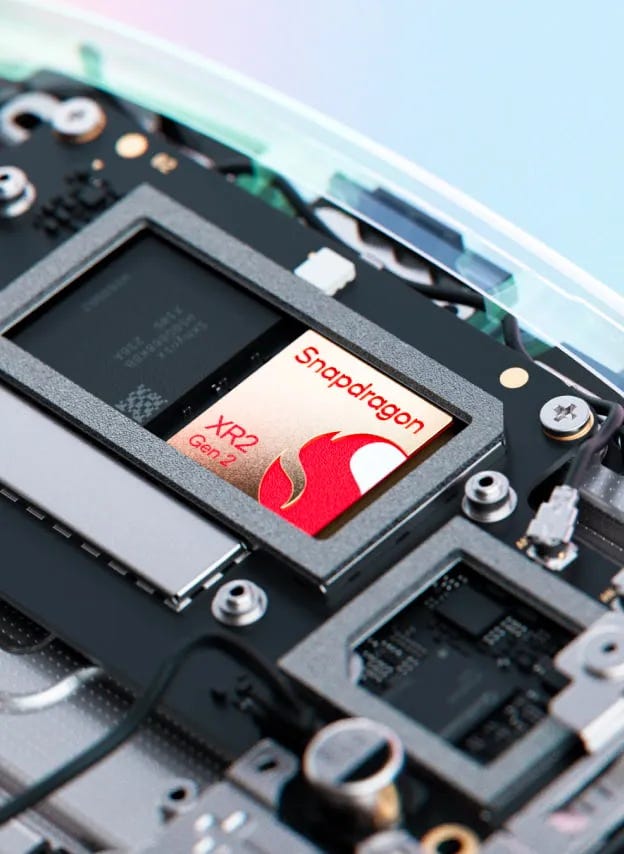
The headset that made standalone mainstream was the Meta Quest.
The Quest runs on a mobile chip, the same family of chip that runs your phone. That is why it can be light enough to wear on your head and cheap enough to actually buy.
It is nowhere near as powerful as a gaming PC. But it does not need to be, because it does not need a PC at all.
That trade, a bit less power in exchange for zero cables and zero extra cost, is what unlocked VR for regular folks. You are carrying a whole VR computer in something the size of a pair of ski goggles.
The Quest uses an ARM processor, it’s the same architecture that your phone processors use. Not sure what that means?
Well, here’s my detailed article that explains what ARM means for you and why it is everywhere from phones to VR headsets.
The Decade We Were Promised Everything
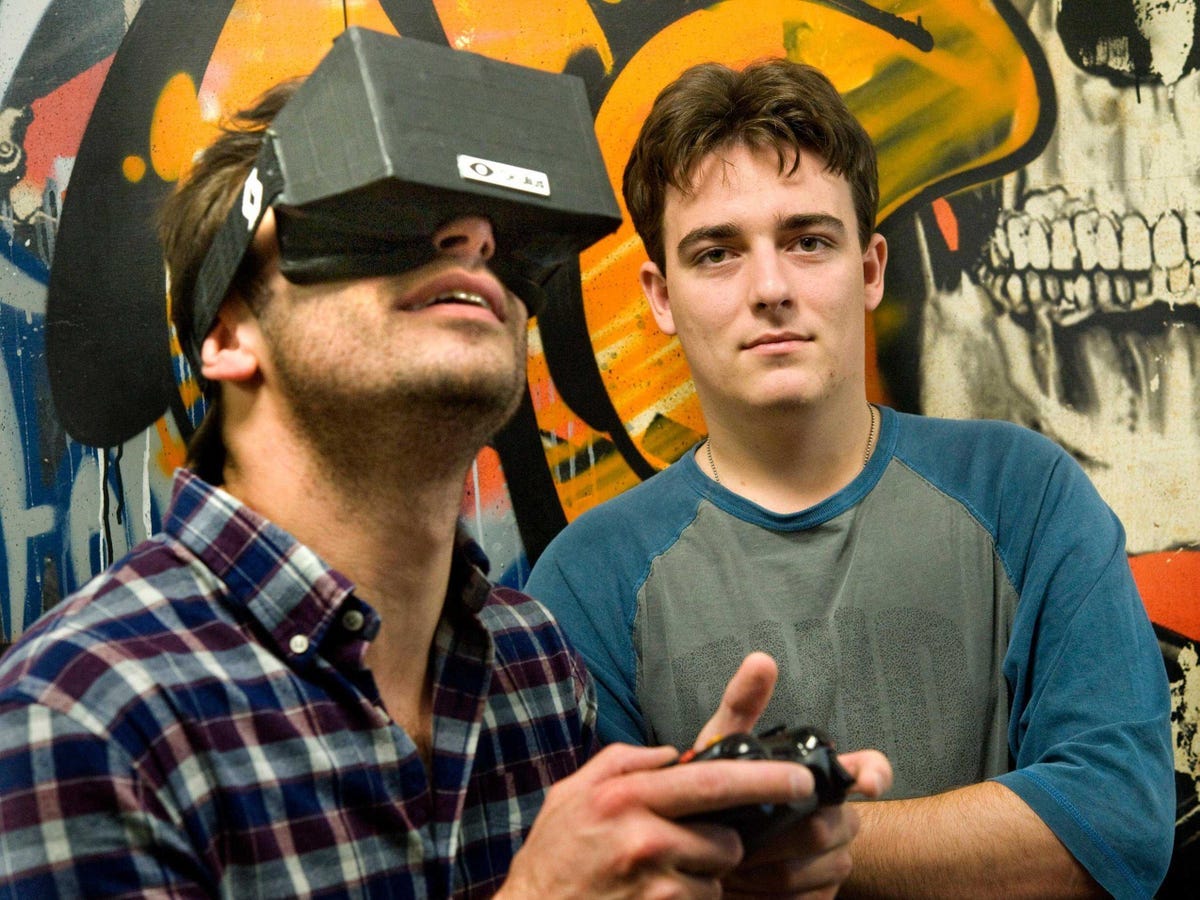
Back in 2012, a small company called Oculus built a headset that got the whole industry excited again.